Create a free Packaging World account to continue reading
Agents Do the Work: What Agentic AI Means for Packaging Operations
Agentic AI is emerging as a new layer of automation in packaging, where software agents plan, execute, and refine complex workflows, from testing to design to factory automation, helping teams reduce cycle times, improve quality, and scale decision-making.
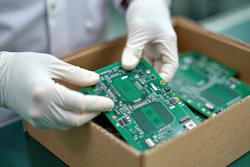
AI-driven systems are increasingly used to evaluate and coordinate packaging workflows, from inspection and validation to broader process decision-making.
Adobe Stock 1649186045
Agentic AI systems execute complete packaging workflows automatically by sensing data, planning steps, taking action, and learning from results—moving beyond chatbots to coordinate entire processes from design validation through testing and operations.
Agentic AI vs. Chatbots: Unlike chatbots that respond to individual prompts, agentic systems execute end-to-end workflows toward defined goals without continuous human input
The Agent Loop: Systems operate through four stages—sense (gather context), plan (break goals into steps), act (execute workflows), and learn (refine actions)
Differs from RPA: Agentic AI adapts when conditions change, while Robotic Process Automation executes fixed, rules-based tasks and breaks when inputs vary
Real-World Impact: In packaging, agentic systems can coordinate ISTA testing workflows, reduce cycle times from weeks to days, and free teams for strategic work
Implementation Requirements: Success depends on integration, governance, and oversight—systems are not fully autonomous and require controlled data environments
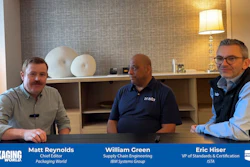
Bill Green, Distinguished Engineer & Chief Technologist: Supply Chain Optimization, Sustainability and Protection, IBMFor the past two years, most conversations around AI in manufacturing have centered on copilots, the tools that assist, suggest, and respond. But a different model is starting to take shape, one that moves beyond answering questions and into executing work.
At ISTA’s TransPack Forum, IBM’s Bill Green framed that shift in practical terms.
“I think a lot of the biggest shifts that we are seeing in packaging is the explosion of e-commerce, but also now the age of AI and data where we’re able to dig in better using these type of tools,” Green said.
That broader shift sets the stage for what he and others are calling agentic AI. These are systems designed not just to respond to prompts, but to carry out work toward a defined goal.
From prompts to processes
To understand the shift, it helps to start with what agentic AI is not. Chatbots and large language model assistants are familiar tools. They respond to prompts, generate text, and provide guidance—but they typically rely on continuous human input to move forward.
Green drew a clear distinction.
“Your chatbots… do a very, very good job with unstructured text… you can ask it to do a thing and it does one thing,” he said.
Agentic AI, by contrast, is designed to move beyond one-off tasks.
“Agentic AI… does an end-to-end solution,” Green said. “If I need to create a tool that pulls data from here… scrapes the internet… puts it all together, it does it end to end.”
The distinction shows up in how work gets assigned. Instead of prompting step by step, users define an objective and the system determines how to achieve it.
“It goes out and it’s goal-oriented… it’s going to be an assistant that takes you all the way to that end goal,” he said.
The agent loop: how the work gets done
Green described this behavior through a repeatable cycle, often referred to as an “agent loop,” that mirrors how human operators approach complex tasks.
It typically unfolds in four stages:
Sense: Gather context from data sources, applications, and prior runs
Plan: Break the goal into steps, define constraints, and select tools
Act: Execute actions, trigger workflows, and generate outputs
Learn: Evaluate results and refine future actions
He emphasized that these systems don’t simply execute instructions, they adapt as they go.
“It plans and it reasons… it can break things down and put ’em in the steps,” he said.
They also operate across systems, not just within a single tool.
“It can go and pull APIs, it can write code… grab code… and then… get feedback,” he said.
That ability to iterate is what differentiates the approach from static automation.
“It keeps going until it feels like it’s done the right thing,” Green said.
Beyond RPA: from tasks to orchestration
Automation is nothing new to packaging professionals. Robotic Process Automation (RPA) tools have long been used to handle repetitive, rules-based tasks in packaging, like palletizing or pick and place. But the comparison highlights where agentic systems diverge.
RPA is described as task-based and highly structured, thus effective when conditions don’t change, but brittle when they do.
Agentic AI, by contrast, is built to adapt.
“RPA… you have to specifically tell it what it has to do,” Green said.
Agentic systems, on the other hand, can adjust when inputs change.
“It looks at the end-to-end process… from the beginning to the end… what’s the desired outcome… and figures that out,” he said.
In practical terms, that means RPA executes steps to optimize a package size, test the package for damage risk, put a product in a package, put a package in a case, and stack cases on a pallet, while agentic systems coordinate entire packaging workflows.
A packaging use case: ISTA testing workflows
The implications become clearer when applied to a familiar packaging scenario. Consider the process of validating a package design against ISTA protocols. Today, that workflow often involves multiple handoffs between engineering, testing labs, and operations teams.
Agentic systems, Green says, can coordinate those steps. He outlined how such systems can move across tools and data sources to assemble workflows automatically.
“It can go and grab code… it can pull all these things… and then they’ll get feedback,” he said.
In a packaging context, that could mean pulling specifications, selecting test protocols, scheduling lab time, generating documentation, and capturing results—all tied to a single objective.
Operational impact: where the value shows up
While much of the broader AI conversation focuses on productivity, Green pointed to more direct business impacts.
“Usually green dollars help,” he said when asked how companies justify investment.
Those gains can come from multiple directions:
Faster cycle times
Reduced manual effort
Improved planning and execution
“Maybe it takes you three weeksm maybe it takes a few days [with Agentic AI],” he said.
There’s also a shift in how work is distributed.
“It can free up your time to do better, more strategic things,” he said.
Guardrails and reality
Despite the promise, Green was clear that these systems are not fully autonomous.
“It is not infallible… you are still needed to make sure that it’s going in the right direction,” he said.
Data security is another constraint.
“If you’re using open tools… and feeding in… company data… that’s a bad idea,” he said, emphasizing the need for controlled environments.
That means implementation depends on integration, governance, and oversight, not just access to tools.
AI-driven systems are increasingly used to evaluate and coordinate packaging workflows, from inspection and validation to broader process decision-making.Adobe Stock 1649186045A shift in how work is assigned
For packaging teams, the emergence of agentic AI introduces a different way of thinking about automation.
Instead of scripting tasks or prompting step by step, users define objectives and let systems determine the path forward.
That doesn’t eliminate the need for expertise, but it does change where that expertise is applied. And in packaging operations, where coordination, timing, and accuracy are constant pressures, that shift from executing tasks to orchestrating workflows is underway (or soon will be) in packaging engineering and test engineering departments at big brands nationwide.
We’ve done the legwork to identify and vet experienced packaging and processing consultants you can contact directly for your next project. Decades of combined experience in packaging line engineering, machinery selection, package and materials development, and food processing operations.

 Bill Green, Distinguished Engineer & Chief Technologist: Supply Chain Optimization, Sustainability and Protection, IBM


 AI-driven systems are increasingly used to evaluate and coordinate packaging workflows, from inspection and validation to broader process decision-making.Adobe Stock 1649186045