Google, Mars, and Nestle successfully converted major product packaging from plastic to paper, demonstrating that paper can work at scale despite significant technical and operational challenges. Their experiences show that paper packaging requires rethinking performance standards, involving operations early in development, and accepting that material changes may look and feel different while still meeting consumer expectations and sustainability goals.
- Kind bars launched a paper wrapper in limited trials, discovering consumers perceived it as more premium and durable despite losing the transparent film that showed ingredients.
- Google eliminated 94% of plastic from electronics packaging by reformulating paper to be three times stronger and 70% more stretchable, while adjusting visual standards for a natural appearance.
- Vital Proteins converted its iconic blue plastic collagen canister to paper using Boardio technology, requiring new manufacturing lines and extensive automation to prevent damage during production and distribution.
- Paper packaging must be tested against regional recyclability standards and recovery conditions to support sustainability claims, as materials approved in Europe may not meet U.S. requirements.
- Brands need cross-functional teams and early operations involvement to balance design innovation with manufacturing feasibility, quality control, and capital planning.
Paper has moved from the edge of sustainable packaging development into the center of many material discussions. Packaging World’s 2026 Annual Outlook Report found that paper, paperboard, and other fiber-based formats continue to gain ground as brands respond to regulatory pressure, consumer acceptance of paper, and the availability of established recovery systems.
Although paper looks straightforward on a sustainability scorecard, it often becomes less straightforward on a packaging line. Forming, sealing, barrier performance, graphics, distribution, and equipment compatibility can all complicate a conversion, especially when a package was designed around the properties of plastic.
Last June at PW’s Packaging Recycling Summit, packaging leaders from Mars, Google, and Nestlé shared their experiences moving to paper packaging. The projects involved a paper wrapper for Mars’ Kind bar, the removal of plastic from Google’s consumer electronics packaging, and the conversion of the Vital Proteins collagen canister from plastic to paper.
The formats and markets were quite different. Still, the three projects raised many of the same issues, including how much performance a brand is willing to reconsider, when operations should enter the development process, and whether consumers will accept a package that looks and behaves differently.
Kind tests the value of a paper wrapper
Kind began testing a paper wrapper in 2023. The project required the brand to reconsider one of its most recognizable packaging feature: the clear film that lets consumers see the bar and its ingredients.
When Mars began exploring a paper wrapper for Kind bars, Kerri Clark, VP of packaging R&D at Mars Inc., looked first at the feedback the brand was already receiving from consumers. “They actually think our packaging is already recyclable,” she said. “They’re giving us all this credit because of the brand name, so we need to be very careful with that.”
That perception gave the company a reason to act. It also made the stakes higher. Kind’s packaging needed to catch up with what consumers already believed about the brand.
Paper was an easy material for consumers to understand, but losing transparency prompted difficult discussions. Kind’s tagline promises “Ingredients you can see and pronounce,” and the team had to determine whether shoppers interpreted that statement literally or whether the clear wrapper had become less important as the brand matured.
The first trial moved from development to market in less than a year. It was limited to kindsnacks.com, which allowed the company to put a relatively small number of packs into consumers’ hands.
Speed created its own internal friction. Team members supported a test-and-learn approach in principle, but concerns surfaced when the package had not been tested against every possible condition or when print results were less predictable. Clark recalled the response when those concerns threatened to slow the trial. “It’s what we’re going to learn, guys,” she said. “That’s the learn part of the test and learn.”
 Kind tested a paper wrapper for its Dark Chocolate Nuts & Sea Salt bar to evaluate how the material would perform on existing equipment, withstand distribution, and appeal to consumers accustomed to the brand’s clear plastic packaging.Kind/Mars
The small launch also exposed a weakness in how the project was organized. A limited core team had moved the work forward, but the effort wasn’t always seen as a formal business priority. Kind used its established Stage-Gate process for a second test, assigned a cross-functional team, and brought in sponsors who could help the package move through the organization.
Mars also brought knowledge from other paper-packaging work within the company. Kind wanted the wrapper to run primarily on existing assets, including equipment of different ages and configurations. Work completed with a strategic OEM helped the team identify changes needed to form the paper without tearing it, improve seal quality, and prepare the package for distribution.
A later trial placed one paper-wrapped SKU in Whole Foods stores. Kind conducted consumer interviews in the stores and shared information with the retailer, which was studying paper options for its own products.
Although the package did not reproduce the look of plastic exactly—graphics were less vivid and the paper clearly appeared and felt different—consumers responded positively. Said Clark, “More premium, more appealing, more durable is what the consumers fed back.”
That finding challenged the assumption that a paper wrapper would make the product appear less polished. Some consumers also said the product seemed to taste better, even though the bar itself hadn’t changed. They associated the paper with greater care and a more responsible brand.
According to Clark, the project demonstrated that sustainability and packaging innovation could support the commercial value of a product. Packaging gave the sales organization something new to discuss with retailers, while the consumer research provided evidence that a material change could improve perceptions of the brand.
Google works through the last plastic components
Google’s work covered a system of electronics packaging rather than a single product. By 2019, the company estimated that its packaging was about 94% plastic-free on average. The remaining 6% included closure labels, product wraps, labels, and shrink film. Those components were difficult to eliminate because each served several purposes.
Plastic had long been used in those applications because it delivered reliable protection and functionality. Acknowledging the trade-offs, Joey Giacomini, packaging design engineer lead at Google, said, “I do kind of miss plastic because it did a good job of some very relevant things.”
Shrink film, for example, provided tamper evidence, sealed the box, and protected the printed surface. Removing it meant finding other ways to perform each of those functions without creating new problems elsewhere in the packaging system.
Some answers came from small engineering changes. Google reversed the orientation of the corrugated board used for its shipping cases, placing the smoother liner toward the product packages. The exterior of the shipper looked less uniform, but the packages inside were less likely to pick up impressions from the corrugated structure.
The team also adjusted shipper fit, dunnage, handling procedures, coatings, and pack-out methods. Small particles trapped between boxes could scratch a printed surface, so Google studied damaged units and worked backward through contract manufacturing, distribution, and retail handling to identify possible causes.
Those changes had to serve a wide product range. Phones may fit a fairly consistent rectangular format from one generation to the next. Cameras, floodlights, displays, and other devices vary in weight, geometry, screen size, and orientation, making a common packaging template harder to apply.
 In 2024, Google rolled out a new version of its 100% plastic-free packaging, with a new speckled paper solution.Google
Product-development timing added another constraint. Consumer electronics packaging is tied to the launch cycle for the device, which can run nine to 12 months. Google needed about three to four years to complete the larger plastic-removal effort because the team had only a limited number of product generations in which to test major changes.
One of the project’s more significant material developments came from a decision to use uncoated paper. Google formulated a paper that was three times stronger and 70% more stretchable in the machine direction than its previous material. The added strength allowed the company to use a lower basis weight and reduce the weight of the packaging system.
The removal of plastic lamination also changed how the team judged print protection and appearance. A paper surface protected by a UV coating could not always meet the same visual standard as a laminated structure. “At some point you have to start realizing it’s not going to be perfect and pristine, but you have to mark your place where do you want to be,” said Giacomini. “What feels acceptable.”
The project prompted Google to reconsider what premium electronics packaging should look like. Giacomini said the team was working against a visual standard that had become familiar across the category. “Traditionally with these rigid boxes, everyone thinks of a pristine white telescoping rigid box with a white tray on the inside,” he said. Google instead allowed speckles and slight imperfections to remain visible, gradually establishing a more natural paper appearance as its own expression of premium packaging.
That appearance also helped both consumers and material recovery facilities identify the material correctly. During testing, Google followed highly finished molded-fiber trays through MRFs and found that some were mistaken for plastic because their surfaces looked too smooth and uniform. Visible fiber gave the package a clearer paper cue.
Beyond helping consumers and MRFs recognize the material, the work showed Google that design decisions couldn’t be separated from operations. As the packaging template evolved, the company began involving operations earlier. The design group still wanted a small team to explore concepts without having every stakeholder reject ideas too soon. More frequent checkpoints with manufacturing and automation teams helped identify equipment or capital concerns before designs had advanced too far.
Vital Proteins treats paper as a manufacturing change
The Vital Proteins project began during a period of rapid growth. The brand needed more manufacturing capacity for its collagen peptides, which were produced and filled at a facility in Franklin Park, Ill. Its large blue plastic tub had become closely associated with the brand. Replacing it with paper began as a design concept, but Vital Proteins initially struggled to find a technical solution.
Eric Bell, principal packaging scientist at Nestlé Health Sciences, joined the project after the brand had nearly nine months exploring the idea. Nestlé’s packaging experience and scale helped move the canister into development using Graphic Packaging International’s Boardio technology.
The project went far beyond the container material, however. Vital Proteins was building new packaging lines, and the switch to paper affected the filler, end-of-line equipment, quality systems, warehousing, secondary packaging, and tertiary packaging. Package development and capital approval moved forward at the same time. The first line took about two years to reach the market, followed by a second line approximately a year later.
Because package development and capital planning were moving forward at the same time, the team had to commit resources before every technical question had been settled. “You think you know what the risk level is, you think you know what the technical solution is. And a lot of those assumptions end up being incorrect, both on the manufacturing side and on the pack development side,” explained Bell.
Distribution was also a major source of concern. Filled canisters can weigh nearly two pounds, and Amazon and Costco are two of the brand’s largest customers. The paper package had to survive e-commerce shipment and display-ready pallet distribution after replacing a plastic tub that could tolerate rough handling. Bell said the canister passed distribution testing and continued to meet customer requirements in the market, although he didn’t detail any structural changes made to the container itself. Costco reviewed test reports and package specifications closely before accepting the new format.
 Made from Forest Stewardship Council (FSC)-certified fiber, a new paper-based package will reduce the plastic used across all Vital Proteins canister offerings by more than 90%.Vital Proteins
Weight was only one durability concern. To give the canister a natural paper appearance, the team selected a matte varnish. During equipment testing, however, canisters began scuffing as they moved through the filler, before the package had even left the facility.
Nestlé worked with the package supplier and its suppliers to refine the varnish application. The coating had to resist scratches and scuffs while remaining food-safe, flexible enough for in-line forming, and compatible with recycling.
Handling presented another problem. Suppliers assured the brand that their systems could move the paper canisters gently, but testing showed that conventional conveyance and manual contact still caused damage. Nestlé responded by reducing touchpoints and investing in more automated handling.
“Traditional conveyance is not acceptable,” Bell said. “Automation is our friend at the end of the day. The fewest manual touches you have, the better.” With automation, movements could be adjusted and repeated, giving the team more control than manual handling, which varied by operator and shift. Nestlé also applied those learnings to the secondary and tertiary packaging so the canisters would leave the facility in better condition.
The use of fiber also changed quality procedures. The team had to manage paper shavings created during forming and determine which inspection systems and quality checks were appropriate for the new material.
According to Bell, that early work produced operating benefits after the problems were resolved, noting that the lines required fewer people and fewer manual touches, while unplanned stops were reduced.
Paper doesn’t guarantee a recyclability claim
Material performance was only part of the challenge. Kind also had to prove that the wrapper met the requirements needed to support a curbside-recyclability claim in the U.S.
The paper selected for the first trial had passed fiber-recovery and repulpability testing in Europe, and the team expected it to meet U.S. requirements as well. However, testing at Western Michigan University, whose recycling pilot plant evaluates the repulpability and recyclability of fiber-based packaging, used a different protocol and a higher fiber-recovery threshold. The first paper didn’t pass, so Kind couldn’t claim that the test wrapper was curbside recyclable. A second paper later met the requirement.
Despite the fact that the first paper didn’t meet recyclability requirements, Mars chose to continue the initial limited trial and explain the situation honestly. Consumers responded positively to the effort, according to Clark, even though the package had not yet reached the intended recyclability outcome.
Google encountered another regional issue. Some bags made from wood fiber or bamboo contained regenerated cellulose. Although the structures protected products well and didn’t appear to contain conventional plastic, European guidance classified regenerated cellulose as plastic.
“They don’t technically have plastic in them, but they contain regenerated cellulose, which is in essence a plastic,” Giacomini said. Therefore, Google decided not to use the material across its packaging template. “It’s tough because it’s taken our toolbox of things to throw at scuffing, abrasion, and product protection and minimized it quite a bit.”
Both cases point to a basic requirement for brands considering paper. A package must be tested against the standards and recovery conditions in the markets where it will be sold. The appearance of paper alone doesn’t support a recyclability claim.
Consumers recognize paper, but still need context
Paper can help communicate a material change because shoppers often recognize it by sight and touch. However, appearance can’t always explain everything. In some cases, brands still need to tell consumers why the package changed, how to use it, and whether other changes introduced at the same time are connected.
Kind found that the paper wrapper required little explanation during its Whole Foods trial. The company used a small callout on the display carton rather than shelf talkers or a larger promotional campaign. Consumers noticed the single paper-wrapped SKU within the shelf set and understood that the package was different. Said Clark, “That’s the beauty of paper. It’s pretty intuitive.”
Vital Proteins initially relied on that same intuition. Its first paper canisters carried no message explaining that the package had changed. “We didn’t even say new packaging, same product. Literally nothing,” Bell said. Some e-commerce customers were confused and wondered whether the unfamiliar canister was counterfeit.
Bell said the company had expected the material itself to communicate enough. “So I think we leaned a little bit too much into that and didn’t jump on the claims piece. So I think we missed the mark there. “Based on what we learned from consumers, we added more claims.”
Nestlé focused those claims on product freshness, opening instructions, and plastic reduction, while relying on the canister’s appearance and feel to signal that it was paper.
Around the same period, Vital Proteins removed a plastic scoop from some products, making the response more complicated. Although the scoop removal and the paper conversion were separate initiatives, some consumers experienced them as a single package change and blamed the new canister for the missing component.
That experience is worth considering when several packaging changes are introduced close together. A material conversion, component removal, and new opening method may be managed separately inside the company. To the shopper, they arrive as one new package.
Making room for learning
The projects also showed that paperization requires a different development mindset. Teams need enough freedom to explore new materials, but they also need timely input from the people responsible for manufacturing, quality, capital spending, and commercialization.
The balance differed by company. Nestlé needed broad alignment because the Vital Proteins conversion was tied to new equipment and manufacturing capacity. Google found value in keeping its early design group small, then bringing operations into the process through regular checkpoints. Kind’s experience showed that a limited trial still needs enough internal visibility and support to be treated as a serious program.
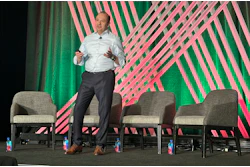
 From l. to r., Joey Giacomini of Google and Eric Bell of Nestlé discuss the engineering and operational changes required to make paper packaging perform, from protecting printed surfaces to improving automated handling and distribution durability.PMMI Media Group
Paper may also require companies to reconsider standards developed for plastic. Google adjusted its expectations for surface appearance, while Kind moved ahead with its first trial even after the material fell short of the U.S. repulpability threshold. The purpose of testing was to expose those issues and use them to improve the next version.
“It’s very easy in this space to go, okay, this doesn’t quite work all the way. It’s not the silver bullet yet. It’s not the one-fits-all solution, so I’m going to paralyze myself with fear of getting it wrong and not do anything,” said Clark.
But Kind’s willingness to go ahead with the pilot and acknowledge it hadn’t reached its intended goal was still appreciated by consumers, who gave them credit for the effort. “That was such good, strong motivation to keep going,” Clark shared. “It also showed that small wins are pretty big in this area, so let’s take them.” PW