Successfully deploying mobile automation requires extensive upfront planning to define operational problems, document current processes including informal workarounds, prepare facilities, involve IT early, and plan careful transitions from manual to automated workflows rather than rushing to implement technology without clear goals and readiness.
- Define the problem first: Establish clear operational goals like labor savings, safety, or throughput before selecting AGV or AMR technology.
- Document everything: Map material flow, identify informal workarounds and exceptions, and standardize pickup and drop-off points to prevent bad processes from being magnified by automation.
- Prepare the facility: Ensure floors support vehicles, aisles are clear, wireless networks cover full routes, and storage is organized and consistent.
- Involve IT early: Integrate software systems like WMS, ERP, or MES from the start to avoid delays and cybersecurity issues later in the project.
- Plan phased transitions: Implement automation incrementally while maintaining manual operations, provide comprehensive training and support, and expect 90+ days of stabilization before full capacity.
Labor challenges and persistent material-handling problems are prompting more manufacturers to consider mobile automation. An automated guided vehicle or autonomous mobile robot may be part of the answer, but it shouldn’t be the first item on the project plan. The first step is to define the problem the plant needs to solve.
An AGV or AMR can’t compensate for a pallet routinely left in an aisle or a load that requires a last-minute shove from a forklift. It will also struggle with routing decisions that exist only in an operator’s head. Those workarounds may keep a manual operation moving, but they become obstacles once the process is automated.
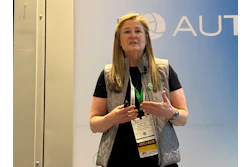
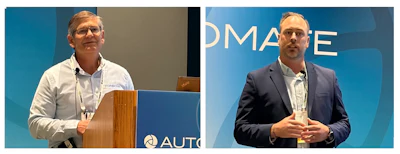
Jordan Guhl, VP of sales, and Mark Longacre, senior strategist, market development, both of Formova, addressed that preparation during a presentation at Automate 2026, held in Chicago in June. Their advice centered on AGVs and AMRs, but many of the steps apply to other automation projects that involve multiple departments and connections to existing plant systems.
Longacre drew on approximately 500 mobile automation projects completed over 27 years. He covered the work required before a project begins, while Guhl focused on implementation and the period after go-live.
Begin with the operational problem
Labor savings are often the easiest benefit for manufacturers to identify and quantify. Longacre encouraged companies to look beyond that initial calculation and consider safety, throughput, and other operational concerns. Without a defined application, suppliers have little basis for determining what equipment is appropriate or whether automation will solve the issue.
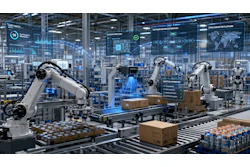
 Begin an automation project by defining the labor, safety, throughput, or cost problem you need to solve, rather than starting with a general directive to add robots or launch a loosely defined pilot.Image courtesy of Formova, recreated with AI.
The urge to catch up with competitors can push a company toward a technology before it’s settled on the application. Longacre warned against beginning with a general directive to add robots. “What you don’t want to do is say, ‘Oh my gosh, I know I’m behind. I’ve got to put in robots. Let’s get them in. I’m not really sure how I’m going to use them, but we’re going to figure it out.’ Please, please don’t,” he advised.
The project team should establish what needs to improve and how the results will be measured. One target might be fewer forklift incidents or greater pallet throughput. Another project may focus on delivery consistency, cost, or moving employees out of repetitive material-handling work. Those measures give the manufacturer and supplier a shared definition of success.
 Map material flow from receiving through shipment and use operating data to identify the delays, bottlenecks, and manual tasks an automation project should address.Image courtesy of Formova, recreated with AI.
Pilots and proof-of-concept projects require the same discipline. Longacre called them a “really, really slippery slope.” They can be useful when the scope and goals are clear, but a poorly designed pilot may test conditions that don’t resemble the plant’s actual operation or produce little information that can support a larger deployment.
Once the goal is set, the team needs to document how material moves through the plant today. That means involving the people who operate and support the process, then mapping the flow from beginning to end. Average volumes and peak loads both matter. The team must also account for exceptions and likely changes over the next three to five years.
The supplier will need to know what’s being moved and where each move begins and ends. It also needs to understand how movement requests are generated. A pallet or transfer that appears only occasionally still belongs in the process map. “There’s just no replacement for doing this upfront homework,” Longacre said. “You absolutely have to do it.”
Document informal workarounds
Manual operations often depend on decisions that live only in an experienced operator’s head. A forklift driver may know that a leaning pallet needs to be straightened before delivery. Another employee may divert a load when a staging location is full, even though the alternate route has never been documented.
An automated system must be told how to handle those conditions. It can inspect and reject an unstable pallet, for example, but the rejection location and the next step must be built into the process. “You need to build a process that’s going to work without those little extra things that no one has documented that some person decides to do,” Longacre said.
Pickup and drop-off points require standardized work. Loads should be consistent, and destinations clearly defined. Exceptions need rules rather than improvisation. “Bad processes get magnified when you automate them,” Longacre said. “They don’t go away, they get worse.”
Preparing the automated workflow may therefore require changing the manual one. The best route for an AGV or AMR may require a different staging plan or changes to inventory flow. Guhl advised teams to stay open to those changes instead of asking the new system to reproduce every step performed by people and forklifts.
Examine the facility itself
Process readiness extends to the building. Floors and aisles must support the vehicles, while staging areas and charging locations need to fit the planned flow. The racking must be considered, and the wireless network must cover the full route. Load quality matters as well. A crack that barely registers with a forklift driver may interfere with an AGV or AMR, while a pallet left temporarily in an aisle can block a planned route.
The condition of the plant can offer an early indication of whether the operation is ready for automation. Longacre said haphazard storage and undocumented buffer areas are warning signs, especially when they block aisles. An automated system can’t work around those conditions the way an experienced forklift operator might. Plants with mobile automation, he added, usually show greater order and consistency before the vehicles are even visible.
Traffic planning deserves close attention because manual traffic will often share space with mobile robots. The team should identify crossing points and set safety zones before the vehicles arrive. It must also decide how lanes and transfer locations will be kept clear.
Bring IT into the project early
The vehicle is only one part of an AGV or AMR system. Software determines when a movement is requested and where the load should go. It also assigns the vehicle and decides how the task ranks against other activity in the plant.
Some applications may exchange basic signals with equipment on the floor. Others require closer integration with a warehouse management system, enterprise resource planning platform, manufacturing execution system, or warehouse control system. The team must also decide where operating logic will reside and how responsibility will be divided among the different software layers.
 Plan system integration early so automation can communicate with WMS, ERP, and MES platforms, provide real-time visibility, and generate data for continuous improvement.Image courtesy of Formova, recreated with AI.
Longacre recalled projects with an attractive business case that stalled after IT was finally invited into the discussion. In one case, the department was tied up with an ERP implementation and couldn’t support the automation work for three years. “You want to get this group involved very early,” he said. “Don’t save that until the end because that’s really difficult.”
Early involvement gives IT time to evaluate the integration and confirm that the network can support the system. It can also address cybersecurity and staffing before either issue delays the project. Wireless coverage must be checked along the full travel path, particularly around racking or machinery and in areas crowded with stored materials.
Plan the transition to automation
Few manufacturers can shut down for an extended period while a mobile automation system is installed. Manual and automated workflows will usually coexist for part of the implementation, which creates another layer of planning. Longacre called the transition “the project within the project.” A company may need to automate one area at a time while redirecting traffic and creating temporary staging points. Manual and automated work should be separated wherever possible. The plan should also explain how production will continue if part of the new system is unavailable.
 Treat automation as a workforce transition, shifting employees away from repetitive material movement while preparing them for equipment support, exception handling, data review, and other higher-value responsibilities.Image courtesy of Formova, recreated with AI.
People need preparation as well. Operators should understand how their jobs will change and how to interact with the vehicles. They also need clear instructions for handling exceptions. Maintenance and IT employees may be responsible for servicing the vehicles and supporting the software and network.
“You can’t talk about training enough,” Guhl said. He recommended identifying a central system champion to coordinate ownership after go-live, even when several departments manage different parts of the system.
A new user may also need more supplier support during the first year or two. That level can be reduced as the internal team gains experience. Starting with too little support, however, can leave operators and maintenance staff on their own during the period when adoption is most fragile.
Set realistic expectations for startup
Turning on the system doesn’t mean it will immediately run at maximum capacity. Early operation may expose conditions that didn’t appear during design or testing. The first several months may require software and process adjustments, along with more training.
Guhl referred to this period as stabilization or “hypercare.” It often coincides with handoffs on both sides. The supplier’s installation team transfers responsibility to customer support while plant engineering turns the project over to production. “Go-live is not the end of a project,” he said. “It’s really just the beginning.”
Performance expectations should be set for startup, then revisited at 90 days and beyond. “Don’t expect to be running at full capacity in your max threshold on day one,” Guhl said. Production demands can change while the project is underway. The SKU mix or plant layout may shift as well, so the system and its support team must be able to adjust.
That support will still include people. “I think a common misconception is that automation means zero people or that it’s replacing people,” Guhl said. “It doesn’t mean we’re eliminating all people.” Some labor may be eliminated from repetitive movements, he explained, but people will still maintain the equipment and handle exceptions. They’ll also review system data to find bottlenecks.
Choose a quick win
A company starting its first automation program may be tempted to hand its most troubled plant or process to the supplier. Guhl advised against using an unstable operation to prove the technology to executives and other internal stakeholders.
“My recommendation is start with a quick win,” he said. “Start with your strongest site, a site that has the most adoption and collaboration between all the different groups.” Success there gives the organization a chance to learn from the installation before expanding. It can also build support for the next project.
A brownfield facility might begin with one contained material movement, then add applications as the process stabilizes. A greenfield site may be able to automate several activities at once, although the installation sequence still matters. AGVs and AMRs often arrive late in the project, after racking and inventory systems are in place, and the communications infrastructure is ready.
Guhl described one CPG customer that wanted to automate movements from trailer unloading through put-away and outbound loading. The team began with staging and put-away, leaving the docks alone until the middle of the operation was stable. Trailer loading came next, followed by unloading. The full deployment took about five years. Trying to automate the entire warehouse at once could have put throughput at risk and weakened support for later projects. Said Guhl, “It’s not a sprint, it’s more of a marathon.”
Before approaching suppliers, the internal team should agree on the problem and how success will be measured. It should also decide where to start and who will own the finished system. The facility and staff should be prepared, and the team should have worked through IT requirements and safety planning. It should also know what support will be needed.
That readiness begins with the manual operation. A plant with clear aisles and accurate inventory gives the technology something dependable to build on. The same is true when employees follow documented procedures. Warned Guhl, “If you didn’t have operational discipline with a manual operation, you’re not going to have it with an automated operation.” PW