These innovations highlight new and different innovations that are hitting the market.
Learn more about ThePackHub's Innovation Zone here.
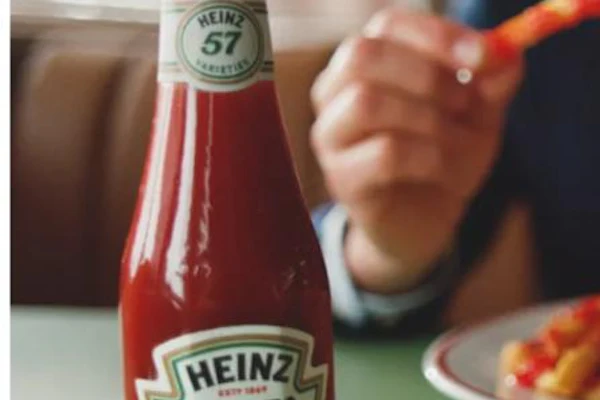
Return of the glass ketchup bottle to Heinz
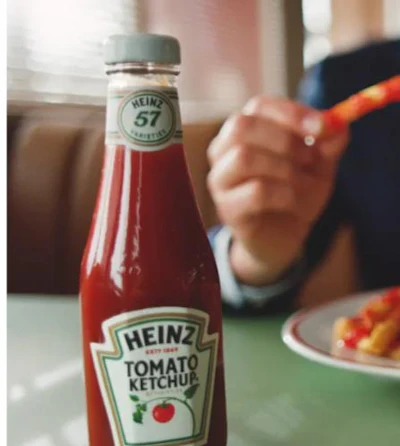
Heinz, headquartered in Pittsburgh, Pennsylvania, US, has reintroduced its glass ketchup bottle in the United States as part of its 157th anniversary campaign. The packaging initiative centers on the return of a glass container format that has been absent from the brand’s mainstream US offering for approximately a decade. Rather than introducing a new packaging structure, the company is leveraging a historic pack format that remains strongly associated with its brand identity. The glass bottle features the familiar Heinz shape and visual design elements that have been widely recognized by consumers over many decades. The initiative highlights the role of packaging as a distinctive brand asset, with the company positioning the glass bottle as a key component of consumer recognition and product recall. The bottles are being made available exclusively through Walmart stores. Glass packaging also differs materially from alternative container formats through its rigidity, transparency, weight and barrier properties. The reintroduction demonstrates how packaging can serve functions beyond product protection and distribution, including supporting consumer engagement and reinforcing established consumption rituals.
 The format decreases the number of individual bottles entering recycling or waste streams.ThePackHub
Tequila Tromba's large-format tequila bottle is designed to reduce glass use
Tequila Tromba, distributed in the United States through 375 Park Avenue Spirits and produced in Mexico, has introduced a 3.75-liter (126.8 fluid ounce) Blanco tequila bottle format intended for hospitality, foodservice and high-volume consumption settings. The “Extra Grande” bottle represents the brand’s largest packaging format to date and is equivalent to five standard 750-milliliter (25.4 fluid ounce) bottles. The packaging concept draws inspiration from the traditional Mexican botellón communal vessel format while adapting it for commercial bar service, restaurant operations and large-scale beverage preparation. The innovation focuses on consolidating product volume into a single oversized container to reduce packaging material intensity relative to multiple smaller bottles. According to the company, the larger format uses less glass per liter of beverage compared with standard bottle configurations, potentially lowering material consumption and reducing associated emissions linked to glass production and transportation. The format also decreases the number of individual bottles entering recycling or waste streams. Beyond material efficiency, the packaging has been designed for operational use in batch cocktail production, frozen beverage machines and infused spirit preparation where high-volume handling is required. Oversized beverage packaging formats are increasingly being explored in hospitality environments as producers assess opportunities to reduce secondary packaging, simplify inventory handling and improve packaging-to-product ratios.
 Q-Bic's 114 mm (4.5 in) cube arrangement doubles the polystyrene box's capacity from 90 to 180 trays of 125 g (4.4 oz) arils—raising product volume from 11.25 kg (24.8 lb) to 22.5 kg (49.6 lb).ThePackHub
Ecopak introduces cube-based packs to improve fresh produce logistics
Ecopak, based in India, has partnered with Norwegian packaging developer Q-Bic to introduce and trial a cube-based packaging format designed to improve logistics efficiency for fresh produce exports. The innovation focuses on addressing common challenges in produce packaging, including inefficient use of carton and pallet space, high transport costs, packaging material consumption, and cold-chain performance. The cube-based design aims to maximize carton fill and pallet utilization by creating a more uniform pack geometry that reduces unused space during shipping. Trials involving fresh pomegranate arils demonstrate the concept's potential. In the current format, a polystyrene box contains approximately 90 trays of 125 g (4.4 oz) arils, equating to 11.25 kg (24.8 lb) of product. Using Q-Bic’s 114 mm (4.5 in) cube arrangement, the same box can accommodate 180 trays, increasing product capacity to 22.5 kg (49.6 lb). The companies estimate that this increase in packing density could reduce air freight costs by approximately 25% when volume and weight factors are considered. The redesigned tray also reduces packaging weight from around 11 g to 6 g per tray, lowering packaging consumption from approximately 88 g per kilogram of arils to 48 g per kilogram. To maintain temperature performance in higher-density configurations, Ecopak has developed a cooling arrangement that positions gel ice packs at the center of the cube formation rather than in unused spaces. The companies are also evaluating the format for blueberries, cherries, grapes, fresh-cut fruit, coconut chunks, dry fruits, nuts, snack packs and food-service applications.
Learn more about ThePackHub's Innovation Zone here.