These innovations highlight new and different innovations that are hitting the market.
Learn more about ThePackHub's Innovation Zone here.
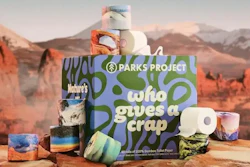
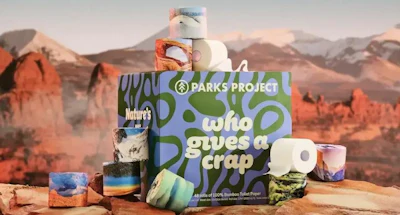
Who Gives A Crap refreshes paper wrappers with national park photography
Who Gives A Crap, headquartered in Melbourne, Australia, has renewed its packaging collaboration with Parks Project, based in Los Angeles, US, for a toilet paper collection featuring wrappers inspired by US national parks. The packaging consists of 12 individual wrapper designs, each using landscape photography depicting different national parks across the United States. Rather than altering the structural format of the toilet paper packaging, the development focuses on the graphic and communication role of the primary wrappers, turning individual rolls into a coordinated series of photographic designs. The approach enables multiple visual identities to be incorporated within a single product range while retaining the established individually wrapped format. Photography is used as the principal design element, with the wrappers presenting natural landscapes rather than conventional product-led graphics. This creates a collectable-style packaging system in which variation is achieved through print and artwork rather than changes to packaging shape, materials or dispensing functionality.
 The Oil, Dressing & Vinegar Set uses matching bottle formats for olive oil, dressing and balsamic vinegar, replacing the mixture of different bottle shapes and visual styles typically found across these condiment categories.ThePackHub
Foli coordinates bottle design to create unified condiment set
Foli, based in the UK, has developed a coordinated packaging concept that brings three liquid condiments together as a unified set designed for storage, dispensing and tabletop presentation. The Oil, Dressing & Vinegar Set uses matching bottle formats for olive oil, dressing and balsamic vinegar, replacing the mixture of different bottle shapes and visual styles typically found across these condiment categories with a consistent packaging architecture. Each container retains its role as an individual primary pack while sharing common proportions, styling and graphic elements that allow the three bottles to function visually as one collection. The approach is intended to make the original packaging suitable for remaining on a kitchen worktop or being placed directly on a dining table, rather than requiring the contents to be transferred into separate serving bottles. This gives the primary packaging an additional presentation function alongside its conventional roles of containing, protecting and dispensing the contents. Using a common design language across several related products can also simplify range recognition, while individual graphics differentiate the contents of each bottle.
 The packaging innovation centers on replacing conventional plastic cosmetic packaging with alternative materials, while designing the packs to be fully recyclable at the end of their use. ThePackHub
Aora México's plastic-free beauty packaging launches at Sephora
Aora México, a beauty brand based in Mexico City, Mexico, has introduced its packaging range through Sephora, with the retailer listing the company as its first fully plastic-free beauty brand. The packaging innovation centers on replacing conventional plastic cosmetic packaging with alternative materials, using tin, aluminum and wood across the product portfolio while designing the packs to be fully recyclable at the end of their use. The approach aims to eliminate plastic components from primary packaging while maintaining the functional requirements expected for prestige beauty products. The launch includes a range of cosmetics packaged in these materials, demonstrating that rigid metal and wood formats can be applied to products typically sold in plastic containers. Alongside the material selection, the company has incorporated Spanish-language packaging with bilingual digital content, adapting packaging communication for a broader consumer audience while maintaining compatibility with international retail distribution. The innovation therefore combines material substitution with packaging design and labeling considerations rather than focusing solely on the packaged products themselves. The company also states that its packaging strategy aligns with wider efforts to reduce reliance on single-use plastics within the beauty sector.
Learn more about ThePackHub's Innovation Zone here.