Packaging policy is no longer a niche concern for a handful of materials or product categories. A growing web of state laws now reaches nearly every material and format in the marketplace.
Material changes take longer than many of these rules allow. According to Laszlo Horvath, a professor at Virginia Tech, qualifying a new material can take 12 to 18 months. Meanwhile, many of the regulations driving those changes are tied up in court or still being revised.
 Laszlo Horvath, a professor at Virginia Tech.PMMI Media Group
“We have to think one to two years in advance to make these choices, and we don’t even know what’s going to happen then,” Horvath said.
Decisions to change packaging materials extend into the production line, sometimes forcing manufacturers to work with unfamiliar materials.
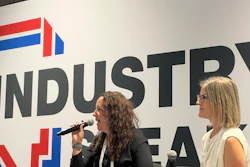
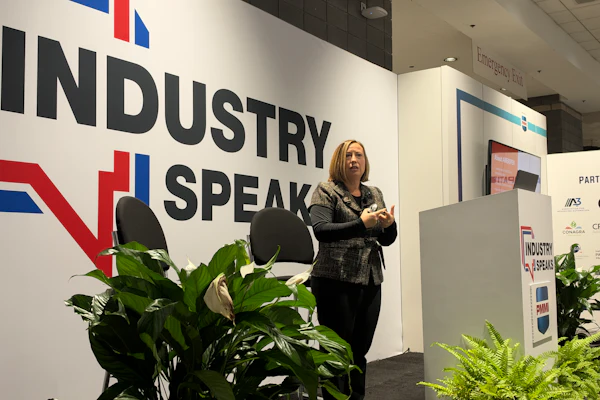
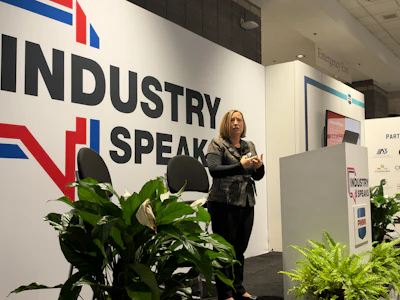
During sessions at PACK EXPO International 2026, speakers from AMERIPEN (American Institute for Packaging and the Environment) and Virginia Tech argued that packaging policy now touches every material, format, and end market. They said companies that bring legal, finance, sustainability, and engineering together early will be better positioned to adapt.
The current landscape
Lynn Dyer, president of AMERIPEN, outlined five policy areas that increasingly travel together.
The most established is extended producer responsibility (EPR). Seven states have laws on the books, and Rhode Island, Illinois, and Hawaii are studying programs, Dyer said. Several states are facing lawsuits over their laws, but none has halted a program. In August, a federal judge upheld Oregon’s EPR law against a constitutional challenge from the National Association of Wholesaler-Distributors.
“Just because there’s been a lawsuit doesn’t mean you can just stop what you’re doing,” she said. “Reality is you still have to comply with these laws.”
Labeling rules, such as California’s SB 343, which restricts when packaging can carry the chasing-arrows symbol or recyclability claims, and compostable labeling laws in Washington and Colorado, are another pressure point.
They create problems when packaging crosses state lines because requirements differ between states. A single package sold nationally may need to satisfy conflicting rules.
Recycled-content mandates set “rates and dates”—minimum percentages and deadlines—for materials such as plastic beverage containers and trash bags. Dyer said they often carry heavy reporting requirements. She also pointed to chemical restrictions on per- and polyfluoroalkyl substances (PFAS), bisphenols, and phthalates as an area likely to expand as the Make America Healthy Again movement scrutinizes packaging. The fifth area, source reduction, is largely limited to California, Dyer said. Those rules push companies to cut material, lightweight, or change formats.
Designing against a moving target
Uncertainty extends to cost, too. Horvath said even Oregon’s EPR fees are shifting. After the program reported an $80 million surplus, its fee schedule changed, and producers don’t yet know what 2028 fees will look like. Rules and fees also vary from state to state, and some programs are on hold pending litigation.
As a result, Horvath said, companies may replace a traditional material that has worked well “without knowing whether the regulation that drives it is even going to be implemented in the long term.”
But some relief exists. Oregon offers credits to producers that submit lifecycle assessments or demonstrate source reduction, Horvath said.
What changes on the line
For OEMs and their customers, Horvath said, the shift means running materials that have never been on the line before, and nearly every process window gets tighter.
He pointed to molded fiber, PFAS-free coatings, cellulose films, and mono-material structures as options, but each comes with trade-offs.
Molded fiber is replacing foam in food packaging, but its PFAS-free grease and water barriers must be qualified for uses such as hot soup. Cellulose films change performance with humidity. Polylactic acid (PLA) requires drying before processing, and bioplastics bring longer mold times and heat limits. Mono-material structures have a narrowed seal window.
“We already have to combine science, engineering, and design to be able to create working solutions,” Horvath said. “But now it just became much more complicated because now we have to deal with the regulations that are driving these performances.”
To prepare for the constantly evolving regulatory landscape, Dyer recommended cross-functional internal teams involving legal counsel, finance teams, sustainability teams, and engineering teams.
She also emphasized the need for executives to understand the legislation so they can help align the company’s strategic plan with its packaging decisions.
“You are increasingly going to be subject to these laws,” Dyer said. “Make sure you're putting together the right teams internally to be able to address this.”