Food and beverage companies are facing labeling challenges on two fronts at once. Federal rules are proposed but unresolved, while states pass their own requirements, some of which end up stalled in court.
For companies that supply ingredients to other brands, the exposure doubles. They have to track regulations that may never touch their own products but will affect their customers’.
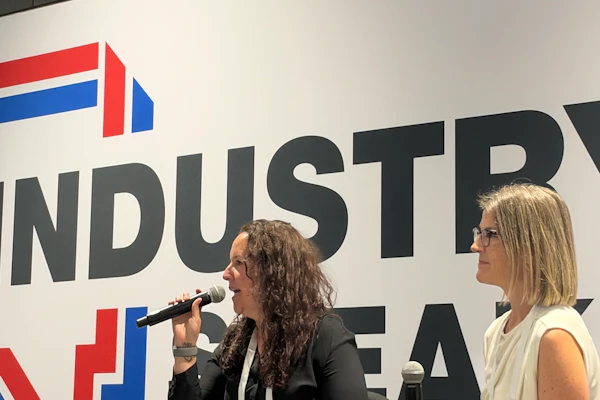
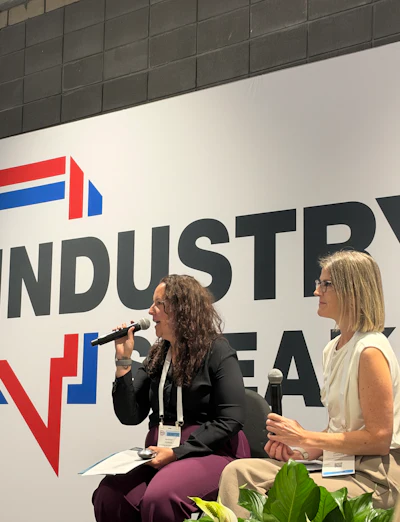
McCormick sits on both sides of that equation. It sells its own retail products and also develops flavors for other companies’ brands. During a session at PACK EXPO International, Marsha Forman, senior regulatory affairs manager at McCormick, explained how her team manages labeling risk for consumer products in the U.S. and Canada, starting with how it tracks regulatory change..
Forman said the company relies on its government affairs team, trade associations, and news sources. It also uses AI to read incoming regulatory newsletters and flag changes likely to affect the business or require action. An open comment period on a proposed rule, she said, is the kind of item the team needs to know about so it can understand the regulation and respond.
Deciding what to act on and what to watch is a cross-functional call, Forman said. Government affairs and trade associations provide insight into which proposals are likely to move forward.
Preparing without pulling the trigger
When it comes to federal versus state regulation, Forman said the company has already weighed proposed rules against its portfolio to start to prepare for potential impacts.
One example she pointed to was the FDA’s front-of-package nutrition labeling rule. The rule has been in proposed form for a long time, and Forman said signals from the administration and trade associations suggest the FDA may not finalize it on its stated timeline. The agency could also revise it enough to issue a new proposal, which would push the timeline out further.
She said McCormick is already working to support customers who are leaning in on sodium or sugar reductions in case the rule is finalized.
“We’re looking at it from all different perspectives, but we can't hit go 'cause we don't know what actually needs to go on the label or if it does at all,” Forman said.
State laws create a different problem. For a large company with national distribution, Forman said, tailoring products state by state isn’t an option.
“We can’t manage SKUs at a state level,” Forman said. “It has to be a national reformulation.”
Texas Senate Bill 25, a warning-label law, illustrates why. McCormick was preparing to reformulate when the law was amended to require warnings only for declared ingredients. It’s now under an injunction, Forman said, and Louisiana has a similar law.
“You can be in a good place in one state, and then you still have to figure out what to do for another,” she said.