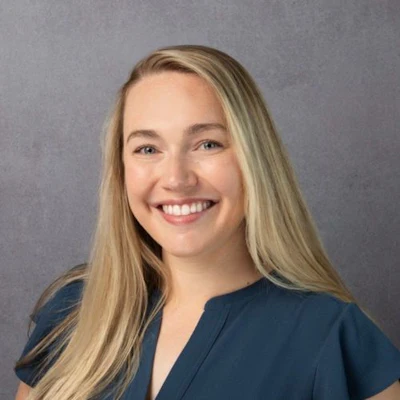
Charlotte Ashcraft, Senior Manager of Packaging & Graphics Development at Just Born, won PMMI's CPG NexGen Award for leading a five-year project that completely redesigned the Mike & Ike and Hot Tamales theater boxes and sparked a multimillion-dollar equipment investment, including three new production lines that optimized the entire packaging system from filling through palletizing.
- Charlotte Ashcraft redesigned Mike & Ike and Hot Tamales theater boxes, one of Just Born's highest-volume packaging formats, requiring a complete rethinking of the entire packaging system.
- The five-year project led to installation of three new production lines replacing aged equipment, representing a multimillion-dollar investment in automation and manufacturing capability.
- The redesign optimized multiple competing requirements: shelf presence, carton packing efficiency, pallet utilization, trailer cube and weight optimization, and high-speed production capability.
- The project involved cross-functional collaboration with PMI Kyoto (filling equipment), Aagard (case packers), and a new palletizer, covering the entire value chain from filling through palletizing.
- Ashcraft uses AI tools to navigate complex regulatory landscapes like Extended Producer Responsibility (EPR) across multiple states, improving research efficiency and regulatory compliance.
PMMI’s Inaugural CPG NexGen Award winners are delivering measurable advances in automation, productivity, sustainability, and packaging to transform how CPG products are made. One of these 10 rising innovators is Charlotte Ashcraft, Senior Manager, Packaging & Graphics Development at Just Born. She helped to redesign the Mike & Ike and Hot Tamales theater boxes and as such had to rethink the entire packaging system. I sat down with her to learn everything that that entailed.
Liz Cuneo: I feel like we all kind of know you at this point. But why don’t you give us the short spiel of your current role and how you ended up in packaging?
Charlotte Ashcraft: Sure. I actually did not start in packaging. I think, at least when I went to college, most students did not enter college saying, “I want to design packaging,” but found their way into it in a little bit more of a roundabout way. I absolutely fell into that category.
I was going to RIT for electrical engineering. I found my way into that through a high school program and was always really into cars, so I wanted to use my electrical engineering degree to go into the automotive industry. But I got to my third year of my degree, and let’s just say it was not going very well.
I’m a very visual, very hands-on person, and electrical engineering is very theoretical because you can’t see electricity. So, I utilized the career services office at my college, and they recommended packaging and set up a meeting with the packaging department head for me.
It was just like a light bulb went off. Everything needs a package. Every product that you interact with needs a package, and there’s this whole world of engineering, design, and manufacturing behind packaging that most consumers probably don’t think twice about.
I actually changed my major before I even left the department head’s office that day and never looked back.
I got my start here at Just Born when I was in college, as a packaging intern. Then a packaging engineering position opened up for me, which was about 10 years ago now. So I’ve been with Just Born for 10 years.
Today, I am the senior manager of packaging and graphic development, where I oversee packaging engineering, graphic design and prepress, and packaging sustainability.
Liz: Interesting. That’s kind of unusual, right, to oversee that many different sides or aspects of packaging? I feel like most people are focused on manufacturing, materials, or design, right?
Charlotte: I would agree, but I think there’s so much value in housing all of that under one functional area. It really helps us connect the dots and develop the best package that’s truly optimized, not just for manufacturing, but for the consumer experience, and really put our best foot forward.
Liz: That leads me to my next question: What do you enjoy most about your job? I keep hearing that it’s so different every day. Being in packaging, it’s not, “This is what you do every single day.” Everything’s changing, you’re touching so many different things, and I think that’s kind of a draw for people.
Charlotte: I completely agree with you, and that would probably be my answer exactly. I think my job is so different day to day because packaging has so much depth and breadth to it.
Packaging really sits at this very unique intersection of engineering, manufacturing, marketing, supply chain, sustainability, and the consumer experience. I love being able to connect the dots. I love creating things, and I don’t just mean designing the physical package itself, but also figuring out how we’re going to manufacture it, how we’re going to pack it, how we’re going to distribute it, and ultimately how it’s going to show up in the hands of the consumer.
A big part of that is my involvement in our packaging automation projects. It’s probably one of my favorite parts of my job. I’m not necessarily the person managing the capital investment or installing the equipment, but I help define what we need that equipment to accomplish from a packaging perspective.
I really enjoy thinking beyond the immediate project. I’ll include things like, “What innovations do we want to introduce five years from now, and what flexibility should we be building into the equipment today so that we’re not limiting ourselves in five to 10 years?”
I think, yes, it’s the hands-on part of it, but it’s so hands-on because there’s so much involved and so many functional areas that packaging touches. It’s so much fun having that much variety in my day, too.
Liz: That’s awesome. Let’s dive into the CPG Next Gen Award that PMMI awarded to, I believe, 10 recipients, and you are one of them. You won the award for leading a packaging redesign that helped drive a multimillion-dollar investment in new technology. That’s a little vague, so why don’t we dig into what the packaging redesign was, what sparked it, where it’s going now, and how it’s helped the company?
Charlotte: Absolutely. This was a really exciting project. I think from the time we decided we wanted to work on this project until the time we installed it was probably about five years. It was actually one of the most challenging and rewarding things that I’ve worked on so far in my career.
The project itself was a complete redesign of our Mike and Ike and Hot Tamales theater boxes, which is one of our highest-volume packaging formats. What made this project so interesting is that we weren’t just redesigning a carton; we were really rethinking the entire packaging system.
We started by evaluating opportunities to optimize the existing package and what our current equipment could accommodate. But as the project evolved, we realized that the packaging changes we wanted to make were going to push beyond the capabilities of our existing, honestly pretty aged, equipment.
That’s when it really opened up. Rather than redesigning a new package around all the constraints of our existing machinery, we had the opportunity to step back and ask, “If we could design this whole system from the ground up, what would the ideal solution look like?” That became a much bigger and more interesting engineering challenge.
I was tasked with optimizing the package across the entire value chain. We needed to maintain a strong shelf presence so that the package still had the visual impact that consumers expected at retail. We needed to optimize how the cartons packed into our corrugated cases, how those cases stacked on a 40-by-48 pallet, and ultimately how efficiently we could utilize our transportation capacity.
I had a few main goals for this project. One was to develop a configuration that would optimize both the cube and weight utilization of our trailers, rather than having one become a limiting factor before the other.
Then, of course, the package had to actually run on the equipment, which sounds so obvious, but it’s a really important distinction. You can design a carton that looks fantastic on paper and meets all the design criteria that your retailer needs, but that doesn’t necessarily mean that it can be filled, closed, and handled at really high production speeds.
We went through countless structural designs over the course of several years—so many design configurations. There were some designs that looked really promising from a logistics standpoint, but then we evaluated them from a manufacturing perspective, and they introduced challenges.
For example, one of the narrower carton configurations made it really difficult for us to get the Mike and Ike candy beans to settle properly during filling at high production speeds.
We kept balancing all of these competing requirements. We’d optimize one thing, and it would completely negate something else because of a different constraint.
Liz: You talked about aging equipment. Are you saying that you made adjustments to the equipment, or did you purchase new equipment for the project?
Charlotte: Originally, the scope was to utilize our existing equipment and retrofit all of it. We figured out through this entire investigation that that was just not possible.
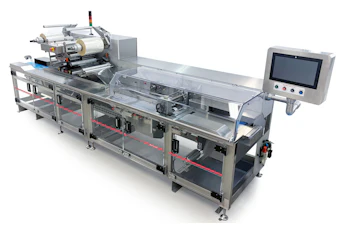
We decided to completely gut both of the production packaging lines. Through the project, we decided to actually install a third line.
We installed the third line first, and that got us over the whole learning curve of, “What’s the right design? Do we have the right training?” Then we were able to remove the two existing lines and replace those.
We have been operational with these three new theater box lines for almost three years now. This was a little while ago, but it was such a great cross-functional effort between our internal engineering and manufacturing team, the OEM that the equipment came from, and the packaging supplier. I think that’s why it was so successful—the collaboration between all of those stakeholders.
Liz: Are you able to share what type of equipment you purchased for the project? I’m assuming filling, cartoning—anything else?
Charlotte: Yes, and we had great partners. We worked with PMI Kyoto. They were the ones that supplied the carton filling equipment. We worked with Aagard; they were the ones that did the case packers. We also had to install a new palletizer. Front to end, everyone was collaborating with one another, and that made this such a successful project. It was everything from filling through palletizing.
Liz: Switching gears a little bit, talking about AI, because everyone’s talking about AI: How has AI changed your job, and what are you using it for in particular?
Charlotte: I think AI is really exciting, and I see a lot of potential in it for packaging. For me personally, one of the biggest benefits is the ability to accelerate research, analysis, and problem-solving.
It can be a really useful tool for organizing complex information, exploring different approaches, and identifying questions or considerations that you might not have even thought of.
One area where I’m using it pretty extensively is for extended producer responsibility—EPR, everyone’s second-favorite topic. EPR is so complex and rapidly changing in the regulatory landscape, especially when you’re trying to understand the requirements across all of these different states.
Then you have states like California with SB 54, where they’re introducing not just an eco-modulation model, but an entirely different source reduction model, and reuse, refill, etc.
There’s so much information to interpret, and tools like AI can help make the research and analysis process a lot more efficient.
It’s not replacing a legal or technical review for me, but I’ll upload a brand-new bill once it’s passed into AI and ask a question such as, “How does this differ from existing states like Colorado, California, Oregon, etc.?” Or, “Here’s my product, here’s what I make, here’s my packaging. How does this impact me?”
It’s helping me have better conversations and ask better questions when I do have a chance to meet with my internal team. It’s really increasing my level of comprehension.
Again, it’s so broad, and it helps make that a little bit more digestible when I don’t have to focus on the areas that really don’t have an impact on my business.
We have no metal packaging, for example, so I don’t have to pay attention to that. I should probably be aware of it, but I don’t have to focus on it. It really helps clear out some of that chatter and helps me focus on and interpret what’s most important for us.
Liz: Thinking about the industry as a whole—and that might be packaging, it might be candy for you—what do you see changing in the next five to 10 years?
Charlotte: I think the new consumer is such an interesting area to focus on. You have this huge impact in this era of social media. I think this even started in the era of YouTube, before TikTok and Instagram, but you have consumers who are filming their unboxing experience and talking you through it.
I have the opportunity now to pull up TikTok and watch someone interact with a package of Mike and Ike that I designed. I might see that they’re opening it differently than how I designed it. It’s so fascinating to watch that.
In the candy industry as a whole, you have a lot more direct access and direct-to-consumer opportunities. It creates this whole opportunity for exclusive packages, exclusive products, and limited-edition runs that could be sold only in that stream.
One example is an Instagram shop or a TikTok shop. It allows you to really pressure-test brand-new innovations, not just in the packaging, but also in the candy and your product formulation.
You can receive that direct consumer feedback and understand if there’s a lot of buzz around it in the comments section, if other consumers are interested in trying that product or that package.
I think this whole era of social media gives you so much more access to your direct consumers. Being open to that feedback can only help us get smarter and better and put out a better-quality product and package as well.