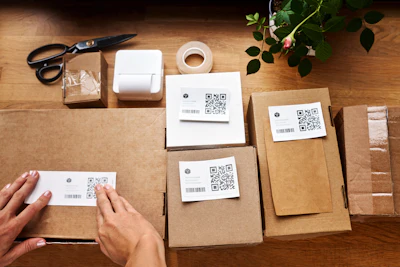
The next packaging redesign many brands face may start with the barcode. The Sunrise 2027 initiative from GS1 US aims for retailers to scan 2D barcodes at checkout by the end of 2027, so many packages will need a new code.
State disclosure laws are also pushing product information behind QR codes on packages that are already crowded. Clay Ryan, head of worldwide business development at Amazon Transparency said, many packages may carry three to five codes: a UPC for retail scanning, a QR code for marketing, an authentication code, and a batch or lot code.
These pressures could turn a routine barcode update into a competitive advantage.
During sessions at PACK EXPO International 2026, speakers from GS1 US, Amazon Transparency, and the Consumer Brands Association argued that this redesign is a chance to replace the cluster of codes on most packages with one code that handles checkout, regulatory disclosure, authentication, and consumer content.
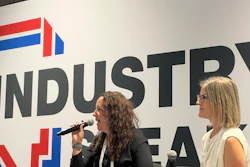
What the standard requires From left: Andrew Morehead, director of global standards at GS1 US and Steven Keddie, senior director, global solution provider ecosystem at GS1 Global Office. PMMI Media Group
Sunrise 2027 puts the Global Trade Item Number (GTIN) encoded in today’s linear barcode into a standardized 2D format. According to Andrew Morehead, director of global standards at GS1 US, a code that rings up at checkout is “the bare minimum.”
Brands can choose from three GS1-conformant 2D barcodes. A QR code with GS1 Digital Link scans at the register and on consumers’ phones. It sends shoppers to whatever experience the brand chooses, while downstream partners can pull additional data from the same code.
However, Morehead cautioned brands against choosing this format.
“That is a barcode that is really not supposed to be spoken about,” Morehead said. “Lord Voldemort, pretty much. We created it, but it's not gonna get used.”
 There are three 2D barcodes that are GS1 compliant.GS1 US
A GS1 DataMatrix stores product information with GS1’s element string format, which tags each piece of data, such as a lot number or expiration date, with a numeric prefix. This is the only GS1 2D barcode for regulated healthcare.
A DataMatrix with GS1 Digital Link writes the same data as a web address, but most native phone cameras won’t open it. This code also takes up less space than a QR code.
Compliance moves behind the code Rishi Gangaji, senior director at the Consumer Brands Association and SmartLabel lead.PMMI Media Group
For many brands, the most immediate use for that code is regulatory. Rishi Gangaji, senior director at the Consumer Brands Association and SmartLabel lead, said state-by-state disclosure requirements have driven much of the change in how CPG companies use QR codes over the past 18 to 24 months.
He pointed to two examples. Under the federal bioengineered food disclosure standard, brands can currently meet the requirement through a QR code instead of on-pack text. California’s baby food law takes a similar approach. Baby food sold in the state must carry a QR code or other machine-readable code that links to the manufacturer’s test results for heavy metals.
SmartLabel organizes that information into templates for each product category. A food page opens with the product image, regulatory disclosures such as the bioengineered symbol, and third-party certifications.
Gangaji said brands can also embed SmartLabel data on their e-commerce product pages, so a change to a formulation or package size is updated in one place.
“This is all seamless, and then that SmartLabel page serves as that single source of truth for consumers and for the company,” Gangaji said.
The same scan can also serve as a method for consumer education. SmartLabel features an ingredients tab in addition to the standard Nutrition Facts label. This tab defines ingredients and provides information on sourcing and growing. According to Gangaji, this serves as a method for direct-to-consumer communication in the age of rising consumer concern over unpronounceable ingredients and artificial colors.
Similarly, an allergens tab allows brands to provide detailed allergy information, extending beyond “may contain” statements.
“Something that’s manufactured in the same facility versus something that’s manufactured on the same line, those are different levels of risk for someone who has an allergy,” Gangaji said. “You’re able to share more information. You can think of SmartLabel as unlimited label real estate.”
Gangaji emphasized that brands are in control when it comes to implementing SmartLabel. CPGs take initiative to adopt the system, meaning consumers are getting first-party, reliable product data.
"In an age where there's so much AI...it's important that information is coming from credible and reliable sources," Gangaji said."
Weighing serialization now Clay Ryan, head of worldwide business development at Amazon Transparency.PMMI Media Group
While Sunrise 2027 doesn’t require serialization, Ryan said brands should consider adding it during the same refresh. Adding unique serial numbers now, he said, can help brands avoid a second costly packaging change later, when rising demand could create bottlenecks.
Transparency, Amazon’s product authentication service, assigns a unique code to each enrolled unit and scans every enrolled unit moving through Amazon fulfillment centers. Units with missing or invalid codes are pulled before they reach customers.
“We catch the counterfeits before they cause damage, not after,” Ryan said. “We prevent those defects from being passed down the line to customers in the first place.”
Serialization can also support traceability. A brand that tracks product by unit, batch, or lot can limit a recall to the affected units. Ryan said Amazon is also piloting a data-sharing program to flag stolen goods: units shipped to other retailers that turn up for resale with no point-of-sale record.
Sunrise 2027 only requires a 2D code that rings up at checkout, but these codes are able to carry more information. Brands that choose a format early, connect it to one source of product data, and consider serialization during this refresh can avoid paying for a second redesign later. Disclosure rules are still changing, so brands that treat the barcode as a planning decision rather than a print change will be better able to adapt.