These innovations demonstrate the packaging industry's commitment to enhancing consumer experience while addressing inclusivity concerns.
Learn more about ThePackHub's Innovation Zone here.
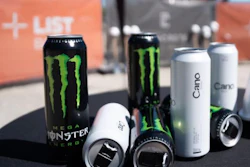
Monster Energy's resealable can lid keeps drinks contained after opening
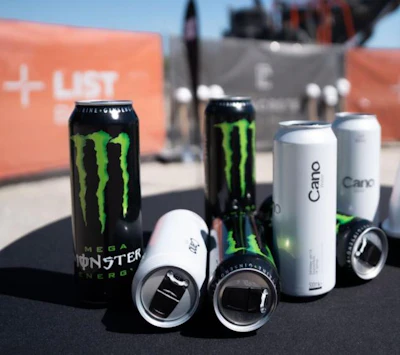
Monster Energy has introduced beverage cans fitted with Xolution’s XO Lid in Poland, bringing a resealable format to its energy drink packaging. Xolution, headquartered in Dachau, Germany, has developed the closure to overcome one of the main limitations of a conventional stay-on-tab beverage can: once opened, it cannot normally be closed again. On the Monster Energy can, consumers lift the pull tab and slide the mouthpiece to access the drink. If they do not want to finish the beverage immediately, the opening can be covered again by moving the slider back and pushing down the pull tab. An internal sealing disc returns to its closed position, creating a leak-resistant seal designed to help retain carbonation and protect the remaining drink from spills, dirt and insects. This makes the Monster Energy can more suitable for drinking over a longer period or carrying after it has been opened. The closure also includes a tamper-evident PP band that is visible on an unopened can and breaks during the first opening, while remaining attached to the lid. Importantly for high-volume beverage production, the XO Lid is based on standard can shell formats and is designed to require minimal changes to existing production and filling equipment. This allows Monster Energy to retain the familiar aluminum can format while adding a functionality more commonly associated with bottles.

Karma Water introduces push cap that stores ingredients until consumption
Karma Water, based in Pittsford, New York, US, has developed a patented dispensing closure called the Karma PushCap, designed to keep powdered ingredients physically separated from water until the point of consumption. Unlike a conventional beverage closure that primarily provides sealing and opening functions, the PushCap incorporates a dedicated internal chamber that stores the dry ingredients above the liquid. This chamber uses a hermetic seal to create an airtight environment, protecting its contents throughout storage and distribution and preventing them from contacting the water prematurely. The packaging has been developed in response to the stability challenges associated with certain vitamins, nutrients and cultures, which can deteriorate when stored for extended periods in a premixed liquid. Activation is controlled by the consumer through a simple sequence. A protective external seal is first peeled away before the upper section of the cap is pushed downwards. Applying pressure activates the dispensing mechanism and releases the powdered contents of the chamber directly into the water below. The package can then be shaken to disperse and mix the ingredients immediately before consumption. This means the closure functions simultaneously as a bottle seal, separate ingredient reservoir and dispensing mechanism. The design also removes the need for consumers to open a separate sachet or container and manually add its contents to the bottle.

Village Farms International launches easy-pour pouch for controlled dispensing for ground cannabis
Village Farms International, based in Delta, British Columbia, Canada, has introduced a new flexible pouch format for its Super Toast range that incorporates a dedicated easy-pour opening for controlled dispensing of ground material. The packaging is being used for 0.25 oz (7 g) formats and is intended to reduce the need for users to reach inside a conventional pouch when dispensing its contents. The design combines the pour opening with a resealable, color-coded cap, allowing the package to be closed between uses while using cap color as a means of differentiating variants. A small transparent window is also integrated into the pouch, providing visibility of the quantity of material remaining without requiring the package to be opened. The combination of a flexible pouch, rigid dispensing closure and viewing window represents a departure from more conventional resealable cannabis pouches, with the dispensing feature designed to improve portion control and reduce spillage during use. Canadian cannabis packaging operates within specific regulatory requirements, including requirements for plain presentation, child resistance, security features, and mandatory labeling.
Learn more about ThePackHub's Innovation Zone here.