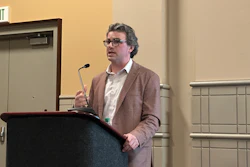
At SPC Advance 2026, Linnea Whitney Skierski, deputy director of CalRecycle’s Office of Policy Development and Analysis, joined a panel on the practical implications of meeting California SB 54’s source-reduction requirements. Since then, Circular Action Alliance submitted its revised program plan to CalRecycle on Oct. 13, and the agency is now reviewing it, with public comments open through Nov. 13. Packaging World followed up with Whitney Skierski on producer participation, accountability, and how individual source-reduction efforts will factor into the program.
Packaging World:
At SPC Advance, you emphasized that SB 54’s source-reduction targets are collective and that individual producers will not each be held to a specific percentage reduction. What, then, does CalRecycle expect an individual producer to demonstrate to show that it is doing its part?
Linnea Whitney Skierski:
 Linnea Whitney Skierski, deputy director of policy development and analysis, CalRecycleCalRecycle
Individual source-reduction plans compel producers to select approaches that are meaningful and practical for their business rather than one-size-fits-all and act as essential inputs to inform the PRO’s collective strategy for meeting the source-reduction requirements.
If the PRO does not achieve the 10% source-reduction target beginning in 2027, where does accountability fall?
The PRO, not individual producers, is responsible for ensuring collective source-reduction targets are met. The PRO must include a mechanism for meeting the source reduction targets in the PRO plan.
CalRecycle is currently reviewing the PRO plan, which details how the PRO will work with member producers to collectively achieve the law’s source reduction requirements.
At the show, you emphasized the importance of active producer participation, but individual source-reduction plans go to CAA, and CalRecycle receives aggregated or anonymized information. What does CalRecycle consider meaningful participation by an individual producer, and how will the agency know whether producers are actively contributing to the collective source-reduction goals?
Meaningful participation includes enrolling and participating in the program and reporting data. Producers must join the PRO, get approval from the department to be an independent producer, or obtain a small producer exemption.
They must report annual data to the PRO for the previous calendar year, along with underlying data methodologies to ensure consistency and transparency. Strong engagement from producers will be required to achieve these ambitious statewide goals.
How will SB 54 recognize source-reduction work producers have undertaken since the 2023 baseline year? Could companies that made significant packaging changes in 2024, 2025, or 2026 receive credit toward the collective targets?
Individual actions taken after 2023 to reduce single-use plastic that are registered in official annual reports count toward meeting the PRO’s collective targets.
A producer might reduce plastic by shifting to another material, but that change could increase package weight, energy use, food waste, or other environmental impacts. How does CalRecycle expect producers to evaluate those tradeoffs when developing source-reduction strategies?
As highlighted in the Needs Assessment, packaging design changes should support cost-effective implementation of the law, improve recyclability, and reduce system burdens—not shift impacts from plastic to another problem. PW