California's SB 54 requires all packaging sold in the state to be recyclable, compostable, or reusable by 2032, with plastic reduction targets of 25% and recycling rates of 65% per plastic category. Brand owners must begin compliance planning in 2026 when reporting systems mature and packaging portfolios are evaluated against state standards.
- Universal recyclability standard: By 2032, 100% of packaging sold in California must be recyclable, compostable, or reusable regardless of manufacturing location.
- Plastic reduction target: Market-wide 25% plastic reduction by 2032, with no more than 8% coming from recycled content alone.
- Category-specific recycling rates: 65% recycling rate required for each individual plastic category, increasing pressure on difficult formats like film and flexibles.
- 2026 compliance acceleration: Brand owners must submit source reduction plans, assess packaging portfolios, and align cross-functional teams for January 1, 2027 implementation.
- Enforcement penalties: Noncompliance carries fines up to $50,000 per day, with regulatory scrutiny expected to increase on data accuracy and reporting.
By 2032, every package sold into California needs to be be recyclable, compostable, or reusable. Plastic packaging placed on the market is asked to decline by 25%, and plastic recycling rates have to reach (an extremely ambitious/optimistic) 65%. By the way, that's not across plastics broadly, but for each individual plastic category defined by the state.
For brand owners selling into the state, it's looking like 2026 will be the year when reporting systems mature, source-reduction plans are formalized, and packaging portfolios are evaluated against compliance standards.
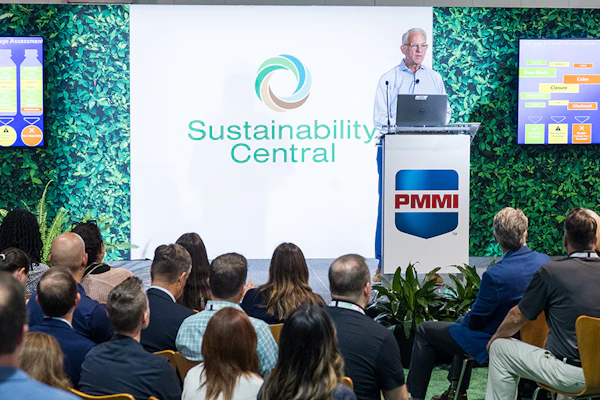
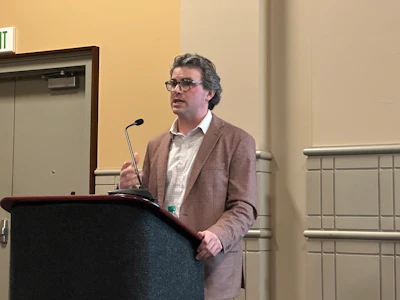
John Hite of The Recycling Partnership outlined the current landscape and its implications during a Packaging World reader luncheon at PACK EXPO East. Across seven states, Extended Producer Responsibility (EPR) for packaging has moved into active implementation. Hite was sure to convey to the 50-or-so brand owner PACK EXPO East attendees that California’s law is the most expansive of the seven states and carries the earliest and most prescriptive design mandates. As EPR programs move into implementation, producers must determine whether they are obligated, register with the approved PRO, gather and report packaging data, and pay fees. In states like Oregon and Colorado, those steps are already underway.The Recycling Partnership
How SB 54 Requirements Impact National/Global Brands
California’s law includes three structural elements that affect packaging decisions:
1. Universal recyclability standard (2032).
“All packaging must be a hundred percent recyclable, compostable or reusable,” Hite said.
That requirement applies to packaging sold into California, regardless of where it is manufactured. National brands can't assume California-only SKUs will absorb the impact without broader portfolio implications.
2. Plastic source reduction (25% by 2032).
“It’s not an individual company mandate,” Hite said. “It’s a market source reduction.”
The 25% reduction is calculated across all covered producers collectively, with the Producer Responsibility Organization (PRO) responsible for allocating the pathway to compliance. Still, each producer needs to submit an individual source reduction plan.
Notably, recycled content alone can't account for the entirety of the target.
“No more than 8% of that source reduction can come from increased recycled content,” Hite said.
That limitation forces brands to look beyond PCR toward elimination, right-sizing, refill systems, concentration strategies, and material substitution.
3. Plastic recycling rate targets.
“It’s not just a 65% recycling rate for plastic. It’s a 65% recycling rate for each individual category of plastic,” Hite said.
That category-specific target increases pressure on difficult formats such as film and flexibles, pigmented containers, and certain multilayer structures. California’s SB 54 requires a 25% reduction in plastic packaging by 2032, but no more than 8% of that reduction can come from increased recycled content. This pushes brands toward elimination, right-sizing, reuse, and material shifts rather than relying solely on PCR.The Recycling Partnership
2026 is Where the Rubber Meets the Road
California’s implementation date is January 1, 2027. But 2026 is when the compliance mechanics accelerate toward compliance.
Across EPR states, producers have to register with the approved PRO, gather packaging data, report that data, and pay fees tied to material management costs.
“These are already sort of mid-flow in a couple of the states,” Hite said, referring to reporting and fee collection underway in Oregon and Colorado.
For California, the 2026 focus includes:
- Submission and refinement of source reduction plans.
- Packaging portfolio assessment against recyclability definitions.
- Analysis of eco-modulation fee exposure.
- Internal alignment between packaging engineering, sustainability, finance, and procurement.
“You’re really having a round table that includes procurement, includes packaging engineers, includes legal… finance,” Hite said.
For many organizations, that cross-functional alignment is still developing.
Eco-Modulation: The Design Signal Embedded in Fees
EPR fees begin with a base rate determined by the cost to manage each material in the recycling system. California and other states layer eco-modulation adjustments on top of that base rate.
“Base fees for EPR generally are set based on the costs to manage certain materials in the system,” Hite said.
Packaging features that interfere with sorting or recyclability can increase fees. Design improvements can reduce them.
“If a brand has a label that easily comes off, it’s clear plastic, clear PET, no pigment… that producer might wind up getting the X base fee minus 5%,” Hite said.
Pigments, label sleeves, adhesive choices, resin clarity, and PCR content can all influence fee outcomes depending on the state’s eco-modulation framework.
For brand owners evaluating packaging redesign projects in 2026, performance, cost, and marketing impact now sit alongside fee exposure and recyclability classification under California’s definitions.
Responsible End Markets and Traceability
California and other EPR states require PROs to track materials beyond the MRF to verified end markets.
“A lot of US EPR laws have this concept of a responsible end market baked into them,” Hite said. “It’s essentially a requirement that the producer responsibility organization be tracking the flow of materials after they leave a MRF.”
That requirement grew from public scrutiny over material exports and end-market transparency. For producers, it means the recycling claim environment is becoming more documented and auditable.
What Brand Owners Should Be Doing Now
With 2032 targets approaching and 2027 implementation in California, brands are now working within tight compliance timelines. Brand owners selling into California should be:
Evaluating recyclability classifications.
Which SKUs will meet California’s standard as written? Which require redesign?
Mapping plastic reduction pathways.
Where can elimination, concentration, or refill strategies contribute? What changes require capital planning?
Reviewing data systems.
Is packaging data accurate by weight and material category across states? Can it withstand regulatory scrutiny?
Modeling fee exposure.
How will eco-modulation adjustments affect total cost of compliance?
Aligning internal teams.
Packaging engineering decisions will now influence statutory compliance.
“There are some pretty tough penalties,” Hite said, referring to California’s enforcement provisions, which allow fines of up to $50,000 per day for noncompliance. Early implementation has focused on participation and reporting, but scrutiny is expected to increase.
“I think the detail orientation around data accuracy is probably going to ramp up over the next couple of years,” he said. Seven states have passed packaging EPR laws, with additional legislative activity underway in 2026. Two other states should be represented as green: Wisconsin has introduced a bill this session, and Michigan is engaged in active discussions, signaling continued expansion beyond the current seven-state map.The Recycling Partnership
Beyond California
Seven states now have packaging EPR laws. New York remains a legislative watch. Washington is considering updates to recycled content requirements and a potential deposit return system that could shift beverage containers out of curbside programs.
But for national brands, California’s timeline often dictates strategy.
Packaging design cycles, capital investment planning, supplier contracts, and portfolio harmonization decisions typically span multiple years. With 2032 being a date now written in stone, those decisions now fall within active packaging design planning cycles, which typically have a 3- to 5-year cadence for most brands.
SB 54 doesn't operate in isolation. It sits inside a growing compliance framework that connects packaging design, reporting obligations, fee structures, and end-market verification.