California's SB 54 packaging law requires CPGs to reduce single-use plastic by 25% by 2032, ensure 100% of packaging is recyclable or compostable, and achieve 65% recycling rates, with compliance measured through detailed material reporting, source reduction plans, recyclability assessments, and eco-modulation fees that adjust based on packaging performance.
- Reporting expanded to 95 covered material categories (up from roughly 60 in other states), requiring producers to track individual package components separately
- 2023 baseline drives compliance: source reduction is measured against 2023 packaging levels, with tiered bonuses for holding or reducing plastic tonnage
- Recyclability requires end-to-end viability: materials must have collection programs serving 60% of California's population and MRF access at that same level to qualify
- Unique Challenge Exemptions (UCEs) provide extended timelines for difficult materials like film and flexible plastic to meet 65% recycling rates beyond the standard schedule
- Eco-modulation fees adjust based on packaging attributes, with automatic reductions for high-recycling materials and potential increases for non-recyclable or disruptive packaging elements like PFAS
California’s packaging EPR law is entering a phase where CPGs will need to connect their packaging decisions to detailed material data, source reduction progress, recyclability, and fees. Producers have already begun supplying much of the information that will feed the system, but several important pieces of the program are still being developed.
For companies selling packaged products in California, understanding those mechanics will be critical. SB 54 requires a 25% reduction in single-use plastic packaging and plastic food serviceware by 2032 compared with the 2023 baseline, while also requiring 100% of covered packaging to be recyclable or compostable and 65% of single-use plastic packaging and food serviceware to be recycled.
How producers will work toward those goals was the focus of a fireside chat at SPC Advance 2026 between Lucy Pierce, senior project manager with GreenBlue, and Shane Buckingham, chief of staff for Circular Action Alliance. CAA is the producer responsibility organization (PRO) charged with developing and administering the industry program under CalRecycle oversight. During the discussion, Buckingham outlined how CAA is approaching reporting, source reduction, material-specific compliance pathways, and eco-modulation as it prepares its program plan for CalRecycle.
Reporting will get much more granular
One of the first changes producers are encountering is the level of packaging detail California requires. Buckingham said California reporting expands to 95 covered material categories, or CMCs, compared with roughly 60 categories in Oregon and Colorado. Producers also have to report the number and weight of individual package components and distinguish categories based on whether they contain plastic.
In practical terms, a package can no longer necessarily be treated as one reporting unit. A container, closure, liner, coating, label, or other component may need to be identified separately depending on its construction and how it falls within the covered material categories.
CAA is already seeing variability in the information producers have supplied, which Buckingham said is expected as companies become familiar with the requirements. Producers have submitted supply reports, annual source reduction reports, and individual source reduction plans. Annual supply and source reduction reporting will continue.
CAA is also developing a process that would allow producers to update their individual source reduction plans rather than treating the original submission as fixed. The same flexibility is being considered for 2023 baseline data, particularly because some companies had difficulty reconstructing historical information at the component level.
That makes data quality an ongoing issue rather than a task that ended with the first filing. A producer that later finds an error in its 2023 component weights, for example, could eventually have a way to correct the baseline against which future source reduction is measured.
The 2023 baseline drives source reduction
The 2023 baseline matters because future source reduction performance will be measured against it. Previous lightweighting still has value, but the law’s measurement system creates a distinction between packaging reductions made before 2023 and reductions made against the 2023 baseline.
Buckingham noted that SB 54 provides an early reduction credit covering reductions made from 2013 through 2022. Under CAA’s proposed approach, however, progress toward the source reduction targets is still measured from 2023.
CAA’s proposed incentive mechanism recognizes different levels of progress. A producer that reduces packaging enough to hold its plastic tonnage at the 2023 level could qualify for a Tier 1 bonus. Dropping below the 2023 level could earn a larger Tier 2 bonus.
“The reason that we did those different tiers is we recognize if we just put out the bonus and said you have to get below 2023, that’s very difficult for producers,” Buckingham said.
That distinction could be significant for growing brands. A company might reduce the amount of plastic used per package yet still put more total plastic into the California market because it sells more product. Under the proposed structure described by Buckingham, holding total plastic at the 2023 level could still receive some recognition even if the producer has not yet moved below the baseline.
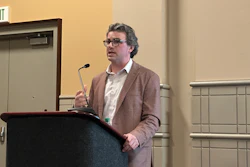
 From l. to r., Shane Buckingham, chief of staff at Circular Action Alliance, and Lucy Pierce, senior project manager at GreenBlue, discuss how California’s SB 54 packaging EPR program is moving from planning into implementation.Packaging World
Post-consumer recycled content is another route available to producers. Buckingham explained that the alternative compliance formula under SB 54 allows PCR to account for eight percentage points within the law’s staged source reduction targets. CAA is proposing bonuses that would vary by resin type to encourage PCR use.
Reuse and refill would also receive incentives. CAA plans to combine producer bonuses with direct investment in systems such as schools, stadiums, and commercial locations that may need infrastructure changes before reusable packaging can operate at scale.
The bonuses would be financed in part through a malus, essentially a fee surcharge, on virgin plastic. The values producers have seen so far remain good-faith, non-binding estimates and can change as CalRecycle reviews the program plan.
Recyclability depends on more than package design
SB 54’s recyclability requirements present a different type of challenge. A package cannot meet the state’s recyclability requirements simply because its materials are technically capable of being recycled.
CAA developed its material strategy by looking first at whether there is a viable end market for a material, then working backward through reclamation, MRF sorting, and collection. Buckingham said the intent is to determine whether material can move through the entire system at the quality needed by an end market.
Access is part of that equation. Buckingham explained that a material needs collection programs representing 60% of the population and MRFs servicing 60% of those programs to reach the recyclability designation described during the session. If a material is not deemed recyclable, local jurisdictions do not have to place it on their collection lists.
“The only way we’re ever going to get to that point is if we can say there’s a demand pull, the material can get through the system,” he said.
For CPGs, that connects package design with conditions well beyond the filling line. A technically recyclable structure may still face problems if communities do not collect it, MRFs cannot reliably sort it, reclaimers cannot process it at sufficient quality, or buyers for the resulting material are limited.
CAA expects its investments to address those gaps from several directions. Its program plan includes collection, processing, end-market development, education, and packaging design as parts of the broader material strategy.
Some difficult materials could get a longer runway
The difficulty of meeting recycling-rate requirements varies considerably by material. Film and flexible plastic are an obvious example, since existing collection and processing systems are far less developed than those for materials with established curbside recycling streams.
SB 54 provides a mechanism known as a unique challenge exemption, or UCE, for covered material categories facing barriers that prevent them from meeting recycling-rate requirements within the standard timeframe. CAA plans to submit individual UCE applications to CalRecycle describing proposed investments, schedules, and measures of progress.
Buckingham used film and flexible packaging to explain how the mechanism could work. Instead of expecting a category with a recycling rate in the single digits to reach 65% within five years, an approved pathway might provide additional time. His example of extending five years to 10 years described the concept and was not presented as an approved schedule.
CAA has begun work on an application for cartons and is also concentrating on film and flexible plastic, which Buckingham said will require considerable investment and time.
A UCE does not remove the material from SB 54. Producers would still report the material and pay the associated fees. The exemption addresses the recycling-rate requirement and potential penalties while the material follows an approved compliance pathway.
De minimis exclusions address very small components
A separate provision could matter to CPGs dealing with small amounts of plastic that are necessary to the function of an otherwise non-plastic package. Buckingham used a plastic liner inside a metal can and a coating on a glass bottle as examples.
If CalRecycle determines that such a component qualifies as de minimis, it would no longer be considered covered material. That is fundamentally different from a unique challenge exemption, where the material remains covered by SB 54.
The reporting effect could be significant. Buckingham explained that if a coating on a glass bottle were approved as de minimis, a producer could report the package as glass without a plastic component rather than glass with plastic.
CalRecycle has authority to make those determinations, and CAA can submit requests for consideration. Buckingham cautioned that assembling the information needed for those applications is intensive and said decisions on exclusions proposed in the plan could extend well into the following year.
Eco-modulation will connect package choices with fees
SB 54 will also use eco-modulation to adjust what producers pay based on packaging attributes. In basic terms, the system can increase or decrease a producer’s fees depending on how a package performs against specified criteria.
CAA is proposing both passive and active adjustments. Passive factors would be applied automatically. A covered material category with a high recycling rate, for example, could receive an automatic fee reduction. A category deemed non-recyclable could receive an automatic fee increase.
Active factors require action and documentation from the producer. Buckingham pointed to PCR and reuse or refill bonuses used in other CAA programs as examples. A producer applies, provides supporting documentation or certification, and receives the fee adjustment if the application is approved.
CAA is also considering active fee increases tied to disruptive packaging elements. Buckingham cited PFAS as an example of a substance that could require producers to report and attest to whether it is present in their packaging.
Not every eco-modulation criterion will arrive at once. CAA has prioritized source reduction and recyclability for the earlier fee structure while doing additional research on renewable content and toxics. Buckingham said producers need advance notice because packaging changes can take a year or longer, while reporting and the resulting fee calculations introduce additional lag time.
The program plan can still change
Many of these details remain proposals rather than final program requirements. Buckingham said CAA plans to submit its revised program plan to CalRecycle on Oct. 13 after reviewing more than 2,500 comments received during the public consultation period. CalRecycle will then review whether the plan meets the requirements of the statute and regulations and can place conditions on approval.
That review means estimated fees, incentive values, proposed exclusions, and compliance pathways could still change. One area Buckingham emphasized at the end of the session was the ability to create a longer compliance path for materials that cannot realistically meet the recycling-rate targets on the standard schedule.
“When producers were looking at those targets last year, they said it’s impossible," Buckingham said. "We found a way to use those UCEs. That’s an important element to give us more runway.” PW