Leaders from Mars, Nestlé, Just Born Quality Confections, Kenvue, Campbell's, General Mills, and more shared their insights and lastest innovations in recycling on Tuesday at the Packaging Recycling Summit in Rosemont, Ill. Here's what they had to say:
Why USFFI is helping subsidize flexible film recycling
The recycling of flexible plastic remains a difficult and costly challenge for the whole recycling value chain. That's due to the material's difficulty to process within traditional MRF infrastructures, their frequent multi-material or nature, the cleanliness of the stream, and the lack of suitable end markets to make their recycling profitable, among other drawbacks.
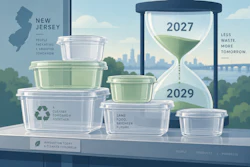
Still, speakers at the Packaging Recycling Summit emphasized that developing workable systems for these materials is becoming increasingly important as more states adopt EPR regulations to meet plastics recycling goals and achieve circularity of entire portfolios of packaging materials--including flexibles.
According to Patrick Keenan, sustainable packaging R&D at General Mills, (L to R) John Nygaard of Glenroy, Inc., Raj Bagaria of GDB Circular, Patrick Keenan of General Mills, and Teo Medellin of Procter & GamblePackaging World
Medellin noted that film accounts for 40% to 50% of U.S. packaging today, underscoring the need to scale recycling solutions for flexible materials if circularity is indeed a goal.
USFFI is working to support that growth by subsidizing film collection from MRFs for recycling, adding to broader investment in flexible packaging recycling infrastructure. Over the past six months, the nonprofit membership organization has helped collect about 1.5 million lbs of flexible film from California’s waste stream, and may have contributed to increasing the state’s overall recycling rate by a percentage point. That helps achieve ambitious recycling goals under California's SB 54, and gives the material value that makes them attractive to end markets that could profitably use it.
“The goal is that this would then start building out those end markets,” Keenan said. “Then, they would be able to make something [PCR material] that they could sell at a more reasonable price, identify more customers, and eventually the system stabilizes to a point where you no longer need to subsidize it.”
Paperization as a value driver for consumers
According to speakers from Nestlé, Mars, and Google at an afternoon panel at the Summit, moving to paper packaging can meaningfully strengthen a company's recyclability profile and how consumers view its sustainability practice. The process isn't easy, but it's achievable with the right collaboration and attitude, they added. (L to R) Brent Lindberg of Fuseneo, Kerri Clark of Mars Inc., Joey Giacomini of Google, and Eric Bell of NestléPackaging World
For Mars, switching Kind bars to paper was an easy sell with consumers, said Kerri Clark, VP of packaging R&D at the company. The challenge came from the new lack of product visibility through the pack itself. The plastic legacy film wrapper featured a window through which consumers could view the actual product. The paper flow wrap doesn't have this feature, relying instead upon high-res artwork. "We had to have some uncomfortable conversations, as our tagline is 'ingredients you can see and pronounce,'" Clark said. "So, how liberal is the meaning of that to the consumer? We worked on that a lot in our journey."
Google's packaging was 94% plastic-free in 2019, but removing that last 6% proved especially difficult. The company committed to eliminating all plastic by 2025 regardless, setting that bar for itself, according to Joey Giacomini, packaging design engineer lead at Google. "You certainly can get some resources, OKRs, and workforce behind it when you make a public claim like that," Giacomini said.
The team behind Nestlé's Vital Proteins brand set an ambitious goal to paperize its plastic tubs and reached it through collaboration, explained Eric Bell, principal packaging scientist at Nestlé. "Pretty early on, once a design brief for paper was better defined, I was brought in as a legacy Nestlé packaging engineer to help find a technical solution, which you see today," Bell said.
Once Kind's project was complete, the move to paper paid off in positive consumer feedback, Clark said.
"The biggest win in doing this project was what consumers fed back to us about the value of packaging, and that sustainability isn't just about sustainability; it can be a value driver," Clark said.
AI emerges as a tool for understanding EPR
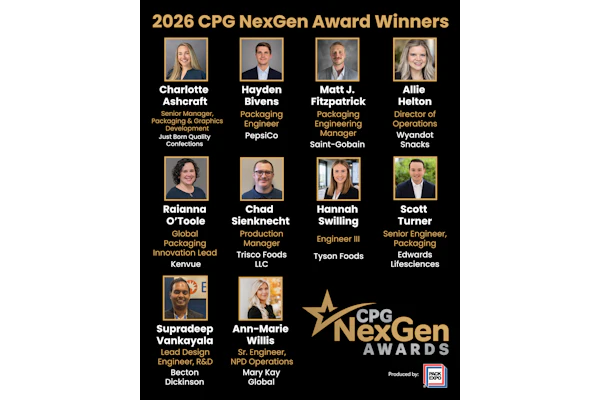
For brands working through EPR requirements, packaging data is an immediate compliance need. But speakers at the Summit also framed that work as a foundation for better long-term decision-making. Charlotte Ashcraft, Senior Manager of Packaging and Graphics Development, Just Born Quality ConfectionsPackaging World
During a discussion Charlotte Ashcraft, CPP, senior manager of packaging and graphics development at Just Born Quality Confections, said AI can help packaging teams determine where to begin as they sort through complex and fast-changing requirements.
Ashcraft emphasized that AI is not solving EPR on its own. Instead, she said, it can help brands get up to speed more quickly, prepare for internal conversations with legal teams, and identify better questions to ask as they work toward compliance.
"AI really helps me understand what matters. In a world where these requirements are changing so quickly, your speed of understanding really matters," Ashcraft said.
Sustainable design as the first step, not a final checkpoint
The most consequential sustainability decisions are made at the very first design step, not as a final checkpoint.
 Gayatri Keskar Ph.D., Global Packaging Materials Science Leader, KenvuePackaging World
Keskar claimed in a session that packaging has to remove friction so a sustainable choice never feels like a compromise. To do this, change has to work across three connected levels at once: the human level, infrastructure level, and the systemic level.
Driving that shift, she said, is Kenvue's Sustainable Innovation Profiler, paired with a partnership with AI-powered waste management tech company Greyparrot that runs design choices through a digital twin of real-world recovery systems, testing how they affect detection and recovery before a prototype is ever built.
"Many packaging formats are recyclable technically by design," Keskar said. "However, their actual recovery depends upon what happens in between. Using digital twin of real-world recovery systems, Greyparrot's Deepnest platform is helping Kenvue identify how specific components like labels, pumps, and respective material choices can affect detection and recovery rates."
Recycling is an economics problem, not a behavior issue
Many conversations about recycling focus on intention or compliance. But Tom Szaky, founder and CEO of TerraCycle, focused on economics. He argued that recycling only works at scale when the value of the material, plus any subsidy, exceeds the cost of collecting and converting it, which is why so many materials never pencil out in curbside systems.
EPR can improve that equation, Szaky said, but it's no cure-all. If the funding merely Tom Szaky, Founder & CEO, TerraCyclePackaging World
Reuse, he explained, isn't mainly a consumer-behavior problem. Across pilots in five countries, behavior held steady. The bigger barrier was retail economics, more complexity, no added revenue.
His biggest takeaway: sustainability solutions scale faster when they align with the incentives of brands, retailers, and consumers rather than working against them. The future of waste and reuse may hinge less on what is theoretically recyclable and more on what is economically and operationally possible.
Strategizing for EPR compliance
For companies working to comply with new EPR regulations, small and individual changes may not cut it.
 (L to R) Matt Reynolds of Packaging World, Suzanne Shelton of ERM Shelton, Mike Roxas of Ahold Delhaize USA, Molly Campbell of Campbell'sPackaging World
To meet the aggregate packaging requirements for states like New Jersey, Ahold Delhaize uses data to prioritize packaging that will make the biggest impact, explained Mike Roxas, packaging engineering manager, own brands at Ahold Delhaize.
“We can find what our fastest movers are. And sometimes the fastest movers actually have low packaging, so it’s not that straightforward. So, we’re looking for our heaviest use of plastic packaging,” said Roxas.
For Campbell’s and its large portfolio of packaging formats, EPR compliance will require a varied and strategic approach, explained Molly Campbell, manager, packaging sustainability at the company. Redesigning packaging for only a few categories likely won’t result in full compliance for some states.
“We’ve had to take a step back and look at what’s the most strategic way to approach this. It really has been a shift in getting cross-category support, and telling that story cross-categorically to leadership,” Campbell said.
An invitation to sit at the EPR table
EPR laws are now taking effect across seven U.S. states, each with its own definition of "producer," its own fee structure, and its own reporting categories. But during a discussion at the Summit, speakers from The Recycling Partnership and the Solid Waste Agency of Northern Cook County (SWANCC) said progress hinges on getting everyone into the same room. (L to R) Christina Seibert of Solid Waste Agency of Northern Cook County, John Hite of The Recycling PartnershipPackaging World
Making sense of that growing patchwork begins with collaboration, said John Hite, senior director of public policy and government affairs at The Recycling Partnership. "This is a table that everybody should be sitting at, whether it's local governments or state governments or brands, trade associations, or others," he said. "I believe in a big round table with everybody helping contribute to the conversation."
From the local-government side, that invitation to brands came with a challenge attached. Christina Seibert, executive director at SWANCC, said she wants ground-level honesty rather than rehearsed talking points. "When I call, I hope you answer and show up and have a meeting with us," Seibert said. "What I want to hear is, what are your real challenges? And not only how can I understand your challenge, but what's your alternative?"
"I think the more state that we can have singing from the same song sheet and pointing in the same direction, the better," Hite said. "It's not going to be a perfect science. We may wind up seeing some amendments down the road to legislation, but ultimately we need to keep helping regulators understand that incentives need to point in the same direction for them to work."
Coordinating virgin plastic reductions
Cutting virgin plastic from private-brand packaging is as much a coordination challenge as a materials one.
 Mike Roxas, Packaging Engineering Manager, Own Brands, Ahold Delhaize USAPackaging World
But the progress, Roxas explained, rests on more than material choices. It calls for alignment across internal teams and external partners, plus accurate packaging data down to the component level across a large SKU portfolio.
As the company presses ahead on sustainability, Roxas stressed "progress over perfection."
"Data is very important to us, because we have a lot of SKUs, and we have to know where that packaging goes or what opportunities we have," Roxas said. "You have to have accurate data down to the component."