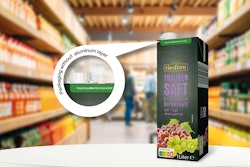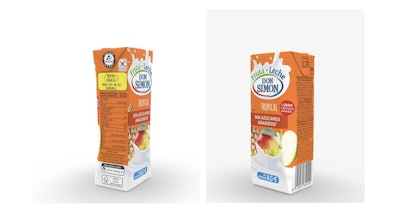
García Carrión unveiled the first global juice portion-pack using Tetra Pak's paper-based barrier technology, replacing aluminum foil with renewable paper to reduce carbon footprint by 43% while maintaining shelf stability and improving recyclability.
- Paper-based barrier replaces aluminum foil with renewable material, eliminating the most problematic recycling component in traditional aseptic cartons
- 43% carbon footprint reduction compared to conventional aseptic cartons when combined with plant-based polymers, verified by Carbon Trust
- 80% paper composition with 92% total renewable content increases fiber recovery and improves recycling efficiency at scale
- Maintains product protection against oxygen, light, moisture, and bacteria while delivering comparable shelf life to aluminum foil cartons
- First commercial use for juice category; prior dairy application in Portugal in 2023 demonstrated viability of technology
Spanish beverage producer García Carrión has unveiled what is said to be the first global juice portion-pack to use Tetra Pak’s paper-based barrier technology, with the Tetra Brik Aseptic 200-mL Slim Leaf carton selected for its flagship Don Simón juice brand.
“We are proud to lead the way in sustainable packaging for the juice category,” says Don José García Carrión, president of García Carrión. “For more than 135 years, García Carrión has been committed to responsible innovation and respect for the environment.”
Aseptic cartons have long been selected by food and beverage producers—particularly outside of the U.S.—for their ability to maintain a product’s nutrients, flavor, and freshness without preservatives, while remaining shelf stable. That performance has traditionally depended on multi-material packaging structures that combine layers of paperboard, plastic, and aluminum foil. While effective at protecting food, these composite materials have contributed to ongoing challenges and confusion around recycling.
In the U.S., the Carton Council reports that 61% of households have access to carton recycling, including aseptic cartons, yet consumer uncertainty persists. While recycling infrastructure for cartons has expanded, the multi-material nature of aseptic packaging continues to complicate consumer understanding. Tetra Pak’s paper-based barrier does not fully eliminate that complexity, as polymer layers are still required for moisture protection and sealing, but it does remove one of the most problematic components from a recycling and environmental perspective: the aluminum foil layer.
Tetra Pak’s paper-based barrier replaces the traditional aluminum foil with a renewable, paper-based alternative. According to the company, when combined with other layers in the packaging, the new barrier provides protection against oxygen, light, moisture, and bacteria, “ensuring food safety is not compromised and shelf life is comparable to packages with the aluminum foil layer.” The first commercial use of the barrier technology was for a dairy brand in Portugal in 2023.
Unlike some other aluminum-free aseptic cartons on the market that substitute foil with polyethylene barriers, Tetra Pak’s solution replaces the aluminum layer with a paper-based barrier, increasing the share of renewable fiber in the package.
The Tetra Pak barrier paper carton is made with up to 80% paper. When combined with the plant-based polymers used in the packaging’s coatings, the renewable content of the carton is increased to 92%, while the carbon footprint is reduced by 43% compared with a conventional aseptic carton that uses an aluminum foil layer and fossil-based polymers. That’s according to findings verified by the Carbon Trust.
The paper-based barrier cartons can be collected, sorted, and recycled at scale where appropriate infrastructure exists. The company adds that the new package is expected to deliver additional downstream benefits for recycling efficiency, including improved recovery of paper fibers while maintaining high-quality fiber and non-fiber fractions.
For García Carrión, the new package represents another industrial application of its 360° Sustainability Strategy, which was recognized with the Factories of the Future Award 2024 for Excellence in Sustainability and Circular Economy. The award honors leading European manufacturers for innovation in Industry 4.0.
Says Fala Corujo, VP at García Carrión. “This innovation supports our mission to reduce environmental impact while offering high-quality products to our consumers.” PW