Note: Transcription completed by AI, may not accurately reflect content.
[Early transcript cut off]
Matt Reynolds (00:00):
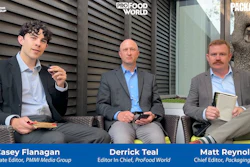
Hi, I'm Matt Reynolds. I'm the editor of Packaging World Magazine and I'm joined by two colleagues. This is Derek Deal, editor of Prof Food World. And
Casey Flanagan (00:08):
I'm
Matt Reynolds (00:08):
Casey Flanagan,
Casey Flanagan (00:09):
Associate editor with PMM MI Media Group.
Matt Reynolds (00:12):
And we're three guys with two mics, so please bear with us as we pass this around. But we're in beautiful Dusseldorf, Germany at Inter Pack, an event that happens every three years. It's massive. It's got both packaging and processing. It's got both machinery and materials. It's got both of everything. So we just spent our first full day on the floor. I've been to several inter packs, so I knew what I was coming my way, but Casey, this is your first, what did you think?
Casey Flanagan (00:40):
It is huge. It is bigger than any show I've ever been to, and so there's so much to see at this first day. I feel like we're barely scratching the surface, but even then we had a lot of really cool things that we ran into and got to see. Yeah.
Derrick Teal (00:51):
Derek,
Matt Reynolds (00:51):
Any first impressions
Derrick Teal (00:53):
Again just said It was absolutely huge. I mean, again, this is my first show as well, and I think I have close to 16,000 steps in or something like that, or 15,000. But yeah, it's massive. I spent most of my time in just one hall. And there are what, 12?
Matt Reynolds (01:08):
There's 17.
Derrick Teal (01:09):
17 actually. Okay. See that's how much I spent one hall, but there's plenty to see from either a packaging perspective or a processing perspective.
Matt Reynolds (01:18):
Yeah, myself, I actually spent a lot of time in just two halls. We got off the train together this morning. You went one direction. I went the other direction. We didn't see each other until now. So maybe I'll kick things off because I was kind of have an intent this morning to cover one thing, and that is on the coding and marketing side. We in the United States call it Sunrise 2027. Sunrise is just the general term that's everywhere in Europe. Basically it's coding and marking, it's labeling, it's putting 2D barcodes. Are you familiar with Sunrise? Have you heard anything about it?
Casey Flanagan (01:52):
Not totally familiar. So if you could give me 30,000 feet of it.
Matt Reynolds (01:57):
Yeah. Well, sunrise is basically for about 50 years now, we've been putting a one dimensional barcode on packaging that's made every package go beep at the checkout counter and it's carried GTIN N information, global tracking, product identification numbers. That's been harmonized between what US and Europe was doing and a lot of great things have come of it. But now with the advent of 2D barcodes, QR codes, you might call 'em, you're able to pack a lot more information, a lot more data into a similarly sized code and you're able to use sensors and vision to read those things and that can read different things to different people. So in the supply chain, whoever scans it in the supply chain can read all sorts of batch data and so on. The consumer can read it and can be brought off to a website or be sent information about discounting these kinds of things.
(02:56):
And every single rung of the supply chain right on down to the consumer, including actually after the consumer down to end of life and recycling and MUR R'S material recovery facilities can access information about an individual single product. The problem is it's variable data. If we're going to be putting information about one single product, it has to be printed variably. Most of our readers at Packaging World are large brand owners who are printing so quickly that to put variable data at the speeds that say Coca-Cola is running has always been an issue. So that is what I'm seeing the most movement on and I saw the most movement on this morning. Like I said, I didn't really leave Hall B until noon hall eight B until noon because I spent breakfast with Amazon, which is great. They did a presentation with Domino just about what I've been talking about, what the larger picture, the big picture of 2D barcodes, the advent of 2D barcodes, some of it's being pushed or becoming sort of a mandate or kind of a defacto standard by the retailers who get the most use out of it or have the greatest use case for it right now.
(04:06):
But there's so many use cases that can actually accrue to the brand owners themselves. So Amazon has a use case as a retailer, as an etailer. It is called transparency, for instance, that prevents counterfeiting. So the idea is that you have these huge brand owners that print really fast products that are going out a thousand an hour, a thousand a minute, even in Coca-Cola's case. But how can you put variable data on that in such a way that you can have the resolution and the clarity of a 2D barcode that can be read by scanners, whether it's at the checkout counter or by vision upstream in supply chain or downstream by the consumer. So your phone can read it but still at that speed. So there's a lot of different ways to do it. When you toggle back historically, when you toggle back on speed, you get more clarity.
(04:55):
When you toggle back on clarity, you get more speed. But now we're seeing various methods of printing. One of them is piezo, one of 'em, continuous inkjet. All of them have had their own little realms. But the big picture is that you're seeing those boundaries are being pushed out far enough so that you're getting all of the speed, you're getting all of the clarity. One very interesting thing is that we've always thought that clarity was something to do with the resolution or the quality of the print on the actual of the 2D barcode, oftentimes it's actually material handling and conveyance. If the product or the package or the carton isn't being presented correctly, then it's not being printed on in such a way that can be easily read down the pike. So I've been rambling on, but that's the big picture. Domino. Videojet Inger just had a new product today, a 2D barcode that is not continuous inkjet.
(05:53):
It's something they can't quite tell me what it is yet. So we've got a video about that that we can introduce the concept of their 2D barcode printer, various others. And meanwhile, some of the nozzle printers Czar XAR zr, they actually make some of the nozzles. Rico is another one that are really leaning into 2D barcodes. The other thing is distance. How far away can you throw a code? So whether it's right up next to a product, whether it's this far away, the reality in a manufacturing environment is that it's variable. It changes, it moves all the time. So those are the things that I spent all morning reporting on, getting a lot more information on. Europe is as usual ahead of the US in a lot of ways. I spoke to Markham homage and they've got some really interesting things going on with what they call klos. And they have actually a program called their 2D program, KLOS 2D, that actually allows a brand owner to bring things to the table, let's say a consumer experience. So if I were to scan my Coke, would that give me information about where this Coke came from or where I can go redeem this for a free Coke at the next place? So that was my morning. I've spent a lot of time talking. So Casey, let's bounce it over to you. What did you see?
Casey Flanagan (07:11):
Great. Yeah, so I spent most of my day in some halls that covered the confectionary vertical. And so there were machines in packaging and processing in that. So I had quite a lot to cover in that area. And I'd say on the packaging side, speed was the name of the game. There was one from, it was the Garten PAC Tech, and they had a new flow wrapping machine that they were showcasing on the show floor that the whole focus of it was speed, ease of operation and ease of changeover for operators. And that was a new piece for them. And then another one from Kavana was, it was a film sealer, and that was for thicker films. It had a longer dwell time and it was meant for thicker films that you might see in the pharma industry and things like that. And they build that as the fastest of its kind in the world. So that was interesting to see from 'em. But over on the processing side, I'd say cleaning was the main theme that I saw. Like
Matt Reynolds (08:19):
CIP like clean in place.
Casey Flanagan (08:20):
Exactly, yes, there was some clean in place and also some ability to do changeovers to make cleaning easier for the operator. So even if it wasn't exactly the machine cleaning itself right on the spot, everybody was focused on making sure things were easier to get clean and keep things moving. So one of those was from Osted and it was a tempering machine that was stainless steel and it was also directly connected to a clean and place machine. And so that made it so that you could clean the entire system really quickly and also get things moving so that you can do a quick change over, get to the next type of product that you want to be running on that. And then over at Solic, there was another really interesting cleaning solution. It was an robing and roving machine that was for
Matt Reynolds (09:13):
Confectionary.
Casey Flanagan (09:14):
For confectionary. So it was things like chocolate bars, roaming chocolate over it, and that first it had automated setting adjustments, so it just made it really easy for operators to use. And then also the entire bottom part of it was able to roll out of the system if you get it into the right settings. And so that made it so that rather than having to clean the conveyor and the bottom section of this machine, if you're switching from dark chocolate to white chocolate, you could basically just yank that bottom part out and put it off to the side, have that start its cleaning process off to the side, but then put a new one right in there and get started on the white chocolate pretty fast. But then one thing that I saw across packaging and processing that I thought was really innovative, it's a fairly new technology with some new innovation going into it now, was something called Sweet Connect. Yeah, you
Matt Reynolds (10:16):
Texted me about this
Casey Flanagan (10:16):
Exactly. Yeah. You said
Matt Reynolds (10:18):
It was first introduced three years ago at 2023 inter pack, but now you're starting to see it matriculate into multiple sites. Exactly,
Casey Flanagan (10:26):
Yeah. And so the cool thing about this was it's a data management platform that covers multiple brands. Any participating brand you can kind of plug into this and it will monitor machine help for that machine. So a company doesn't have to have a new platform for every machine going along the line. If they have machines that are in this collection of participating brands, it can all be monitored from that one platform. So that was really interesting to see just making sure that machines are due for maintenance or in operating order much easier and even a new innovation to that was an AI capability. Yes, we
Matt Reynolds (11:12):
Knew we'd be seeing a lot of AI capabilities. It wasn't here three years ago, but now it's starting to become everywhere. Right,
Casey Flanagan (11:18):
Exactly. Yeah. So the cool thing about that was it had all of that data available if you wanted to click through it or you could just ask this new AI agent to any question you want to ask. It just makes it much easier for operators to pull the information they need very quickly so you can interrogate
Matt Reynolds (11:35):
The data that whatever's there in human language as opposed to having to know later logic and find your way through.
Casey Flanagan (11:42):
Exactly.
Matt Reynolds (11:43):
So thankfully Casey's been wearing the hat of both processing and packaging and by handling confectionery and some bakery I think tomorrow and so on, he's really doing both. So everything from the enro of the chocolate all the way down to the packaging at the end. So kind of pulling double duty. Derek, you've been doing mostly processing, but you've been seeing some packaging too. So what are some interesting things that you saw?
Derrick Teal (12:06):
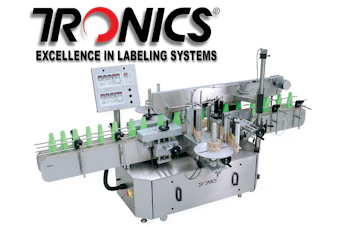
I have, believe it or not, and you guys talk a lot, so I'm going to breeze through mine a little bit more per funk. Yeah. So one of the first things that I saw was that what Casey commented on that ease of operations for the operator, har pack Oma. It was actually Oma introduced on one of their machines that used to have 32 different spots where the film went through for the, again, packaging isn't my forte, but where the film run through and an operator had to go through those 32 points to get the film or the, I believe it's the film.
Matt Reynolds (12:43):
Yeah, so it would be for HAR back if it was Alma, this was labeling or it was,
Derrick Teal (12:49):
Yeah, it was labeling.
Matt Reynolds (12:50):
Okay. So yeah, it would be like rollers that would be,
Derrick Teal (12:52):
Yes.
Matt Reynolds (12:53):
Okay.
Derrick Teal (12:53):
And it went from 32 down to five just because
Matt Reynolds (12:57):
Reducing complexity.
Derrick Teal (12:58):
Exactly that. And we've been seeing that not just here but in other places as well, that the level of technical ability from some of the employees has deteriorated a little bit. And so you're trying to make things simpler for people that might not be as experienced
Matt Reynolds (13:16):
Or mechanically proficient.
Derrick Teal (13:18):
Exactly. That's the other aspect of it. And so to make it easier, they're trying to simplify the process and that's something that manufacturers have been doing for the end users also saw something that was interesting today from Gandini. There's another system that they have where it prints directly onto the pack. And the whole purpose of this is so you don't have to have an additional label to go on it so it can print directly onto the package and the way it prints, it's not just where you don't just need a label, but if you have different products for a single manufacturer and say the example I had had, there was some nuts and there was some pastry type products and same looking package, but on each one it had a different cover to represent what was inside. And that was unique and it just came off the line. It just a matter of changing it right there on the machine on the unit. And it was able to print a different looking package based off or different image on the package, which was pretty neat. And again, that's helped to help reduce the amount of products that, or not product, but not having to buy different labels and reduce the amount of shipping that just create more efficiency overall.
Matt Reynolds (14:37):
And you probably don't have to carry as much inventory of multiple different labels.
Derrick Teal (14:41):
Exactly. That was exactly what was instructed me, except they told me much more eloquently than I provided to everybody else. But a theme that Casey mentioned earlier that was clean and place and food safety has been another big topic regardless of where Europe, us, wherever, a couple of things that I saw today were from key technology. Its new unit. It's basically not really a new unit, it's an existing unit, but its footprint has been shrunk and it's for potato chip or fry inspection detection and it uses a variation of their veic system to do that. And the difference, while the majority of the unit is the same mechanically, what's unique about it is that detection system where it detects in I think as many as eight different types versus the previous units three and the conveyor or the bands at the bottom. The problem with the old system was that over time that band deteriorates and that impacted the quality of the scan that you got.
(15:55):
And so that meant the operator would have to go in and adjust it and you can see dips and perform not dips and performance, but it would gradually dip. Then you'd have to pick it back up, make the adjustments, and then production would go back up. And so over the graph that I saw, there were these ebbs and flows in terms of production. Whereas the new system, because it can read pretty much, well I guess had eight different types of scans and it has the backing the platform, conveyor belt, whatever you want to call it, because actually multiple bands instead of just one flat band, it can detect as many as eight. And the coloration of that, because over time product being introduced to the top of it, the light coming through and just age and that band discolors. And now that this new system, it doesn't matter what happens, I saw it on clear and it was fine and I saw it on very yellow and it would still be able to detect the variations of a multitude of green, blue infrared, a number of different sensors on that.
(17:06):
And the difference was the first one had different ebbs and flows, this one just a steady stream until it gradually declines in terms of quality. So everything needs to be updated. But that was pretty unique to see that upgraded system. And the other system was one that isn't available really in the us as far as I know, I believe there are 40 different companies using this right now in Europe. And there's only one vendor currently in the US who comes in as needed to detect nets, A company called Biomedic and it uses basically a CT scan of product.
Matt Reynolds (17:43):
You were talking about this.
Derrick Teal (17:44):
Yeah. And it was one of those, it was off in the corner and I was just walking by and I'm like, what is this? And went over and it was pretty cool. And it's able to detect a product, you provide a 3D image of a product. It doesn't matter if it's like an apple or baked good or in cans, excuse me, in jars, it's able to take that, break it down to 0.5 millimeter sections, able to detect and tell you exactly where an imperfection is or a porn contaminant is in that food and that food product. And it's able, since it's a CT scan, it's able to detect a multitude of different imperfections like metal, plastic, bone, whatever, what have you. And it was pretty neat and it's something that I hope eventually we get to see more of in the US as opposed to just Europe because like I said, it's important as food safety has always been important, but as more and more manufacturers want to do more for their clients, especially if you're a co-man or whatnot, I think it's a great way to improve that inspection detection aspect of your operations and to, so just ensure that the product leaving the facility is as perfect as it can be.
Matt Reynolds (19:08):
Okay. So not in the United States, not actually saturated in the United States yet, but maybe something to come,
Derrick Teal (19:16):
Hopefully, like I said, there are 40 different, because it does it on the line, and I can't remember the specs. I believe it was something like 44 meters a minute or something like that. It could be a second. I'm pretty sure it's a minute that it's able to detect. But no, in the US right now, there's only one partner that their company that they partnered with that goes in then as needed to help a company as opposed to these other installations where it's part of their facility and it's running right now as an added benefits or step in the inspection detection process in addition to X-ray and other 2D type of inspector detection units.
Matt Reynolds (20:01):
Interesting. So to kind of save time, I just want to say that we did check out some materials side things. There was a lot going on with paper, particularly barrier paper three years ago. I was at Kohler paper for instance, three years ago, and there was maybe one or two products like real commercialized CPG products. I think one of new cow was a very early adopter that was using a barrier paper, like a little poly coded paper that was mostly paper, 90% paper, 10% ish poly. Now you're seeing it's all over the place. Anything from oatmeal to flour and powdered type of goods. And all sorts of candies and confectionary are in paper packaging. Now, again, this is mostly fiber based. There's some small amount of poly on it, but I was talking to the Kohler paper guys and one potential future state is the poly is needed for barrier, otherwise there's going to be oxygen ingress or odors for certain things could be imparted to the food, which you don't want.
(21:12):
But the poly right now is using virgin, or excuse me, fossil fuels as most poly is. But what if you were to use a bio-based material renewable resource? So even that tiny percentage, less than 10% possibly of poly for your poly coated paper with a barrier property, even that comes from a renewable resource like the fiber itself, which obviously comes from trees. Often for a certified I saw there's increasing amount of digital printing on paper. You can always digitally print on paper, but the digital printers themselves, whether it's HP or screen, are starting to partner with some of the converters and their suppliers, the material suppliers upstream from them to actually have to be printing on food-based paper, paper used for food applications with barrier. So that was interesting. There was a cool partnership between BST and Michelman and UPM specialty papers that just came out a couple of days ago actually, where again, it's barrier paper with barrier qualities that you're able to print on in a whole lot of all the brightest colors and so on, confectionary, all sorts of snacks and so on.
(22:26):
And all of these are recyclable as long as they're palpable to 80% I think is the Western Michigan barrier to clear there. Acta, there were so many instances of barrier paper now that are actually had in market examples, digital printing on them that three years ago wasn't there. That's the great thing about having this long gap between these shows is that you can really, it brings into stark relief progress as opposed to the, if you check on something every week, you're not going to see a lot of progress. You check on something every three years, you can see these vast leaps. So with the barrier paper materials that there was a lot. Casey, you want to back clean up anything? Any last things that we cut you off or that you were thinking about that you saw?
Casey Flanagan (23:15):
Yeah, no, I think to that exact point of progress, I think the Suite connect was a great example of that in that it was first released in the previous inter pack, but then this time was when they were showing off that AI capability. So as the technology progresses, you really see that get integrated into these new technologies on the show floor here. So that was great. And then one thing that I think between Derek and I feel like ease of use for operators was one theme that I mentioned several times in my rundown, but that feels like an overarching thing that Derek also mentioned a few times. So it's interesting to see how companies are engaging with the reality that it's hard to train employees nowadays on this complex machinery and making sure they're trying to make that a simpler process and easier to use. So I think this has been a really interesting show to see how they're engaging with these industry issues and working to improve the technology for the sake of that.
Matt Reynolds (24:22):
Good. One quick example, I mean clean in place and also with the operator ease of use. It was both at links, again, 2D bar codes or printing 2D bar codes, levenger, another one. Being able to clean these print heads very easily, being able to have one cleaner links had this example one cleaner that could service many different printers. And basically this is a separate unit that you dunk the print head in and there's a solvent that instead of having to take out the print head and use a squeeze bottle to manually do this, this is basically simplifying things for the operators, for the workers because there's not enough of them. So the general theme of automation and automating every step of the way we're seeing everywhere, I can only anticipate seeing more of that in the next few days that we're here. So Casey Derek, this was only day one. This was only day one. And I've got three more pages of notebooks that we didn't even get to. So thanks everybody for tuning in and we're going to have a lot more tomorrow in the next day and a few days after that. So thanks again.