Casey Flanagan (00:00):
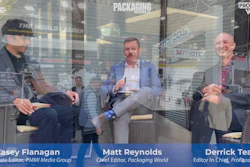
Hi, I am Casey Flanagan, associate editor with PMM MI Media Group, and I'm here with my colleagues, Derek Teel, editor in chief of Prof Food World, and Matt Reynolds, editor-in-chief of Packaging World. We're here on our third day of Inter Pack. It's been a big third day and a big show so far, I think for all of us. And so we're here to report on what we saw today. So I think to start off, we had some AI discoveries that we found here today, so if you guys want to kick that off and tell me what you saw today.
Derrick Teal (00:30):
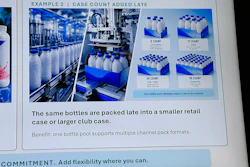
Sure. First thing is I decided that I was going to take in more sessions today instead of doing walking around. I think my miles went from seven to six to today three because I was sitting in on some sessions, like I said, and I wore, maybe we'll get a pick of this, but I wore my robot socks just to appease our future robot overlords from what I said yesterday about humanoid robots. But yeah, it was interesting today that we're talking about ai and the main thing that in the sessions they were talking about AI pretty constantly. And I sat through a session that McKinsey gave, and it was really interesting. They put up a slide that in just one year, I don't remember the numbers, we'll put the numbers up on this photo I took of the slide that in one year it went from a ridiculous amount of people not really interested or not prepared to do ai.
(01:24):
I think it was 2024 to 2025 where that number of people not ready to do ai, I want to say went from 70% down to maybe 10% that weren't ready for ai. And it was just a really impressive that in just a one year span that it changed that. Exactly, exactly. And what was funny too is that we've talked about this in our own publications, when do we use AI for things like artwork? I know that last year we toyed around in Prof food world whether or not we should use AI to generate some imagery for, because sometimes it's really hard to get imagery of a plant because people don't want to share what goes on. So
Matt Reynolds (02:08):
You have AI doing an approximation of it, right? Correct,
Derrick Teal (02:10):
Exactly. And last year we were working on trying to get an AI image of a bakery, but it turned out it didn't really look quite right like a bakery. In fact, from one perspective, the plant went on for so long, it looked like the trench from the death star. How many millions of feet is this hallway? And yeah, you have to be a Jedi to get out of that plant, but it didn't look at all like that. But one of the questions that was raised to McKinsey is how can you use AI in terms of developing images for a product for your packaging? And they said, right now, you really can't for a finalized product that's going to go out to the consumers. So what it benefits you is you can create multiple mockups and present those different types of mockups to customers and to focus groups, I guess is a better phrase, and see how they react to it.
Matt Reynolds (03:12):
AB testing. Exactly.
Derrick Teal (03:14):
And once you get down to the better options, then you have humans come in and create versions that will appeal more to consumers than the AI version. I thought that was an interesting perspective, especially since according to them, it really speeds up that whole process of getting a design that's ready for consumers that is tried and true, even though you might spend more time with the focus groups, but you're not spending time, not hemming and hawing, but really overthinking a package design. And we're talking not the package itself, but the artwork that you're focusing less. So anyway when you come out with something that's going to be right or more likely to be something that people want to see. And I thought that was an interesting use case of it, but
Casey Flanagan (04:08):
That is, it seems like it really just speeds up that ideation that it might not be the finished product that you're sending out exactly to the customer, not what ends up in their hand without further iteration. But at least you have that jump of like, wow, look, I wouldn't have come up with this way to design this without the help of ai.
Matt Reynolds (04:28):
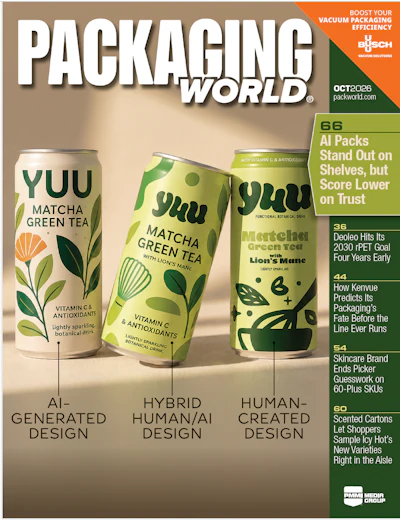
I mean, I do that just in my own. I am not an artist. Stick figures is out of my league. And I have a great designer who designs the covers of my magazine. So I've been using AI lately just to be able to explain to him what I'm looking for, and that gets him 80% of the way down the road instead of him coming to me multiple times. I can't explain it, I can't draw it. It's shortened lead times, basically. And I think that's the intent. It's interesting that we're talking about this topic. This is packaging design, packaging artwork. This is something we haven't touched on yet. We're all machinery, all packaging materials so far, but there's a lot that's behind the scenes in packaging design and artwork. And ESCO has a program and has had a program for a long time where it basically is a library of your artworks because you've got certain brand marks and you've got claims label claims that you can make.
(05:23):
Some things are allergen free. There's all sorts of things that you have to comply with and you have to comply in different markets. You have to comply in Belgium, and now you have to comply in California with SB 54 and SB 3 43. So all these different places, basically a catalog of a brand's different artwork is going to be hundreds of thousands of files. It's huge. And the compliance element is just becoming more and more important. So ESCO's got this compliance program that uses AI to crosscheck all these different locales regions. Like I said, if the eus PPWR says this about this much recycled material, California says this, Nestle's selling into both of those places. So the files are basically checking against the nutrition claims, the label claims, all these types of things. So that was a really interesting use case for AI in that sort of label artwork, that sort of thing.
(06:17):
And even more specifically, another, this is in that hall seven A where it had a lot of the startups and so on. It was called recita. I think I'm pronouncing that right. Recita is a platform that's going to aggregate all sorts of different EPR data requirements. Again, different locations have different EPR laws and there's eco modulation right now will either reward some packaging decisions or charge you fees for other packaging decisions, but it's different in every state. So all those toggle switches, this is one platform that pulls in all sorts of information from the A PR, which is the American plastics recyclers, or it works with spec, right? And various, it's an ecosystem of different companies that have different rungs on the ladder when EPR comes around and brands like Nestle have to report their data to Belgium, to the EU, and then to California and to Colorado and all different forms. This format, this platform is going to be instrumental in helping do that and consolidate that. So
Casey Flanagan (07:23):
Really interesting. And so speaking of PPWR and EPR, we're seeing so much sustainability, so many innovations for sustainability here. And it's mainly because sustainability is being mandated. And not only is it being mandated, but it is a money saver and a waste saver. Green makes green. Yes, exactly. Yes. So one of the things in sustainability that I saw had to do with waste saving, and that was an active packaging innovation from a company called iia. And I know you
Matt Reynolds (07:59):
Also visited. Yeah, I stopped there. Yeah. So food waste is a huge problem, and some would argue that food waste is a bigger problem. I mean, you look at sustainability, and when it comes to packaging and sustainability, you look at it two ways. One is pollution, leakage of plastics into the environment. Ocean plastics, turtles with straws in their nose, that's pollution. But the other side of the coin is CO2 and global warming or climate change. And as bad as CO2 is methane is that much worse? It's a factor of four, I think worse. So food waste goes to landfill that creates methane and that's bad for global climate change.
(08:43):
And the thing is, you put all that energy in feeding the cows, watering the cows, growing the cows over years or for the vegans and vegetarians of the world, growing the crops over this amount of time, harvesting, baking bread, making steaks, getting it all the way to the consumer through the retail shop. And finally it's in somebody's fridge and the shelf life isn't long enough, so they throw it away. It's like fumbling the ball at the one yard. So that is why food waste is such a big problem when it pertains to packaging. And that's what I think in Sentia is trying to tackle. Right?
Casey Flanagan (09:17):
Exactly. Yeah. So their innovation was an active packaging piece. It was a little label that went onto the package in the case that they were showing the example, they were showing it was a salmon package. And so it was monitoring actively the gases that were coming off from that salmon. And if the gases started to come off too much, it would change the color of that little label. And so you can kind of do away with the expiration dates that might be too conservative and the food might still be good. You can do away with somebody not being sure about it in their fridge and tossing it out for sure if that salmon is still good.
Matt Reynolds (09:57):
Yeah, the brand owners, a lot of the brand owners, they build in 20 to 30% of, or they actually remove 20 to 30% of the likely shelf life of a lot of products, especially proteins, poultry, fish, these types of things for fear for airing on the side of caution for somebody to get botulism or something terrible like that, because one case of that, it would be awful. But these active packaging allow the active packaging tags. They're actually indicators that pick up on the gases that are released by decaying food. Essentially allow a brand owner to extend that stated shelf life, best buy dates or whatever we want, because they can be reasonably certain that a recall situation isn't going to happen because the retailer can see the color changing and the consumer can see the color changing. So they can build in less of the buffer that they have now. Food lasts longer, and basically it helps the
Casey Flanagan (10:53):
Environment. Absolutely. Interesting. And then another sustainability thing, and this kind of speaks to all the different ways that companies can tackle sustainability, was it was from SMI, and this goes to inside the factory, and this is in terms of energy savings when you're packaging products. It was a stretch wrap, stretch wrapping machine rather than the shrink wrapping machine, which they also had another shrink wrapper in the same booth. But this stretch wrapper, first off, you're not using the energy that's required to run the heaters for a shrink wrap, and you're also using less material because I think if I remember right, they said about half of the material is used in this stretch wrap versus having to shrink down the shrink wrap to the correct size. So yes, saving a lot more energy in energy savings for your company, and also energy is saved for sustainability's sake, and then also saving money in that material.
Matt Reynolds (11:58):
I mean, I guess, sorry, Derek, we went a little crazy on the sustainability, but I've got one more.
Derrick Teal (12:03):
I can talk about sustainability too. I saw something else in one of another session. It was regarding baked goods, particularly, I believe it was crackers and biscuits off the top of my head, but it was from reading bakery systems that they were talking about a different type of oven that it's proprietary that they have, but what happens when gas, you're not allowed to use gas anymore in terms of your baking process. And so what they were saying, their gist was that they have their oven that enables the same process, not the same process, but the same performance, similar to what convection
Matt Reynolds (12:45):
Ovens. It
Derrick Teal (12:45):
Wasn't a convection of 'em, it was sort of a hybrid of convection that they come out with. It replaces DGF ovens and those operate on gas. And they said this, their new type of oven that they have is the EM thermic XE that it, as I said, operates, gives the same performance as A DGF. And the difference is though it operates currently, you can operate it on gas, but what happens when gas gets taken away, you're not allowed to use that anymore or costs, it becomes cost prohibitive because of things like what we have going on in the Middle East. And then their take was, well, you know what? Unlike A DGF, you can convert our oven from gas usage to electric, no problem. And so right now, it turns out if you have sustainability goals, right now, gas is relatively cheap. I know at this very moment it's not as cheap as it was, but it's cheaper comparatively to potentially other options. And they said, okay, if you switch now when you do have to switch to electric, you can do that more easily and you'll still get the same sort of performance than you would trying to convert your DGF oven to into a electric, which really is super costly and not really possible. But anyway, so I did have a sustainability thing.
Matt Reynolds (14:10):
Yeah, it's good. It was everywhere. It's baked into everything that's here and it,
Derrick Teal (14:15):
No pun intended.
Matt Reynolds (14:16):
Yeah, no pun intended. There's so many different elements of sustainability. Here's another one that we haven't even talked about, reuse. Ellen MacArthur Foundation has the reduce, reuse recycle, and that's actually a hierarchy. The most important thing you can do is reduce the amount of packaging. Reuse is actually ahead of recycle because if you've got something that's a durable package that you refill and continue to reuse over and over again, every time you reuse that, that's like two packages or four or six and it adds up over time. So there was a really interesting one. It's called Meadow. It's a company called Meadow who they recognize that one of the most efficient and environmentally friendly packaging formats that we have as human beings is the aluminum can pressurized, aluminum can because it's aluminum, like 60 or 70% of every aluminum can that you have is already recycled aluminum.
(15:13):
Once you extract it from the earth, you can use it. The manufacturers would say infinitely, it's infinitely recyclable. And yeah, like 60 days after you dispose properly, recycle an aluminum can that's going to be smelted into another aluminum can. So two months, it's the turnaround. So why are we only doing beverages in aluminum can? Well, there's a lot of reasons for that. Once you open an aluminum can, then the product is ready to go. There's not a lot of really friendly dispensers or nozzles or anything like that. But this company, meadow has basically changed the top the cap from the opener that we're used to the pull tab to something that allows for a certain device to puncture the top and open it up in very similar way that a can would open up, but not in a way you can do with your finger or anything like that.
(16:00):
So nobody's going to mistakenly open it because they're packaging mostly cleaning product in there. It can be all sorts of different things, but like shampoos or hand soaps and stuff like that. And the consumer is asked to buy from a brand, a durable, sometimes beautiful package that will be able to, is nice looking enough to sit on somebody's counter. Sometimes it's clear. And then the consumer actually buys refill cans similar to the cans of Coke and stuff like that, but again without the pull tab. So nobody's going to mistakenly gargle with shampoo or anything like that. But then once they screw on the top to this dispenser, that punctures the top and the nozzle will then be able to dispense the hand soap, the shampoo, whatever it's, and then finally, even crimping on these or seeming on these cans, they're seamed in such a way that it's a corrugated pattern.
(16:52):
So it's not a straight circle. So even folks that let's say are blind or they're not fully cited, if they were to lift it up and make the mistake of trying to take a sip, they would immediately recognize it. So reuse, we haven't talked about, we've three podcasts in all the sustainability. We haven't talked about reuse. One last thing, I know I'm rambling, but fiber-based packaging. I talked a couple of days ago about paper ization trends and barrier paper. Well pull pack is doing this thing called dry molded fiber. So molding fiber for cartons, egg cartons and stuff like that takes a ton of energy because it takes a lot of water to make a slurry out of the thing. And then they dry that out. So a lot of heat to dry it to make. So even though it's a sustainable package itself, the process of making it is not very sustainable.
(17:39):
There's a new process though, called dry molding where they use a lot of pressure, but it doesn't take a lot of heat. Doesn't take a lot of water. But the caps, there's all sorts of different containers that can be made by dry molded fiber. The caps that are just remarkably, you would pick them up and expect that to be plastic if you didn't know any better because they're so tightly bound. But it's all fiber. It's all forest certified tree harvest, renewable, renewable material. Now, there might have to be some small layer of poly as a barrier if you're going to put it on your PET water bottle, but these are intended to be on your bottle. So they're intended to work with liquids and beverages and so on. So sustainability was everywhere, I guess would be a safe way to sum things up for today. Anything else on any other topics that we're missing here?
Derrick Teal (18:27):
I mean, I think there are a lot of different topics, but we got to have something for tomorrow too.
Matt Reynolds (18:31):
Oh
Derrick Teal (18:31):
Yeah.
Matt Reynolds (18:31):
We got to leave the audience wanting more. Exactly.
Derrick Teal (18:34):
That's right. You going to wrap it up, Casey, or do want me to do it?
Casey Flanagan (18:37):
I'll let you do the honors for Today.
Derrick Teal (18:38):I get to do the honors. All right. Well thank you for watching three guys, two mics, even though none of us are, Mike, and we will catch you next time.
Casey Flanagan (18:45):
Thanks. Thanks.