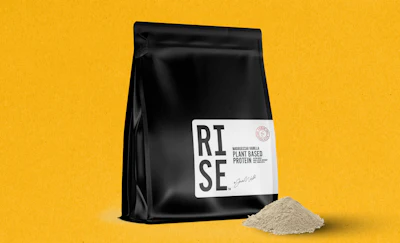
RISE311 is a plant-based protein powder that replaced traditional plastic tubs with premium pouches to improve sustainability and communicate its high-quality formulation, which features 30 grams of complete protein, digestive enzymes, and upcycled sprouted barley protein made in a U.S. facility.
- RISE311 delivers 30 grams of complete protein and over 3 grams of leucine per serving using fermented pea protein and upcycled sprouted barley protein
- The brand chose stand-up pouches instead of rigid plastic tubs to reduce single-use plastic waste and create a premium customer experience
- The product is manufactured in an NSF GMP-certified U.S. facility, undergoes third-party testing, and contains no artificial sweeteners or added sugars
- RISE311 went through 311 recipe iterations and uses a minimalist pouch design to communicate quality and care without over-explaining
- The barley protein is upcycled from Anheuser Busch's beer-making process, solving waste problems while delivering superior environmental impact
RISE311 is a plant-based protein powder developed by celebrity trainer Jason Walsh to address common complaints about traditional protein supplements, including poor taste, gritty texture, and digestive discomfort. The formula combines fermented pea protein with sprouted barley protein to deliver 30 grams of complete protein and more than 3 grams of leucine per serving—an amino acid critical for muscle protein synthesis.
According to the company, its proprietary processing and added digestive enzymes are designed to improve digestibility while maintaining a smooth consistency that mixes quickly without the chalky texture often associated with plant-based proteins. To communicate its premium ingredients, the brand opted for an elevated package to stand out from other proteins.
“You pick it up, and it doesn't look like any other protein powder on the shelf. It’s more like a coffee or a craft sweet you’d find at your local farmer’s market — something you look forward to. That’s the feeling we’re trying to capture,” says Joshua Malin, co-founder.
Beyond performance, RISE311 emphasizes ingredient transparency and sustainability. The protein is manufactured in an NSF GMP-certified U.S. facility, undergoes third-party testing for heavy metals and microbes, and is made without artificial sweeteners or added sugars.
“For a physical product, packaging is one of the best tools we have to communicate what's inside. Words are easily dismissed, but if we can show the craft, the care, and that the 311 formulation iterations we had are more than words, that’s powerful,” says Malin.
I reached out to the company to learn more about the packaging behind the brand, especially the choice to opt for stand-up pouches as opposed to the segment’s commonly used rigid tubs.
“There's an enormous amount of [single-use plastic] in the world already, and we didn't want to add a giant rigid tub to the pile,” says Malin. “We'll be straight about the state of play: flexible pouches that recycle easily in every state and every country aren't fully solved yet. But the breakthroughs in that space are coming, and we wanted to be aligned with them from day one rather than retrofitting later. Our goal is to be thoughtful about making sure we are part of the solution, not part of the problem.”
Sustainability aside, Malin says the choice to move away from the tub was in part to give users a better product experience. “Second, the tub doesn't fit the product. A gigantic plastic tub you have to dip your whole hand into isn't a premium experience; it's the same experience every other brand offers. We borrowed our cues from specialty coffee and fine spirits instead, because that's the level of thought and care that went into the formulation.”
The minimalist design of the black pouch is a key feature for the brand, and it was an intentional choice to “let the product shine,” says Malin.
“The design uses subtle cues — the craft label, the seal, the tasting notes — to guide the eye and give you a genuine sense of what you're about to put in your body. We went through 311 recipes to land the first version, and we're constantly iterating and testing everything. That’s the problem minimalism solves for us. How do we communicate that without boring people to death? We don't write an essay on the pouch. We let the restraint do the talking. Care shows up in what we leave off of the design as much as what we put on. We made the harder and more considered choices. We don’t just say it; we show it. And when a customer picks up the pouch, they experience it.”
The company spoke with me candidly about the sustainability goals behind the product, but also the segment itself, as well as the current customer landscape.
“Most customer research shows that sustainability isn't a major purchase driver for the end customer,” says Malin. “People say it matters, but it rarely sways what they actually buy. And plenty of brands in the category talk about sustainability while shipping a single-use plastic scoop in every pouch, so it's fair to ask how many are living it.”
The company also highlights the elimination of the plastic scoop as well as the use of upcycled barley protein.
“Whey and other animal-based proteins add significantly more pressure to the environment than plant-based. And then plant-based options shipped from China create more problems than carefully sourced, upcycled plant-based proteins made here in the USA. For instance, our barley protein is upcycled from Anheuser Busch's beer-making process. Not only is it a phenomenal protein, but it also solves a real problem regarding excess waste. We made our choices not because it's the commercial play (the research says it mostly isn't), but because doing right by the product and the customer is a fundamental principle for every director in this business.”