Target wants food to be the reason shoppers visit, and it is leaning on packaging developed alongside the product to get there.
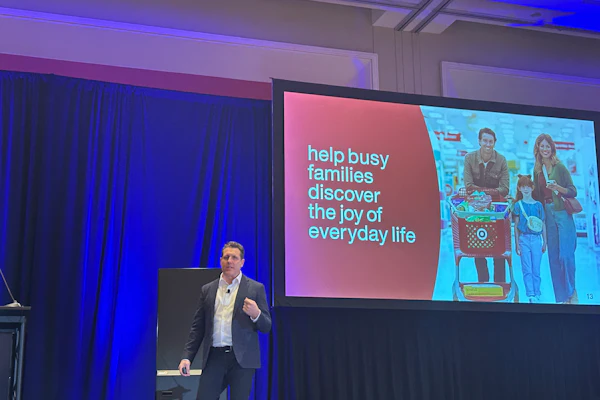
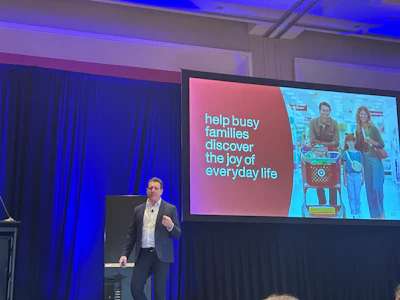
John Conlin, Target's senior vice president of merchandising, food and beverage, made the case in his November 16 keynote at the 2026 Private Label Manufacturers Association's annual show in Rosemont, Ill. "Food has never been more important at Target than it is today," he said.
The goal, Conlin said, is an aisle that is unmistakably Target: "If you can't tell that you're at Target, then we haven't worked hard enough to bring our distinct point of view forward." On shelf, much of that work falls to the package.
Package and product, developed together
Conlin’s presentation focused on retail strategy but included many packaging implications. At Target's Minneapolis headquarters, designers, engineers and food scientists share labs and a test kitchen with packaging teams, refining product and package side by side. A video shown during the keynote pointed to frustration-free packaging that is easier to open and less wasteful, packaging for the Figmint cookware line that is 95% plastic-free, and redesigned up&up food storage that uses 30% less plastic.
Suppliers who work with Target should expect packaging to enter development early, with easy opening and material reduction treated as requirements.
Scale raises the stakes
Target's roughly 40 owned brands generate about $30 billion a year. Good & Gather, launched in 2019 without artificial flavors, colors or sweeteners, is on track to become Target's first $4 billion owned brand. The food business has grown by about $9 billion since 2019.
 Conlin mentioned Target's quick pivot to snacks made with avocado oil, displayed at the PLMA show's World of Ideas.Joseph Derr
Fresh, seasonal and online
Target nearly doubled its organic produce assortment this year, and organics now make up about 30% of produce sales, headed to 40%. New stores, 30 to 40 a year, have fresh departments nearly three times the size of a conventional Target, and about 200 remodels will expand food. Although Conlin didn’t mention the direction packaging implication, an expanded produce section clearly points to more clamshells, trays and retail-ready displays, with organic claims easy to spot on labels.
Seasonal and licensed programs raise the bar on decoration and speed for Target and its co-packers. A nostalgia candy shop product line starts at $5, and an exclusive Harry Potter collection of 27 snacks and treats launched at Halloween. "Our partners and our suppliers and vendors created amazing packaging that I think actually stands just as tall as the product that it's wrapping," Conlin said. Such programs call for short runs, gift-ready formats and fast turnarounds.
Easy family meals with a bit of novelty and fun are another priority at Target, Conlin said. A cook-in-bag turkey and new honey pumpkin goat cheese ravioli point to more ovenable and convenience formats, with Target’s signature simple-yet-bold packaging grabbing consumer eyes in the aisles. And as the No. 5 U.S. digital grocer aiming for the top three, Target needs packs that survive drive-up and order-pickup handling.
Target doubled its food newness this year, Conlin said, and its guests want new items in food more than in any other category. For private label packaging partners, that pace means shorter development cycles and more launches.
"Bring us your biggest ideas,” Conlin said. “Push us, and make us feel uncomfortable."