Transcript created by AI, there may be transcription errors.
Anne Marie Mohan:
Hello, I'm Anne Marie Mohan, senior editor of Packaging World, and today I'm joined by Haley Maness, founder of herbal wellness company Roots and Leaves. We're here to talk about Haley's journey, founding Roots and Leaves, and how she has intentionally selected both the graphics and the materials for her product packaging to reflect her brand's commitment to clean plant-based living, while also balancing sustainability functionality and a timeless apothecary inspired aesthetic. Welcome, Haley.
Haley Maness:
Thank you so much for having me today.
Anne Marie Mohan:
So just to begin, could you give us a little background on what inspired you to launch Root and Leaves and what differentiates your products from some of the other good for you, good for the planet brands that we see today?
Haley Maness:
Yeah, absolutely. So really what differentiates Roots and Leaves is that my product was not created to start a business. They were actually all created by accident and for personal healing journey that I was going through. Back in 2016, I was struggling with Lyme disease and trying to support my body with herbs and nutrition and natural remedies. And then I also had a newborn daughter at the same time who had colic and diaper rashes and sleep challenges. So all of those original products, which are most of our best sellers now, were born out of necessity within my own family. And so that's a big differentiator. There's a lot of companies out there that are started just because they're chasing trends and that is just not how we got started. We started with real life necessity and then word spread and then the rest is history.
Anne Marie Mohan:
Great, great. So I understand that your product line has grown substantially. So how many products, how many SKUs do you offer now and what are some of those products?
Haley Maness:
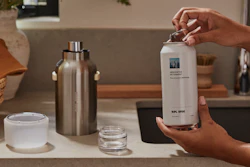
Yeah, so we have over 60 SKUs now, and we started with just the elderberry tonic. I brought it here for you to see. This is our original one. And so that's what we started with, and now we're over 60 and planning to launch 10 more this year. I basically just love to create products. That's what I am super passionate about, coming up with solutions for families just like mine that they can trust are high quality ingredients and made with love and care and quality. So like I said, the first product was the elderberry tonic, and then I expanded into all of the herbal teas. So we have looseleaf, herbal teas as well. We have five of those. And they all kind of target specific areas, like I have a thyroid support, I have a liver support, an allergy tea, which is my personal favorite. And then we have a full skincare line that is organic, cold infused with different herbs and botanicals and plants.
And then we have electrolytes are new as of last year, and they're super clean and free of citric acid and natural flavors and colorings. And we also have bar soaps and we also have a full line of tallow products. We have five different skincare tallow products to choose from. We also have our magnesium body butter, which is neck and neck for our bestseller with elderberry tonic. And so yeah, we have a lot of variety. We have laundry soap, and that's another thing I'm wanting to expand into this year is more products for the home. And then obviously we have our shampoo and conditioner too, but I'm really wanting to expand to give my customers more options for cleaning their home, washing their dishes, things like that.
Anne Marie Mohan:
Okay, great. So this is really interesting because you came from an HR background, correct?
Haley Maness:
I did, yes.
Anne Marie Mohan:
So very different. So when you were looking at finding packaging for your initial product, I mean it was very much out of your sphere of knowledge. So who did you consult and where did you go and what did you decide on and why?
Haley Maness:
Yeah, I mean, I had no one to consult. I didn't know anybody in the industry at that point in time. I know lots of people now, but back then it was just me by myself and Aiken, and I just knew I wanted glass, so I literally went to Walmart and got the 16 ounce ball mason jars, and that's what I was making my elderberry tonic in because I knew that I needed glass and I honestly had no clue how to source anything. So everything was figured out, trial and error, 2:00 AM nights, I did the mason jars for probably about a year, and then moved to the stout bottles that we have that you see today, just literally Google searches researching glass bottles. And the different, there was, there's different types you can get, and I decided that the stout bottle was what I liked and then I just ran with that. But I knew from the very beginning that I needed to use glass and I wanted to use glass whenever possible.
Anne Marie Mohan:
So glass works very well for the initial product, but now that you have such a large range of products, what are some of the package types that you're using and how do you select them given that you want to provide the most sustainable option?
Haley Maness:
Yeah, absolutely. So I mean, now I have lots of contacts in the industry. I've been doing this for 10 years now. So I've been to multiple trade shows. I've met a lot of contacts in the packing industry. And so now I work with them and they all know I actually have a main guy that I work with that helps me source my stuff now. And he knows that everything I need to do is sustainable. So our soap boxes or in Kraft paper boxes and anything that's like an herbal extract or a nutrient dense liquid is in glass. And then I do the flexible, the packaging for our teas are actually biodegradable bags. And then even when we have to use plastic, for example, our shampoo and conditioner, glass and water just don't mix. And I couldn't find any other option besides plastic for that. And if there is one, I would love to know.
But so I do HDPE plastic bottles for my shampoo and conditioner. Because it's recyclable, it's considered one of the safer plastic options, and it's easier on the sustainability side to maintain that. And then our loose leaf teas are packaged in biodegradable bags. And then our sunscreen is actually a sugar cane based tube, which is plant derived instead of petroleum based plastic. So I'm always researching what, what's new that I don't know about. I'm working with my packaging guy, like anything that's coming down the pipeline that we could use that is better than plastic, but, and also, as you know, the shampoo and conditioner, I just don't feel like I can get away with doing glass in the shower. That's a recipe for disaster.
Anne Marie Mohan:
Sure, absolutely. And I think some in plastic circles, or even in the wider packaging world would say plastic isn't the worst material in the world when it fits the application and it can be recycled, which yours can.
Haley Maness:
Absolutely, yeah, that's the most important thing to me. If I'm going to use plastic, then I want to make sure that it's recyclable. But also me being from my journey and my viewpoint and my customers, we are also very concerned with any toxins that can leach from the plastics. That's a big part. So we have the sustainable part I have to think about. And then I also have to really consider any toxins that could be coming from my packaging. And so that's why HDPE is one of the best ones for us to use.
Anne Marie Mohan:
So to pivot now, I wanted to talk a little bit about the package design or the graphics of your packaging. And for me, I feel like there's such an emotional connection when you have a really good graphic design and yours has that feel. And I was very surprised to learn that you did the graphics for the packaging, and I was wondering what inspired the design and what did you want it to convey about the brand?
Haley Maness:
Yeah, so I've always been really drawn to that old apothecary type aesthetic. Something that feels like herbal timeless, something. You would go into a traditional remedy shop maybe in the 1900s. I've always, always loved that look. So doing it in house has allowed me to keep everything really connected. And I do want to be clear that they are my designs, but then I hire a graphic designer to make it beautiful in ai. But I'm like, I sketch it out, I give her what to do, but it's all comes from my brain and the branding comes from me in that old apothecary vibe that looks beautiful on a shelf and that looks like artwork, but reminds me of my grandmother and my great-grandmother and just a good down home feeling.
Anne Marie Mohan:
Yes, it certainly does convey that, but could you talk a little bit more about the graphic elements and why you chose them?
Haley Maness:
Well, every product, it is unique to the product. So for example, let's just, I'm best with examples, so Fire Cider. I wanted to display some apples on here because the base of this product is we're all apple cider vinegar, so the apples are drawn on here. And then the other herbs that we've included in here are drawn as well. So I really wanted to kind of give a visual of what's in the product. And I do the same thing with the elderberry tonic. We have the elderberries at the top of the bottle kind of on the vine. And so I really like to display the images of what the four main herbs are, even though there's 12 herbs in here. And then the color scheme is very earthy. And so I just keep with the earth-based colors and try to match it up with the product.
I would say the only one that doesn't match the whole brand aesthetic would actually be the Fire Cider because it's red, and it's not my brand colors at all. My brand colors are like a dark green, dark brown sage, a light turquoise, but I wanted to do a dark red on this one because it's Fire Cider, and that just makes sense. So I literally just go product by product and I sit with that product and I think, what color does this product need? How does it match the branding? And what graphics do I want to display on the label to make sure that people understand what this product is?
Anne Marie Mohan:
Okay. And how do you think that the graphics have helped with the customer success of your products?
Haley Maness:
I think it's helped a lot, actually. I know it has helped a lot. So my main business strategy has been to partner with retail stores, independent retail stores. So we're in almost 3,500 now. And so I'm always thinking, how will this look on their shelves and how will their customers relate to these products? And I own a retail store myself too, so I know what it's like to be on that side of the fence and have a product that's just not popping out to the customer enough to make them pick it up. So yeah, that's basically, I wanted to make sure that it would be beautiful for them enough in an easy sell. And I have so many retailers that just tell me your packaging and your labels sell your product. And there are number one bestsellers in the store, and people love the branding and they absolutely love it. It's been a huge part of my, and honestly part of my success. I really believe that.
Anne Marie Mohan:
That's wonderful to hear coming from a packaging background, I think that's amazing. That's really important. So you talked about the fact that it's in retailers. Can you be more specific about where your products can be found? What parts of the country or do you sell them online? Where can people find your products?
Haley Maness:
So we absolutely sell on our website. They can go to our website and purchase online. We ship all over the us. We do not ship international right now to direct to consumer, but we are in every state. There's a store that can be found in every state. My goal is almost every city is what I would love because as a mom, I'm going to give you an example really quick. My daughter right now, yesterday woke up with an abscess on her gum, and I need to go somewhere locally to get something that can help that. And even in my own store, I didn't have anything. So it's important for me to be in as many independent mom and pop stores as I can so people can run down the street and go get it what they need. Amazon is fast, but they're actually getting slower.
And I refuse to sell on Amazon because I want to support my independent retailers. So they can go to my website. There's a store locator, they can enter their zip code and they can find the nearest store near them. We do actually sell to retail stores internationally too. So we are in quite a bit of countries as well. I actually went and visited one of my retailers in Scotland a couple of years ago. So we are able to ship internationally to stores, but not quite yet for individual consumers. It's a whole different process with customs and all of that. But yeah, they just enter their zip code, find the nearest store near them. If there's not one near them, then they can absolutely order on our website, but I always encourage them to go to their local store first.
Anne Marie Mohan:
Okay. Okay. So you talked a little bit about how you want to expand the household cleaning category of products. What are some of your other aspirations for the brand moving forward?
Haley Maness:
Yeah, I mean everything. Anything that touches the skin or people use internally that's in my wheelhouse of herbal remedies. I want to get into actually what I'm launching later this year, which is a little bit out of my wheelhouse, but I've had a lot of customers asking for it is makeup. So we are going to be launching makeup later this year, and it's really hard to find a toxin-free makeup that actually performs very, very similar to my shampoo and conditioner. It took me two years to formulate it and come out with what I have. It's not easy to make toxin free, be effective, basically. So we're launching makeup later this year. We are going to be getting, as I said, more into the dish soap and maybe stuff to clean your house with and things of that nature. And then we are going to be launching some new deodorants and in some paper tubing, which I'm really excited about that we're going to have four scents of that. Let me see what else. I have a whole Excel spreadsheet, but the big one's going to be makeup. That's a big project. Yeah.
Anne Marie Mohan:
Okay. Okay. Well, we'll be keeping an eye on those. And we wish you all the best of luck with your company and your brand. And thank you so much for joining us today.
Haley Maness:
Yeah, thank you so much for having me. I really appreciate it. Bye. PW