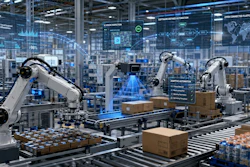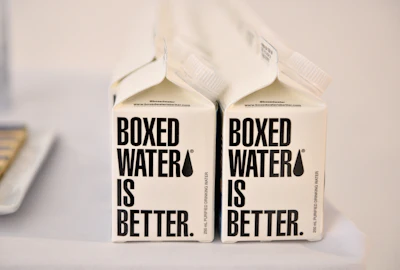
Boxed Water automated its end-of-line palletizing operations by deploying robotic systems supplied by Formic, eliminating the physical strain of manually stacking heavy water cases and improving production efficiency without requiring capital investment from the brand.
- Boxed Water replaced manual case stacking with robotic palletizers at both its facilities to eliminate repetitive strain on workers
- The robotic system easily accommodates new case formats and SKU variations through on-site updates or remote configuration changes
At Boxed Water's Holland, Mich. facility, end-of-the-line palletizing operations used to come down to muscle.
Cases of water weighing 14 to 28 lb, depending on configuration, were stacked onto pallets by hand—a task tiring enough that even with high operator changeover case stacking still struggled to keep pace across a full day, according to Rick Kulas, director of operations at Boxed Water.
For Kulas, that physical bottleneck is what made end-of-line palletizing the right place to bring in a robot.
“Even with rotating people through hand stacking, this operation was very tiring and difficult to maintain throughout the day,” Kulas says. “Adding a robot to take over this physical task was an easy decision for me.”
Boxed Water now runs palletizing robots at both of its facilities, supplied and operated by Formic under a model that leaves the equipment investment and upkeep with the vendor rather than the brand.
Boxed Water already runs automation elsewhere in production, so the choice to automate palletizing next was deliberate. Kulas points to two factors: the heavy lifting itself, and a relatively small SKU mix that made the process an easy fit.
"It was an easy fit for us to automate the lifting of heavy cases along with a relatively small SKU mix," Kulas says. “The palletizer also offers high uptime compared with other automation, resulting in minimal impact on overall equipment effectiveness.”
Rather than buying and managing the system itself, Boxed Water opted for Formic'sFull-Service Automation model, where Formic owns the system's performance and upkeep.
Kulas wasn’t apprehensive about investing in Formic since he didn’t have to worry about capital expenditure. He also points to the company’s 24-hour service response as a contributing factor in Boxed Water’s decision to partner with Formic.
But setting cost and risk aside, Formic still had to prove its equipment and services could hold up on a high-volume line during the busiest stretches of the year. Before Kulas decided to trust the system, the vendor had to demonstrate a solid commissioning plan and enough personnel on hand to support any issue that came up during the year.
The real test came once the palletizers were in production.
As Boxed Water's product line expands and more case formats run through the line, the system has been able to absorb the variety. When a new format is coming, Kulas sends Formic the new case dimensions and pallet patterns. He says that Formic can either come on-site to perform the update and test it, or push the update to the palletizer remotely.
According to Kulas, changing SKUs haven’t had an impact on Boxed Water’s production process.
What's changed for operators
The most immediate change is on the line itself. Lifting heavy cases throughout the day is no longer part of the operator's role, freeing those employees from the repetitive strain that defined the task before.
"The palletizers stack perfectly, which has helped with storage and shipping," Kulas adds.
This downstream benefit extends past the end of the line into how product moves through the warehouse and onto trucks.
Palletizing isn’t the end of Boxed Water’s automation goals. The company currently runs three palletizers and is adding a fourth. Next for the company will be automating the packaging process, according to Kulas.
He says he expects future automation to reduce packaging material and increase both cases per pallet and cases per truckload.