AI accelerates packaging innovation by enabling faster concept generation and material optimization, but success depends on asking the right questions about consumer needs and business viability. The fundamentals of packaging innovation—insight, technology, and foresight—remain essential to creating sustainable solutions.
- AI helps teams move faster in concept generation, material selection, performance modeling, and quality control without replacing core innovation fundamentals
- Companies already use AI for virtual prototyping, material optimization, and line efficiency improvements in packaging production
- Major food companies like Nestlé and Esko are leveraging AI to identify high-barrier materials that improve both product protection and sustainability
- Packaging breakthroughs historically came from disciplined observation, consumer insight, and foresight—not just technology alone
- The real opportunity is combining AI with consumer understanding and long-range thinking to create packaging that solves real problems
 Mike Richmond
In those early years, we also learned from some of the field’s true thought leaders, including Ted Labuza, Theron Downes, Jack Giacin, and Aaron Brody. Their influence helped shape a generation of packaging professionals. Over the past 25 years, the field has changed dramatically. It is almost hard to believe how much was accomplished before tools like AI assistants became part of the conversation. Even so, many of packaging’s most important advances came from disciplined observation, technical ingenuity, and a deep understanding of consumer needs.
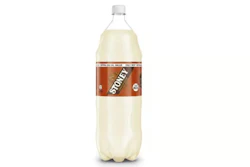
Before AI, innovation was already accelerating through better technology, stronger design thinking, and sharper consumer insight. We saw the rise of the flexible retort pouch, aseptic packaging in both rigid and flexible formats, and the rapid expansion of PET. The 2-L PET bottle became iconic. Single serve packaging and microwaveable formats reshaped convenience. Susceptor technology helped fuel the microwave popcorn boom, while single serve flavored milk created a more portable, consumer friendly experience. In that era, convenience was king, and packaging was central to making products easier to use, more affordable, and more relevant to daily life.
Consumer insight also started driving more meaningful breakthroughs. One example was the plastic paint can. Traditional metal cans were messy, hard to open, and inconvenient to reseal. Research made clear that users wanted a format that was cleaner and easier to handle. The same pattern showed up in food: the zipper on shredded cheese may seem ordinary now, but it solved a real consumer problem by helping keep the product fresh without requiring a separate container. Not every new format succeeded, of course. Some fell short on performance, cost, or fit with consumer expectations. But the lesson was clear: when packaging innovation solves a real problem, it sticks.
We also saw major advances in food safety and shelf-life extension through technologies such as microwave sterilization and high-pressure processing (HPP). In confectionery, we were fortunate to work on the shift from five-stick gum packs to wallet packs. That was small change on the surface, but one that consumers embraced because it felt cleaner, more modern, and more convenient. Those examples remind us that innovation is not always about dramatic reinvention. Often, it is about understanding behavior well enough to make the experience better.
Foresight became increasingly important in that work. At a 2005 Future of Packaging meeting in Chicago, we identified sustainability as a major force that would reshape the industry. At the time, many in the room were skeptical. Today, sustainability is central to packaging strategy, and that shift reinforced for us the value of scenario planning and long-range thinking. Packaging has always evolved at the intersection of technology, consumer behavior, and business reality. Foresight helps make sense of where those forces are heading next.
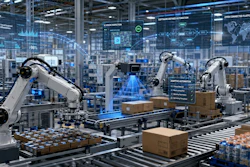
That brings us to AI. I do not see AI as replacing the fundamentals of packaging innovation. I see it as accelerating them. AI can help teams move faster in concept generation, material selection, performance modeling, and quality control. Companies are already using AI to evaluate new packaging structures virtually before physical prototyping, optimize material use without sacrificing performance, and improve inspection and line efficiency. Major food companies are also exploring AI to identify new high-barrier materials that could improve both product protection and sustainability. These are practical applications, not science fiction. Nestlé reports using AI with IBM to identify novel high-barrier packaging materials, while industry coverage from Esko shows AI gaining traction in virtual prototyping, automation, and packaging workflow improvement.
What matters most, however, is not the tool itself but the judgment behind it. The future of packaging will still depend on asking the right questions: What problem are we solving? What does the consumer need? What will scale operationally and commercially? AI can help us answer those questions faster and with more data than ever before. But the real opportunity is the same one we saw back in 2001: combining insight, technology, and foresight to create packaging that is more useful, more sustainable, and more responsive to a changing world.
Mike Richmond, [email protected], is one of the founders of PTIS,
Global Management & Packaging Consultants.