RISE Packing & Assembly is a contract packaging company in Illinois that employs 45 people with intellectual or developmental disabilities, delivering competitive services through flexibility, transparency, and hand-assembled work that outperforms conventional automation-focused competitors.
- Workforce: Nearly 45 part-time associates with intellectual or developmental disabilities (IDD) deliver contract packaging, kitting, labeling, and assembly services
- Business model shift: Phased out workshop model in 2018, cutting workforce from 150 to 40 people and achieving four times the productivity
- Competitive advantage: Hand-assembled flexibility allows RISE to pivot in hours versus robotic lines requiring reprogramming, serving diverse industries from board games to industrial fluids
- Retention and growth: 85% associate retention rate with employees staying 12-15 years; waiting list exists as company pursues more contracts
- Partnership strategy: Transparency and reliable delivery drive long-term contracts; customers often discover the IDD workforce only after visiting the facility
It's a Tuesday morning in Orland Park, Ill., and three crews are running three separate jobs.
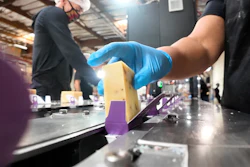
On one, a kitting crew loads cooler-style overpacks with sterile water sampling bottles, ice packs, and instructional materials — nine kit variations, each with its own labeling and palletizing specs. Across the aisle, another crew sleeves and heat-seals Christmas tree removal bags, steadily packing what will yield half a million units before the season ends. By the loading dock, workers run five-gallon buckets of hydraulic fluid through two labeling units, filling separate purchase orders for industrial distributors side by side.
It looks, in other words, like a busy contract packaging operation. Because it is one.
But there's something about RISE Packing & Assembly Co. that most of its clients never learn: nearly all the work is done by people with intellectual or developmental disabilities.
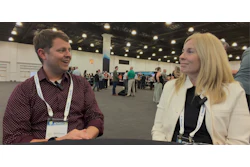
"If you go to any other co-packer, they don't say, 'Hey, we have neurotypical people that do the work,'" says Vice President Mark Goryl at RISE Packing & Assembly Co. "We're here to provide a service. A lot of times when we work with businesses, they don't know that people with disabilities are doing the work. And in my opinion, there's no reason they should know."
 Business Development Specialist Keith Coffindaffer checks in on a labeling operation.RISE Packing & Assembly Co.
But like any co-packer worth its salt, RISE runs on contracts, deadlines, and customer satisfaction. The mission, as Business Development Specialist Keith Coffindaffer puts it, comes second.
"We're a business first, and then we're a community service after that," Coffindaffer says. "Both things have to work. That's business."
From workshop to co-packer
CTF's co-packing roots go back to early vocational training programs: light assembly work, piece-rate pay, a Department of Labor 14(c) subminimum wage certificate. By the 2008 financial crisis, customer contracts had started to dry up. When Goryl joined in 2014 as production manager, the operation had shed most of its business and had no real growth strategy. A move to a dedicated facility in Crestwood helped, but the more decisive shift came in 2018, when leadership phased out the workshop model entirely.
"Before 2018, we had 150 people in a work setting, some interested and others not interested," Goryl says. "We did surveys and cut our workforce to 40 people. With those 35 to 40 people, we accomplished four times the productivity that we accomplished with 150, because they were driven by a paycheck, driven by working, dedicated to what we were doing."
The rebranding to RISE (Realizing Inclusion by Supporting Employment) came in 2023 alongside a move to the current Orland Park facility. RISE added a business development role in 2025, when Coffindaffer joined.
The operation Goryl inherited in 2014 stands in sharp contrast to today's.
The nimble factor
RISE's core portfolio spans contract assembly, kitting, labeling, secondary packaging, and rework. The customer mix is highly diversified across many non-food products: industrial fasteners, water testing kits, automotive fluids, consumer goods, brooms, sponges, board games, and brewery packaging.
Goryl has seen what happens when a co-packer leans too hard on a single sector. "Business is cyclical," he says. "We want to make sure we can balance that and have a book of business that fits us for the entire year."
Most of the work is done by hand, but Goryl makes no apologies for it. In a market where contract packagers often talk about investments in automation or even robots, RISE has built its pitch around the value of the opposite: flexibility. Whereas a robotic line requires reprogramming, new sensors, and possibly new tooling every time a customer changes a format, RISE can pivot in hours.
"If a customer says, 'Hey Mark, we usually do this, but I have this new project' and with robotics involved, I'd have to reprogram the whole machine," Goryl says. "With us, I can pivot faster, and I say, 'Send it in, we've got it, we can turn it around for you.'"
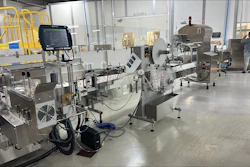
Semi-automation is entering the picture selectively. RISE runs Vevor band sealers on carts that wheel to any workstation, Shanklin heat tunnels in two sizes, and a Cleveland Equipment carton sealer. A conveyor-and-sensor counting system is in development to improve accuracy on high-volume runs, and a semi-automated labeling machine is being evaluated to keep pace with the industrial fluid container program, which moves nine to 10 truckloads annually.
For counting larger quantities, a donated laser measurement sensor keeps the lines humming. RISE is also evaluating a vibratory dry-fill system for non-food bagging, a move that would open a new service category without requiring FDA certification.
Partnership is the product
Transparency, Goryl says, is the single biggest factor in holding long-term contracts.
"A lot of times in business, people over-promise and under-perform, and that strains relationships," he says. "If we run into a snafu, being upfront with the customer by saying 'This is our choke point' — that's what creates a great business partnership. And after you develop that partnership, if somebody runs into a tight timeline, just say: send it in, we'll figure it out on the back end."
 RISE's portfolio includes runs of close to half a million units of Christmas tree removal bags annually.RISE Packing & Assembly Co
But rather than take the new work and sort out the timeline later, Goryl laid out the situation plainly, telling the customer what RISE could commit to each week and what the delivery time would be.
Exploding Kittens adjusted its own schedule accordingly. RISE hit its weekly commitments for seven consecutive weeks, and two additional projects from the same customer followed.
"We did what we said we were going to do, which is very important," Coffindaffer says. "We're convenient, we're close, and adaptable. We did the hang tab rework job, then RFID tags, then whatever came next."
A separate episode tells the same story from a different angle. When a full truckload of gallon containers arrived with a blow-mold defect causing leakers, a long-standing customer needed a fast fix. RISE improvised a leak-testing protocol on the spot, and by day two, the team was running labeling and quality checks simultaneously across 9,000 containers.
"It wasn't a matter of 'let me time-study this and give you a price,'" Goryl says. "It was: we got it, let's do it."
The workforce variable
Managing a production floor where associates work 20 to 30 hours per week, arrive on varying schedules, and bring a wide range of physical and cognitive capabilities is not simple. It is, Goryl acknowledges, the operational reality that most distinguishes RISE from a conventional co-packer.
After their production manager issues a daily assignment list each morning, RISE floor trainers and neurotypical staff set up their work groups, match associates to tasks suited to their abilities, and are accountable for getting jobs done. Final QA runs through production management, including spot-checking labels, verifying pallet markings, and confirming all customer specs are met before anything ships.
 A RISE associate checks a sealed case. RISE employs 45 neurotypical people but is focused on the business. "Let's get the work done and let the work speak for itself," Goryl says.RISE Packing & Assembly Co.
RISE reports an 85% associate retention rate. Some have been with the operation for 12 to 15 years. Others are brand new to the workforce. A waiting list exists, and the company's answer to it is straightforward: go get more business.
'The work speaks for itself'
When it comes to RISE's approach, it's all about business.
"Let's get the work done and let the work speak for itself," Goryl says.
It captures how RISE has learned to compete. Brands and CPGs evaluating a new co-packer want on-time delivery, clean specs, and a fair price. Goryl says RISE leads with that conversation every time. The IDD workforce, the CTF mission, the 50-plus years of history all emerge once a customer walks the floor and sees the operation running. Usually at that point, Goryl says, any bias or skepticism about RISE's capability tends to take care of itself.
"A lot of times customers will come in and do a visit and they're shocked," Goryl says. "And then we tell them that by the way, you're also helping 45 individuals have meaningful employment."
After decades of experience, and with its business and the mission in sync, that is not a happy accident — it's the whole point.