PureCycle's proprietary PP purification technology removes contaminants, color, and degraded polymers to create high-quality recycled resin that meets food-contact requirements and virgin-material performance standards, enabling Churchill Container to produce 100% post-consumer recycled souvenir cups for major sports venues without equipment redesign or quality compromise.
- Purification Process: PureCycle's technology keeps the PP molecule intact while removing additives, degraded chains, fillers, and contaminants—unlike chemical recycling methods.
- Food Safety: The purified resin holds FDA Letter of No Objection for food-contact use and undergoes daily internal and monthly third-party testing.
- Drop-In Replacement: Internal compounding allows PureCycle to adjust melt flow, enabling Churchill to use recycled PP at 100% without major equipment changes or lengthy purging.
- Stadium Collection: The Cleveland Browns program recovers 20-25 tons of plastic and aluminum per season, creating a closed-loop system where discarded cups become feedstock for new products.
- Commercial Viability: Churchill achieved its goal of offering 100% recycled content across its product line by 2025 with minimal cost premiums.
For brand owners looking to increase recycled content in polypropylene packaging, finding enough of the material is only part of the challenge. The material also has to meet requirements for appearance, odor, processing performance, consistency, and, in some applications, food contact. Those demands can make mechanically recycled PP difficult to use at high percentages.
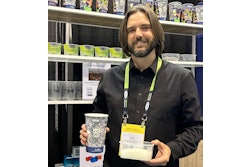
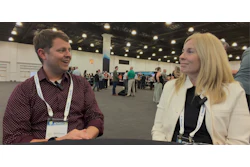
 Erik Johnson of Churchill Container, left, and Christian Bruey of PureCycle Technologies discuss the stadium-to-cup recycling loop at the Packaging Recycling Summit.Packaging World
A collaboration between Churchill Container and PureCycle Technologies shows how a different approach to recycling PP could expand those options. Erik Johnson, product director at Churchill, and Christian Bruey, director of sustainability and external affairs at PureCycle, discussed the technology and its use in 100% post-consumer recycled souvenir cups during a session at Packaging World’s Packaging Recycling Summit, held in June in Rosemont, Ill.
The project began with sports venues, but the implications extend to brand owners trying to incorporate recycled PP into demanding packaging applications.
Conventional recycled PP presents quality challenges
Churchill has produced reusable and recyclable drinkware since 1980, with professional and collegiate sports venues representing its largest market. The company also supplies foodservice, theme park, restaurant, and entertainment applications.
In 2020, Churchill set a goal of offering products made with 100% PCR within five years. The company knew recycled PP could theoretically meet the need, but the quality of available material created obstacles. “We need cleaner materials, more consistent materials, materials without odors and streaks, and higher melt flow options,” Johnson explained.
Food-contact requirements added another layer. Churchill’s drinkware must undergo migration and other food-safety testing, and its customers can impose additional standards of their own.
For a highly visible souvenir cup, aesthetics matter as well. A fan may pay $15 or $20 for a cup featuring a team or event, Johnson noted, so recycled content could not result in a product that looked noticeably inferior. Churchill needed to reproduce bright colors, white backgrounds, graphics, and other design elements expected from virgin PP.
Dissolution removes more than surface contamination
PureCycle licenses a PP purification technology originally developed by Procter & Gamble. At its Ironton, Ohio, facility, the company processes 107 million lb of post-consumer PP annually. During the process, additives, degraded polymer chains, fillers, and other contaminants are removed, and color is filtered from the solution before the solvent and PP are separated and the purified polymer is extruded into pellets.
Unlike technologies that break polymers into their chemical building blocks, the PP molecule remains intact throughout purification. For packaging applications, the result is a recycled material with properties that are difficult to achieve through conventional PP recycling. Bruey pointed to low ash and polyethylene content, along with the removal of color and contaminants, as key differences.
 PureCycle’s PureZero program collects and sorts stadium recyclables, purifies recovered PP, and returns the resin to Churchill Container for new souvenir cups.PureCycle
Removing the original color also gives Churchill more flexibility to reproduce the colors its sports customers expect. Bruey said PureCycle can produce a colorable recycled resin suitable for white, bright blue, red, and other shades.
PureCycle also holds an FDA Letter of No Objection for food-contact use of its purified resin. Bruey said the company conducts daily internal testing and monthly third-party testing as part of its quality program.
Resin still has to run on the packaging equipment
Purifying the polymer did not automatically make the resin suitable for Churchill’s manufacturing process.
PureCycle receives PP from a mix of applications with very different melt-flow characteristics. A thermoformed container might have a melt flow of two, three, or four, Bruey explained, while a thin-wall injection-molded yogurt container could be much higher. The combined feedstock produces a material with its own average melt-flow range.
Churchill needed a higher melt flow for its equipment. PureCycle responded by adding internal compounding capabilities that allow it to adjust the resin for the application. That enabled Churchill to use the recycled PP as a drop-in material rather than redesigning its process around the PCR.
“Literally they take it, they put it in, they can run it at 100%,” noted Bruey, adding that Churchill does not need major equipment changes or lengthy purging when switching materials.
The ability to tailor recycled resin to a converter’s manufacturing requirements could be significant for brands interested in PCR. Material performance on existing equipment often determines whether a recycled-content project can move beyond a trial.
Stadium collection supplies material for new cups
The Cleveland Browns provided an opportunity to connect the purified resin with a more complete recovery system. PureCycle began its PureZero collection program before its Ironton facility was operating, in part because PP collection has historically lagged behind recovery of some other packaging resins. Stadiums presented a concentrated source of cups, food containers, clamshells, and other recyclable materials.
With the Browns, one of the changes was surprisingly simple. Fans were encouraged to leave their cups and other items at their seats after the game.
Rather than depending entirely on thousands of fans to sort material correctly into public bins, the stadium was able to train a much smaller group of cleanup employees to separate recyclables, compostables, and trash after the event. PureCycle then moved recovered PP through additional sorting and into its purification process.
The Browns program recovers approximately 20 to 25 tons of plastic and aluminum per season. Purified PP can then return to Churchill for use in its Run It Back line of souvenir cups.
The system gives fans a tangible example of packaging moving through a circular system. A discarded PP item can become feedstock, be purified into recycled resin, and return as another food-contact product rather than automatically moving into a lower-value application.
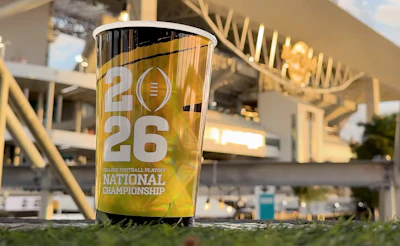
Churchill has also supplied 100% PCR Run It Back cups for the College Football Playoff National Championship and other programs. By 2025, the company reached its goal of being able to offer 100% recycled content across its product line. Its next target is to have at least half of its customers choose the recycled-content option by 2030.
Cost and new applications
As ideal a solution as the purified PP was for Churchill, the company still had to ensure it worked commercially, including carefully weighing the economics of recycled content against performance, supply reliability, and customer expectations.
Churchill initially encountered some additional cost with the material, but Johnson said the premium was small enough to be shared or absorbed. As the program has developed, the company has been able to offer the PureCycle resin without making added cost a central part of the customer discussion.
“One of our goals was to be able to use their resin as a drop-in replacement without having to have a cost conversation with every single customer,” Johnson explained.
The souvenir cups also give PureCycle a commercial demonstration of how its purified PP performs in a finished product. PureCycle is exploring the resin in applications beyond injection-molded cups as well. Bruey cited thermoformed coffee lids and biaxially oriented PP film among projects demonstrating other potential outlets for purified PP. PW