The Soap Gal solved its cartoning bottleneck by switching to a Yeaman multi-size cartoner that runs 60 cartons per minute, enabling 150,000 bars weekly without sacrificing artisan quality or community jobs.
- The Soap Gal's semi-automatic cartoner from 2022 couldn't keep pace with demand and frequently jammed, limiting production to single-size runs
- The new Yeaman TK 177690 cartoner achieves 30,000+ bars daily with changeovers between sizes in 15 minutes or less
- The machine uses a robotic arm with suction cups to pick, erect, and position carton blanks reliably without jamming
- The upgrade enabled The Soap Gal to produce new mini sample sizes profitably and accept broader customer programs
- Founder Joanna Couch prioritizes labor multiplication over automation, maintaining 6-7 workers to preserve artisan quality and community employment
Joanna Couch’s favorite movie scene is from City Slickers, where the old cowboy tells Billy Crystal’s character that the secret to life is one thing — but you have to find it yourself. For Couch, founder and CEO of The Soap Gal, that one thing is soap.
“I just love making soap,” says Couch. “And I get to show love by making a product that helps keep people clean, healthy, and cared for so they can go out and find their own one thing.”
 The Soap Gal specializes in cold-process bar soap based on a traditional no-heat method that preserves essential oils and nutrients.Photo courtesy of The Soap Gal
As Couch puts it, The Soap Gal has grown to become “some of the largest natural soap brands’ little secret.”
From farmers markets to Whole Foods
The company traces its roots to 2009, when Couch — dealing with health issues in her early 20s — was advised by her doctor to cut out dairy.
 The Soap Gal CEO and Founder Joanna Couch.Photo courtesy of The Soap Gal
Adapting her grandmother’s recipe, she began selling at farmers’ markets and craft fairs, eventually landing in 10 local Whole Foods locations. By 2019, as The Soap Gal she had expanded to a range of soap and body care products and focused on private label manufacturing.
What sets The Soap Gal apart from larger soap manufacturers is its commitment to the traditional cold-process method, starting from scratch with sodium hydroxide and fats and oils, preserving the glycerin that extrusion-based manufacturers typically remove. Couch says every 130-pound batch yields between 280 and 1,000 soap bars, depending on bar size. Bars cure for 48 hours after pouring, then move through cutting, quality assurance, and staging before reaching the packaging department.
A bottleneck hiding in plain sight
As demand for The Soap Gal’s product line of retail-ready, carton-packed soap grew, Couch found herself facing a familiar co-man dilemma: the production side could scale, but packaging couldn’t keep up. A semi-automatic, single size cartoner she bought in 2022 for the job quickly revealed its limits.
 The Soap Gal uses Yeaman’s cartoner to pick and erect blanks and move them into position for filling and sealing.Photo courtesy of The Soap Gal
Couch wanted to say yes to a broader range of customer programs without dedicating a full manual labor crew to every cartoning run. So, she set a target: she needed a machine that could pack a minimum of 30,000 bars per day across multiple carton sizes.
The quest begins
Couch turned to Interstate Packaging, a local Arizona distributor that had been advising her packaging operation for years. Together, they walked the PACK EXPO floor in 2024, where Interstate brought her over to see the Yeaman Packaging Systems booth.
 The Soap Gal’s product line, produced today in a C-GMP certified facility, is inspired by a recipe passed down by Couch's grandmother. Photo courtesy of The Soap Gal
What she saw on the show floor piqued her interest, but it was a visit to Yeaman’s facility that sealed the deal. “When I walked through Yeaman’s door and got to meet the whole Yeaman family, I felt the passion in that space,” she says.
Watching the machine run, Couch says, was the moment she knew. During her visit, the line built 1,000 boxes without a single jam, a stark contrast to the chronic jamming that had plagued her existing cartoner.
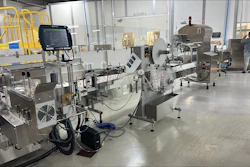
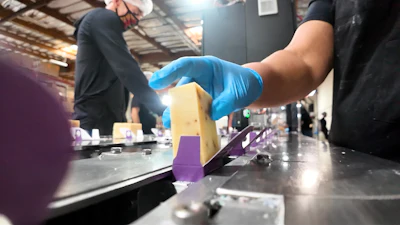
The Yeaman cartoning machine model TK 177690 uses a robotic arm with suction cups to pick carton blanks, erect them, and move them into position. Workers insert soap bars in as the cartons travel through the machine, which closes the top and moves finished cartons onto a conveyor. From there, workers hand-pack inner cartons into master cases, which run through a tape machine before palletizing.
The Soap Gal cartoning line is now greatly streamlined because the machine does the repetitive work reliably, letting a small team pack and palletize 30,000-plus bars a day without breaking stride.
New sizes for more soap
With the Yeaman cartoner, The Soap Gal can now run 60 cartons per minute, hitting 30,000 bars per day all on a single shift, 6 a.m. to 2:30 p.m., Monday through Friday. That equates to 150,000 bars per week from one line, with roughly six to seven workers covering the full packing and palletizing operation.
Changeovers between most carton sizes take no more than 15 minutes, Couch says. Now, switching from a one-inch to a one-and-a-quarter-inch bar thickness — the one configuration requiring a plate swap — takes about 45 minutes and is handled by maintenance the evening prior so the shift is never disrupted.
The machine also allowed The Soap Gal to venture into new sizes including what Couch calls “mini bars.”
“These are the 2×2×1 sample sizes that every brand seems to want,” she says. “Before, I had to hand-pack every single one. Now I’m able to use the machine, and I’m not losing money when I’m taking an order to pack smaller bars of soap.”
People first, productivity second
Couch emphasizes that she sees the Yeaman machine not as a headcount reducer but rather as a labor multiplier for her team.
“I don’t want a fully automated product,” she says. “My product is artisan-made and there is human interaction. I think the key to being an entrepreneur is really about your community; I want to provide jobs for my community.”
 Filled cartons with soap roll off the cartoning machine for packing.Photo courtesy of The Soap Gal
“I want to find machines that help us become more efficient so that we’re able to create more products for more people,” she says.
With the cartoning bottleneck resolved, Couch is focused on growing The Soap Gal’s customer base, reducing concentration risk, and expanding the semi-custom “ready-to-pour” menu she’s building for emerging brands to streamline their private label and contract choices for soap. She sees the Yeaman machine as the first piece of a broader automation roadmap, and almost certainly not the last Yeaman in her future.
“When I need a secondary cartoner or other equipment, it’s going to be Yeaman,” Couch says.