Transcript created by AI, there may be transcription errors.
Anne Marie Mohan:
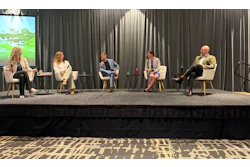
Hi, I am Anne Marie Mohan with Packaging World, and I'm coming to you live from SPC Impact 2026 here in Nashville, the home of music, music City, and I'm joined here today by Rhodes Yepsen. He is the executive director of the Biodegradable Products Institute. So welcome, Rhodes. Thank you for joining me.
Rhodes Yepsen:
Yeah, thanks for having me.
Anne Marie Mohan:
So today you gave very in depth and really compelling presentation about some of the laws in California or the upcoming legislation or existing legislation there, some of the policy that's really giving the users of compostable products and packaging some heartburn. And so I wanted to dig into that a little bit with you, but first I wanted to ask you for those of our listeners or viewers who aren't familiar with the BPI, could you give a little bit of an overview? What does BPI do?
Rhodes Yepsen:
Sure. Yeah. So the BPI stands for the Biodegradable Products Institute. We were formed back in 1999, and we are a mission-based trade association. We work on topics related to biodegradability and compostability in kind of three general categories. One is on claims. So we're best known for our certification for compostable products with a label that helps align the value chain from raw material producers to packaging converters, brands, restaurants, municipalities, haulers, and composters. All of those groups are also represented in our membership and mostly represented also on our board of directors. Then we also work on convening. So with things like committees and working groups as well as webinars and an in-person annual summit, we bring together that value chain to talk about what's needed to make things happen. And then policy, which was the focus of today's conversation at the conference, is talking about our investments in packaging policy and composting policy and trying to break down the Venn diagram silos of food waste issues and packaging issues.
Anne Marie Mohan:
And you're definitely the right person to speak with because we have a lot of brand owners who in our sustainable packaging surveys have really shown a growing interest in compostable packaging. And just to set this policy and perspective and why compostable packaging is such a viable alternative to petroleum-based plastics and packaging. You had a very interesting data point from Ellen MacArthur Foundation in your presentation today, and you noted that it's not a recent one, but it's still one that is very concerning. You said that more than 50% of packaging today requires a fundamental redesign or innovation to make it able to be recovered. And then you followed that saying that compostable packaging has a lot of features and properties that can be used to address this issue. Can you elaborate on that?
Rhodes Yepsen:
Yeah. So is I showed a graphic from an early on MacArthur Foundation study on plastics and the circular economy for plastics and what's needed for recovery. And they identified the types of items needing fundamental redesign and innovation. And yeah, it's a large number of items that need significant change. And they broke it down into different reasons that those need fundamental redesign, things like being small formats, multi-material, using novel materials and nutrient contaminated. And hopefully people understand in the packaging world why those are fundamental problems for recycling today. And what I think is so exciting is that those are all assets for compostability. So for small format items, the mythical two, by not mythical, the two inch by two inch screen size that you have to meet to make it into the sorting facility isn't required at a composting facility. So small format items are okay at a composting facility, multi-material materials, thinking about a multilayer flexible structures or coated papers.
Nature does the work of disassembling that for you. So you're not limited in needing to choose one material for a monolayer structure, novel materials, that's the name of the game. So back to when we were founded in 1999, this is all about identifying and testing materials that can be biologically recycled. So it's not traditional conventional plastics and then nutrient contaminated, so connected to food shows that you're designing for that system. So when we're thinking about compostable packaging, it's really different than recycling. The bin is first and foremost for food scraps and yard trimmings. And the packaging is really just to help people participate. So making it easier to put the right items in that bin. So think about food, soiled packaging, like a lettuce package or something like that, or to reduce contamination. And so by being nutrient contaminated, that means that you are designing for the right system and that composters wanting that food and wanting that packaging because it helps reduce contamination.
Anne Marie Mohan:
That's very interesting and that's something that you taught me and also one of your colleagues at BPI when I originally started learning about compostable materials is that the real value of bringing that material to a composter is that it has some of that food waste. So I visited a composting company yesterday here in the Nashville area, and he said, yes, we can get tons of corrugated board, but we don't want it. We don't need it because it doesn't deliver anything that we need. So you make some very interesting points around that. So diving into the policy part of it, for those of our viewers who may not be steeped in compostable product and packaging policy, what's going on in California and why is this such a big concern right now?
Rhodes Yepsen:
Yeah, so California has passed a lot of aspirational laws around packaging and around zero waste in general. And one of the things that I focused on today is this multiple laws that are working around food waste diversion, compostable packaging specifically, and then all packaging extended producer responsibility for all single use packaging and how the state has the right ingredients but the wrong recipe. And what I mean by that is, in general, the principles of these bills and what they're trying to accomplish is great. And yes, they've set some really hard targets and some rigorous timelines, but we have been supportive of these efforts for California to set these priorities and goals. The problem is they have conflicting dates and conflicting requirements when it comes to compostable packaging and the development of the infrastructure needed to receive those materials. And I think it stems from this issue of the food waste issue being siloed from the packaging issue.
And California is not unique in that sense. Other states have this problem too. Even governments typically isolate these conversations into different departments. But in California it's become highly problematic because of those strict timelines and requirements and some of the minutiae in how they've defined a compostable package that are making compostability an unstable marketplace to invest in. And we know that system change takes a long time and we need investment pipelines for these new materials needing fundamental redesign and innovation. And so I think that's what's worrying people and why you saw a fair amount of interest I think in the room. Considering compostable packaging is a small portion of packaging today, people are starting to think about, okay, well is this a good pathway for me? What's needed? What type of research and development? And when you have a state like California that has that wrong recipe, it's causing a lot of doubt in that momentum that has built around developing compostables.
Anne Marie Mohan:
Okay. So if I'm a brand, what does this mean for me moving forward? If I either have packaging right now in California that is compostable or am if I, I'm considering maybe moving into a compostable material, what would you recommend?
Rhodes Yepsen:
Yeah, I still think it's worth investing in and just like there are a lot of materials in California under SB 54 that we don't really know yet what the fees are going to be on those materials and how we'll hit the diversion targets and requirements in the law. So I don't think it's time to take the foot off the gas in innovation and these materials have a lot of value even when they're not composted. So I think that's another thing that we've been playing up and talking about is that when we're talking about the importance of EPR legislation, yes, first and foremost, it's about producers taking responsibility, meeting criteria, and increasing diversion rates and having responsible end markets. We're also talking about how you have other aspects of that. So there are post-consumer recycled content requirements, there are source reduction requirements in these laws. And I think what we want to see is brands who are working on this, talking about the value of using plant-based materials, the circular bioeconomy compostable products that do not leave persistent microplastics.
So I think that that's one of the many reasons that we're hoping companies will continue to lean in and know that right now there's kind of a difficult situation as we build out that system change. And even though California is sending mixed signals for compostability, they're sending mixed signals for a lot of packaging redesign and innovation. Reuse and refill needs a lot of infrastructure and investment too. Just because there's a small percentage of those items being reused and refilled today doesn't mean to stop investing in that. It just means we need to be really steady with our course and make sure that we're really clear of why we're doing it.
Anne Marie Mohan:
Okay. And you touched on it a little bit, but what is BPI doing to address these issues? You talked about the fact that policy is one of the areas that you're working in.
Rhodes Yepsen:
So we spend a lot of time working on bill tracking and going to committee hearings and discussions to collect information to distribute to our members and to the public online in forums like more public forums like LinkedIn and X and through media. So part of that is information flow and really trying to make sure that we are capturing a large volume of information, filtering it and contextualizing it for people no matter where they are in the value chain so that they can understand the urgency and the opportunity around it. And then we're actively participating in the policy work itself. So as a 501(c)(6), we have the ability to directly engage with legislators and regulators and start with that education piece, but then move into direct advocacy. And so we've developed toolkits around that as well. So flyers and one pagers that we bring into our meetings and bring companies and stakeholders in.
We had a massive fly in Sacramento in February as we were seeking a legislator to help fix some of the issues in California's law. And it was just really interesting to see the types of people who came out of the woodwork to join that within our membership and our network, including composters from outside of California to say, Hey, California, you're really big and what you're doing is going to influence the rest of the country. Let me show you how this works everywhere else. So that's kind of how we approach policy is I think from a very science-based perspective, from our mission of really promoting the circular bio economy as opposed to some other associations where you have this large status quo that you're defending. We aren't defending a status quo, we're talking about a major change in how we think about food packaging and compost.
Anne Marie Mohan:
So my last question, you seem very optimistic about the future. Do you feel optimistic given the complexity of some of this legislation and mixed signals, or do you think that brands should really brace themselves for a major change in the way compostable packaging and products are how are treated?
Rhodes Yepsen:
Yeah, I think choose your analogy here. You lose the battle, but you win the war or progress takes time. I think that ultimately, yes, why I feel optimistic is that even though we know in the short term things are not so great, there is a lot of instability in the marketplace around compostable packaging. We know that it'll win in the long run. We know that plant-based compostable solutions resonate with individuals and consumers. We know that nature-based capital and all of these things are not just buzzwords, that people really do want healthier food and are concerned about the packaging that touches their food and are thinking about their local communities and how that fits within a global economy. And compost does this. Compost is cool, and people really are understanding that on some level. So yes, there is some kind of scariness right now in the short term, and I keep telling people in the compostable space, especially in California, it's probably going to get worse before it gets better, but I am still optimistic that it will get better.
We know that these are solutions that work. There are composters around the country and around the world that are thriving because of compostable packaging, and it's no exaggeration. So our annual summit, we have dozens of composters who come to our network and just talk about why their business wouldn't be possible to divert food waste and support businesses without compostable products and packaging to the extent that some of them are now selling and distributing compostable products in addition to collecting food scraps and composting them because they see that value proposition. You have businesses that it's not just about whether they're a food only composting diversion program or they include compostables in some cases, there is no composting program for the food unless it's food and compostables. If you think about a large stadium or places like that where you have these really great diversion rates that stadiums promoted by groups like the Green Sports Alliance, and then if there's a change where the receiving facility can't take compostable packaging, it's common that the program will shut down. It's not just that they say, oh, well, we're going to move to food only. And I think that there's this growing awareness amongst composters and food scrap pollers around the country that this is the solution, this is the future, and California will just have to catch up. PW