Sean Riley: Hi, I'm Sean Riley, editor-in-chief of OEM magazine, and welcome to this week's End of the Line, our weekly trip down memory lane where we talk to the editors from PMG Media Group and go over what they've seen, what they've heard, and what topics are resonating.
I'm joined, as always, by my colleagues Liz Cuneo from Healthcare Packaging magazine, Matt Reynolds from Packaging World, and Derrick Teal from ProFood World.
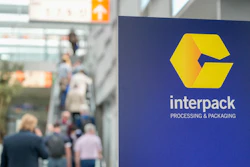
I'll be mostly handling the hosting duties for this week, as the three of you were out globe-trotting while I was rooted to my desk and don't have as many exciting tales to share as you do. Liz was at PACK OUT in Washington, D.C., and Matt and Derrick crossed the pond over to Düsseldorf for the big one, interpack.
So to kick things off, ladies first. Liz, PACK OUT—what was that all about? How was it?
Liz Cuneo: It was great. I got to reconnect with people I met last year, which is always fun, and see some new stuff. A lot of that show was really focused on education, which I appreciate, so I got to learn more about the industry and what’s on med device manufacturers' minds.
It’s sort of the same stuff, but it’s evolving, as always. Costs are rising, regulations are changing, supply chains are shifting. There’s a lot of uncertainty in the industry, and of course, sustainability expectations are rising.
One of the presentations talked about sustainability and how it’s still prevalent. Of course, in a highly regulated industry like med device, it’s more difficult to incorporate recycled materials, and even recycling challenges in the operating room are complicated.
A lot of these devices are made for the operating room. There’s talk of where you put the recycling bins, whether you train the nursing staff to separate materials, and whether that’s really their job during surgery. Do you want that to be their job? There are a lot of different factors, and it’s very different from consumer goods.
There was a lot of talk on that, which was interesting to hear, but companies are definitely still taking sustainability seriously. Another hot topic was global trade and how that’s changing with tariffs, manufacturing in the U.S., and things like that.
Then sterilization, of course—finding alternatives to EtO, ethylene oxide. A lot of alternatives are emerging, and there’s a lot of testing that goes on to make sure they work as well, are safer, and do the job they need to do. There’s a lot of hope there for alternatives, and it’s always good to hear what’s going on—the pulse of the industry, if you will.
Sean Riley: Yeah, I’m not trying to be anti-sustainability, but I don’t know that I want my doctors and nurses in the operating room to be worried about it. Unfortunately, there’s a lot of single-use in medical device for obvious reasons. Maybe somebody could come in and handle that after the fact, but while you’re on the table, I don’t know that I’d be that concerned about it.
Liz Cuneo: I know, but then you need the people. Go ahead, Matt.
Matt Reynolds: I was going to say, think about recycled material. The other side of that coin is, if you’ve got a medical device—whatever it is—and it’s going to be put into you in some fashion, do you want that to be 100% virgin clean plastic, or would you be OK with that being 50% PCR?
That’s something we hear with food a lot—food contact. But I can imagine food contact is one thing. Liz, what your audience is dealing with is another level of balancing safety with sustainability. I can imagine there were all sorts of interesting conversations in that room.
Liz Cuneo: Yeah, there were. Someone mentioned—not at this PACK OUT, but when I was talking about the event at PACK EXPO—a presentation from a couple of years ago at a different PACK OUT where someone was talking about actually reusing transplants. Not organs, but things that you embed. Could you take that out of a cadaver, sterilize it, and reuse it in someone else?
That’s ultimate sustainability, but there’s that cringe factor. I don’t know if that’ll ever be the case. When you talk about that kind of med device, it gets a little weird.
Matt Reynolds: Both of my wife’s knees are cadaver, so she’s OK with the actual body parts.
Sean Riley: Yeah, we’ll do it with body parts, but not with man-made things. That was exactly what I was thinking, Matt.
Liz Cuneo: It would be interesting. Well, if you think about it that way, why not?
Derrick Teal: I’ve had pieces of two people’s knees in my own knee, so…
Sean Riley: And that’s working out, right?
Matt Reynolds: It was working out until he saw the several miles of show that was interpack, and then the knees started barking.
Derrick Teal: They sure they did. On the way back from, what was it, day two or three, my knee just decided it had enough. My left knee—I’ve had surgery on that twice, and that was Greg’s cadaver ligament. On the way up, it decided it was going to become a mule and not move. It was done.
It was just a matter of having walked. I think the first day was seven miles, then six miles, then three miles, and then five miles for the four days we were there. On the way up, it had enough.
Matt Reynolds: So we parked Derrick. There’s a sort of equivalent to PACK EXPO’s Innovation Stages there, so Derrick parked there for an afternoon and had the innovation come to him instead of him going to the innovation.
Derrick Teal: It was a much-needed respite, but I learned a lot too. Probably the biggest and neatest thing I saw there was using a CT scan for product inspection. The company is called Biometic, with a T, not a D.
It was neat. You can run an entire multipack through this device, and it will scan to 0.5 mm of where it is. It’s a 3D scan, so you can manipulate it any way you want to see exactly where in the package it is, or which jar within that package, whether it’s at the bottom or top.
There were still some questions regarding the speed, and cost is obviously probably the big factor. As of right now, I think there are 40-some installations within Europe, but no permanent installations in the United States. They have a U.S. vendor, but that vendor’s job is essentially to come in as a troubleshooter. To my understanding, they’ll come in as needed, and it’s remote or movable—not something that’s going to be permanent like some of the European lines.
Sean Riley: That’s the first thing I thought of: speed. That’s wild to even contemplate how fast it would have to be to get through there.
Derrick Teal: I think it was 40 meters per minute, and 400 images per second, depending on the product. I think that was the max they said it was capable of.
Sean Riley: You guys had tons of videos that everyone listening and watching should definitely go check out from every day of the show. But Matt, what were the one or two things that sparked your interest? Interpack kind of lays the groundwork for the next three years, I like to think, for what’s happening or what’s going to happen.
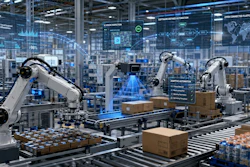
Matt Reynolds: I came in with AI radar going strong, just because we’ve seen that arc over the last three years here in the U.S., from virtually no adoption to it being a marketing tool. I didn’t notice it as much there, only because it was so baked into everything. It’s gotten beyond this threshold where it’s no longer a marketing tool or “come see our new AI thing.” It’s being used as a workhorse, and you’re almost non-competitive not to use it. It’s in every single facet of packaging.
We’ve seen it at the past two or three PACK EXPOs. I feel like we’ve been watching the incremental progress of AI seeping its way into all things robotics and machinery. Hey, dogs, do you guys mind? I’m podcasting. Get off.
Derrick Teal: While Matt berates his dogs, I want to correct myself: it was 40 meters per minute, but 400 images per second.
Sean Riley: Good correction, Derrick.
Matt Reynolds: I think they’re exhibiting contrition behind me, so we’re good. But I was surprised. It was everywhere, but it wasn’t just in the robotics and the humanoid robots that Derek and I had mixed experiences with.
Derrick Teal: I got attacked.
Matt Reynolds: Yeah, you got kicked and I got a handshake. But consider package design templates and package design libraries. If you’re General Mills, you’ve got 100 products, and each product comes in 15 SKUs. You’ve got different artwork for every one. One that you sell into one place has to have allergen-free on it, and another has to have a nutrition label that includes fats, while another one doesn’t have to include carbohydrates in Canada.
You can imagine how it becomes a decision tree that’s almost unmanageable. Esko, Dalim, and a few other platforms used to be SKU libraries or packaging artwork libraries. What they’re doing is bringing all that information together through outside third-party platforms.
It becomes this ecosystem. Somebody’s reporting all of the EPR data for the United States, and somebody else is reporting all the PPWR data for Europe, and where you’re going to have to report this type of packaging material because you use 50% recycled material. You can imagine the complexity there.
The big picture is that they’re using AI in these programs to take the human error and human pick-and-shovel work out of that. Like everything we hear at every step of the AI spectrum, there has to be a human with whom the buck stops. There needs to be a human eye at the end of it.
But the amount of work being taken off packaging designers, packaging developers, and packaging engineers’ plates in managing this storm of differing artwork was really impressive to me.
Sean Riley: So the data is still what is driving so much of the AI adoption, for lack of a better word.
Matt Reynolds: Yeah, the data that we’ve been collecting for so long and haven’t known what to do with—AI is able to make sense of it and make shorter work of it. Again, the human has to be the backstop and carry the ball into the end zone. But getting that far down the field has always been a daunting task for a person. Now we can automate that with AI.
Sean Riley: Awesome. It’s interesting to hear that it’s baked in now. When it first came on the scene, you would walk by a booth and they’d be touting, “We have AI.” It might not necessarily be to the degree they were touting it as. It was incremental in the way it came in, and then it kind of happened overnight.
So it’s interesting that now they’re not beating the drum that they have AI. It’s just assumed that they do, and if they don’t, it’s going to be very noticeable.
Matt Reynolds: Yeah, I would say that in certain realms or domains, not having AI would have been more surprising than having some sort of AI component.
Sean Riley: All right. Well, I know everybody’s tuckered out from their long weeks of traveling, so this was great. Thank you for carving out some time to hop on here for our listeners and watchers.
If you want more on Interpack, please check out Matt, Derek, and our young intrepid reporter Casey Flanagan, who also went over there, in those videos. They’re all great. Otherwise, thanks again for tuning in to this week’s edition of End of the Line.