These developments demonstrate how material reduction can be achieved through structural engineering and production optimization without compromising packaging performance.
Learn more about ThePackHub's Innovation Zone here.
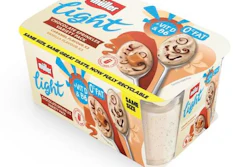
Müller UK & Ireland's cardboard sleeve cuts plastic in yogurt multipack
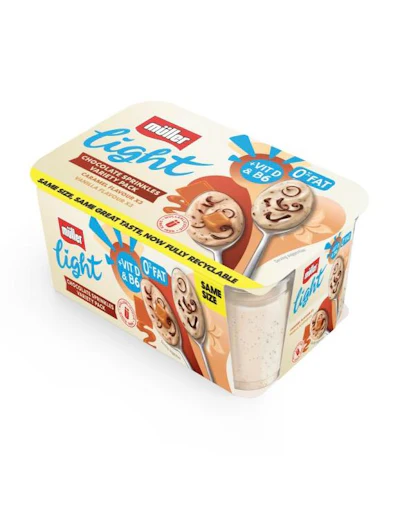
Müller UK & Ireland has introduced revised packaging for its Müller Light six-pack format that uses 30% less plastic than the previous version. The redesign replaces part of the multipack’s plastic content with a cardboard sleeve, creating a mixed-material format intended to reduce overall plastic use while retaining the individual 140 g yogurt pots. The company states that the new six-pack packaging is fully recyclable at home. The change focuses on the secondary packaging surrounding the pots rather than altering the yogurt containers themselves, with the cardboard component providing grouping and presentation functions that would otherwise require a greater quantity of plastic. This approach reflects a wider packaging trend in which brands are reducing unnecessary polymer content by introducing fiber-based components where appropriate, while retaining plastic where its barrier, sealing or structural properties remain useful. For consumers, the different materials need to be separated and placed into the appropriate recycling streams. Recycle Now advises that cardboard or paper sleeves can be recycled separately from plastic pots, while yogurt pots should be rinsed to remove food residue before recycling. The supplied company post specifically identifies the 30% plastic reduction and addition of the cardboard sleeve as the main packaging changes to the six-pack format.
 The structure uses FSC-certified cartonboard and its reduced dimensions are reported to increase container utilization by up to 33%ThePackHub
Telefónica's ready-to-ship router pack reduces shipping volume
Telefónica, based in Munich, Germany, has developed compact packaging for its o2 HomeBox 4 router that combines the retail pack and shipping container in a single structure. The ready-to-ship format is designed to remove the need for an additional outer shipping box, reducing the number of packaging components required during fulfillment. The structure uses FSC-certified cartonboard and its reduced dimensions are reported to increase container utilization by up to 33%, allowing more packed units to be accommodated within the same transport volume. The pack also incorporates accessibility and user-information features directly into its structure. Braille is integrated into the closure seal to help users identify and interact with the packaging, while QR codes provide access to digital information. Installation guidance is printed directly onto the carton using soy-based ink, removing the requirement for separate printed instruction sheets and associated inserts. Published information about the design also specifies single-color printing, limiting the number of inks required for the graphics. The combination of product protection, shipping functionality and installation information within one carton is intended to simplify the overall packaging system rather than relying on several separate components.
 Removing the previously required outer placement tray helps the new format use fewer components while retaining a ready-to-use application.ThePackHub
Ultradent Products introduces pre-filled whitening tray cuts secondary packaging
Ultradent Products, the US dental materials manufacturer based in South Jordan, Utah, has introduced Opalescence Go Advanced pre-filled whitening trays with a redesigned delivery format intended to simplify the packaging system and reduce material use. The main packaging-related change is the removal of the outer placement tray previously required to position the whitening tray, meaning the new format uses fewer components while retaining a ready-to-use application. Each patented UltraFit tray is supplied pre-filled with whitening gel, which is injection-molded directly onto the tray to provide controlled and consistent gel distribution. This integrated approach combines the product containment and application functions within the flexible tray itself, eliminating a separate component from the system. The trays are designed to adapt to the shape of the user's teeth without requiring custom dental impressions, boil-and-bite preparation or additional equipment. Users remove the tray directly from its packaging, position it over the teeth and discard it after treatment. Removing the outer placement tray could reduce the quantity of plastic associated with each treatment and simplify packing, distribution and disposal.
Learn more about ThePackHub's Innovation Zone here.