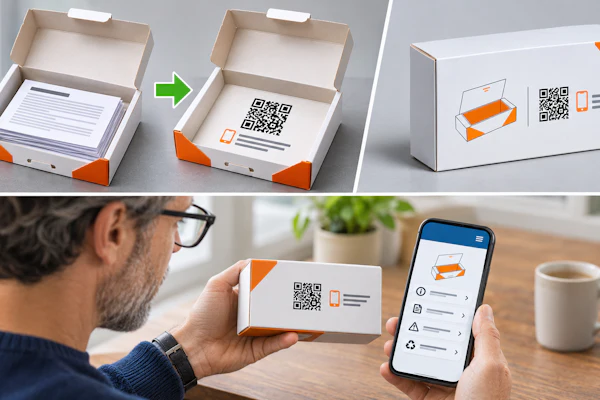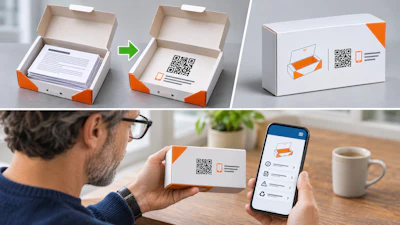
The Telecommunications Industry Association and Mobile & Wireless Forum have petitioned the FCC to allow manufacturers to replace printed regulatory disclosures with QR codes on device packaging for smartphones, tablets, and wearables. The proposal includes safeguards requiring manufacturers to maintain live, accessible URLs for the device's service life and protect content from third-party modification, though printed materials would remain optional.
- TIA and MWF filed a petition on November 9 asking the FCC to allow QR codes to replace printed regulatory disclosures for smartphones, tablets, wearables, and connected devices.
- The QR code would link to manufacturer-controlled pages containing FCC ID, Part 15 compliance statements, RF exposure information, and Hearing Aid Compatibility disclosures.
- Smartphone ownership among U.S. adults increased from 42% of adults 65+ in 2017 to 91% of all adults by 2025, supporting the shift from print to digital.
- Proposed safeguards require manufacturers to keep URLs live for the device's expected service life, maintain accuracy, prevent third-party modification, and ensure accessibility equivalent to printed text.
- The petition reflects broader regulatory modernization efforts, with implications for OTC pharmaceuticals, consumer packaged goods, and the upcoming GS1 Digital Link Sunrise 2027 initiative.
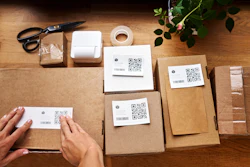
The Telecommunications Industry Association (TIA) and the Mobile & Wireless Forum (MWF) have asked the Federal Communications Commission (FCC) to let manufacturers of smart devices replace printed regulatory disclosures with a QR code on the outside of the product packaging or carton. Their joint petition for rulemaking, filed Nov. 9, covers products such as smartphones, tablets, wearables, wireless earbuds, and connected home devices. But what it portends may inform future cases among OTC pharma and wider CPG where leaflets or inserted literature are involved.
The code would resolve to a manufacturer-controlled web page carrying the device's FCC ID, the Part 15 compliance statement, RF exposure information, and Hearing Aid Compatibility (HAC) disclosures. HAC rules currently require a printed package label stating that a handset is hearing aid-compatible, listing its coupling capabilities, and disclosing its conversational gain. Using the QR code would be optional.
The petition applies only to devices the FCC regulates. But the questions it raises about who controls the destination, how long it stays live, and whether every consumer can access it apply to any regulated category moving from print to code. That includes brands preparing for 2D barcodes and GS1 Digital Link ahead of Sunrise 2027, and especially OTC drug and health products that still ship with folded leaflets or "literature" inside the carton.
The Case for Code
"Consumers increasingly expect to access product information digitally, yet many FCC disclosure requirements remain tied to labeling practices developed for an earlier era. Allowing manufacturers the option to use QR codes to provide required regulatory information is a practical, common-sense update that can improve accessibility, help ensure information remains current, and make it easier for consumers to find the information they need. By building on the Commission's existing electronic labeling framework, these reforms would modernize outdated requirements while preserving transparency and consumer access to important product information. TIA and MWF's proposal reflects the type of targeted regulatory modernization that helps ensure FCC rules keep pace with technological innovation and evolving consumer expectations," says Colin Black Andrews, senior director of government affairs at TIA.
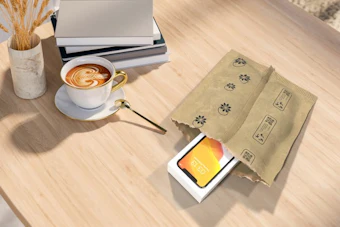
"The Mobile & Wireless Forum believes QR codes provide the opportunity to present customers with more detailed product information in an accessible and more environmentally responsible way than traditional paper-based documents—which most consumers never read. We are pleased to be working with TIA to advocate to the FCC for authority to expand the use of QR codes for those purposes," says Chuck Eger, counsel for MWF. Google’s device packaging for the Pixel 9 Pro Fold, Pixel Watch 3, Nest Learning Thermostat, Google TV Streamer, and Pixel Buds spans the range of products the TIA/MWF petition would cover. The phone, watch, and thermostat have their own screens, while the earbuds and streamer depend on a paired phone or TV, which would put them in different tiers of the proposal. Under the petition, a single QR code on each carton could take the place of the printed FCC ID, compliance statements, and other required textGoogle
Three Tiers, and Paper Stays an Option
The petition sorts device types by their relationship to a screen. For products with their own display, such as phones and tablets, the carton QR code would link to the manufacturer's regulatory page while the device continues to show the same information electronically, as FCC e-labeling rules have allowed since 2017. Devices that pair with a phone or computer, such as earbuds and fitness sensors, would carry the information through the connected screen. For the smaller class of products with no display at all, the QR code would be the main path, and manufacturers could keep printed material in the carton as they do today.
The petitioners maintain that the code does not eliminate paper inserts. It adds a persistent, machine-readable route to current information. They also propose safeguards for the rulemaking to address. The manufacturer would remain responsible for the accuracy of the QR-linked content, and the URL would have to stay live and accessible for the device's expected service life, including through a change of corporate ownership. The destination would need protection against third-party modification and would have to be at least as accessible as the printed text it replaces. The FCC ID would still appear in human-readable form on the carton or be encoded in the QR code itself.
One proposed safeguard speaks directly to connectivity. The petitioners suggest the rules could require the same information to remain reachable without a network, either within the device or, for display-less products, in printed in-box materials.
The filing also asks the FCC to authorize QR codes for business-to-business equipment whether or not it limits their use for consumer products. The petitioners argue that professional buyers already work from datasheets and scan codes routinely for asset tracking and inventory, which makes the transition simple in that segment.
Not Ready in 2017
This is not the first time QR codes have come before the FCC. According to TIA, they were raised in the 2017 proceeding that created the agency's e-labeling rules, and the Commission tentatively concluded that consumers had not yet fully embraced them. That conclusion predated the pandemic, which TIA says changed consumer habits enough to justify a second look, in line with FCC Chairman Brendan Carr's push to modernize outdated rules. The petition grew out of the FCC's "Delete, Delete, Delete" docket, opened in March 2025 to collect rules that no longer serve the public interest, where CTIA, the Information Technology Industry Council (ITI), and the Consumer Technology Association (CTA) made similar recommendations.
Consumer data supports the shift, with caveats. When the FCC weighed the question in 2017, Pew Research Center found that 42% of U.S. adults 65 and older owned a smartphone. Pew's 2025 survey put smartphone ownership at 91% of all U.S. adults.
Any change is still years away. The FCC must respond to a petition for rulemaking, typically by issuing a Public Notice that invites comment on whether to proceed. A Notice of Proposed Rulemaking with draft rules and staff questions could follow, and only then a Report and Order with a final rule. TIA says it does not expect the Commission to adopt the petitioners' proposal unchanged, and that many open questions will be settled through comments from manufacturers and consumer groups.
What CPGs Can Read into It
The petition never mentions GS1 Digital Link, Consumer Brands' SmartLabel, or any encoding standard, and TIA's response to PW's follow-up questions did not address them. The petition specifies what the destination must do, but not how the code gets consumers there. For brands already building toward Sunrise 2027, the industry goal of retail point-of-sale systems that can read 2D barcodes, that's an important gap. A regulatory code designed in isolation could end up as one more symbol competing for carton space alongside a GS1 code, a SmartLabel code, and a marketing code.
TIA's own framing points toward separation. The group says it supports letting manufacturers meet existing printed requirements through "a single QR code that would lead to a regulatory landing page." Whether that page can share a code with marketing or support content is one of the questions left for the rulemaking. CPGs face the same choice between one consolidated code and several purpose-built ones.
The petitioners' safeguards also double as a checklist for any brand moving required content online. A destination that must stay live for a product's full service life, survive an acquisition, and resist tampering needs an owner inside the company and a budget beyond the launch. Tiffany McIntire, principal human factors engineer at Roche, told Healthcare Packaging, Packaging World's sister publication, that it "would take a new department of 120 plus people to be able to actually realize digital leaflets," citing maintenance, updates, and cybersecurity across a company's regional affiliates. Healthcare Packaging has covered pharma and medical device companies' attempts to move leaflets and instructions for use online since at least 2022.
Content that can be updated after a product ships also raises the question of which version governs if a regulator or a court asks what a consumer saw at the time of purchase. The destination also has to stay open. When Healthcare Packaging asked medical lab professionals about packaging pain points in 2024, one described online inserts locked behind manufacturer logins that took days to approve and urged companies to "print the insert in the package or make them available without a log in." Another asked that the insert's last revision date appear on the pack, a simple answer to the version question.
The petitioners point to Europe as well. They cite the EU Packaging and Packaging Waste Regulation's treatment of QR codes and other data carriers, along with the coming Digital Product Passports (DPPs), as evidence that machine-readable carriers will become the main interface between consumers and product information. They also note that moving multilingual compliance text online could reduce the need for market-specific packaging, a SKU-reduction argument familiar to any brand selling across borders.
Medical device makers have made the same argument. Samantha Smith, engineering director of product stewardship at Medtronic, told Healthcare Packaging in 2022 that the company wants to avoid carrying high-volume SKUs for multiple regions just to include the right instructions for use. "How can we come up with a hybrid model... so that we can use a limited amount of paper?" she asked.
The Leaflet Question
The closest parallel in packaged goods may be OTC drugs and health products. An HDPE bottle of pain reliever typically ships in a carton, and many cartons also hold a folded leaflet. Removing that literature would mean less paper, fewer insertion steps on the line, and content that can be corrected without reprinting. FDA's labeling rules are a separate regime, and nothing in the FCC petition touches them.
Outside the U.S., health regulators have moved further than the FCC. A 2025 survey of regulatory experts by Sanofi authors found QR codes on outer packaging to be the most widely adopted way of delivering electronic medicine labeling, cited by 74.7% of respondents. Malaysia's drug regulator allows approved package inserts and consumer medication leaflets to be provided through a QR code on the pack. The Global Self-Care Federation, which represents the consumer health industry, has credited COVID-19 with accelerating e-labeling and making consumers more familiar with QR codes, the same argument TIA makes.
OTC brand owners have been experimenting for years. In 2022, Daniella Foster, then head of public affairs, science, and sustainability for Bayer's Consumer Health division, told Healthcare Packaging that Bayer was using government-approved QR codes for health education in some Latin American markets. "If you have QR codes, you eliminate the need for things like leaflets," she said.
The consumer-access question looks different for OTC products than for phones. A smartphone buyer owns a scanner by definition, even if the new phone in the carton isn't set up yet. A consumer reaching for a pain reliever may not. Pew's 91% ownership figure still leaves roughly 1 in 11 U.S. adults without a smartphone, and ownership drops with age.
Owning a phone also isn't the same as knowing how to scan with it. McIntire cited studies presented at the Human Factors and Ergonomics Society in which more than half of participants didn't know what a QR code was or believed they needed a special app to open one. And a scan needs a data connection, which isn't guaranteed at home, on the road, or in the middle of the night when someone needs dosing information.
The petitioners' own fallbacks show the limits. A phone can display its regulatory information offline, and their proposal leans on that redundancy. An OTC bottle has no screen. For packaged goods, the carton and its leaflet are the offline backup, which suggests the realistic near-term outcome for OTC is a hybrid, with the code adding to printed content rather than replacing it.