Transcribed from AI, rev.com
Sean Riley, OEM magazine:
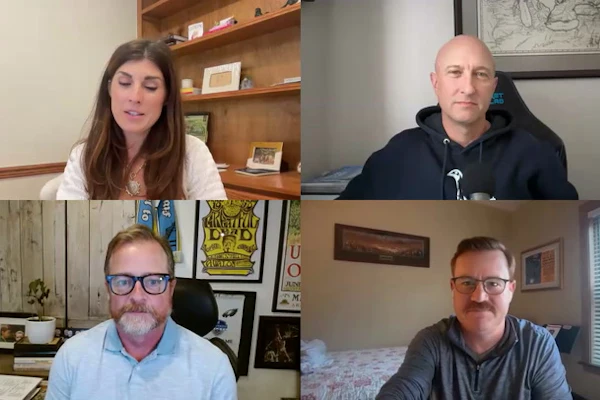
Hi, I'm Sean Riley, editor-in-chief of OEM Magazine. I'm here with my good friend and colleague, Matt Reynolds, the chief editor for Packaging World Magazine. Together as an editorial staff, we recently completed production of Packaging World's 2026 annual Outlook report. The second of its kind spanning the entire packaging universe. Welcome to a quick sneak peek overview of the results of our survey on digitalization trends for 2026. The subjects we look into include healthcare, packaging, contract packaging, workforce automation and robotics, digital transformation, e-commerce, and direct to consumer packaging and sustainable packaging. This particular video is going to dive into just digitalization as Matt led the way on that part of our survey. The full report is available at the SHORTY link. You'll see it up on your screen. It's PW GoTo 9 0 5 2, and all the links to the full report should be available on whatever channel through which you're viewing this video, whether it's our website, LinkedIn, YouTube, et cetera, et cetera. Give that link a click to access the full report. Now, with that long preamble out of the way, Matt, let's jump into your research on digitalization first. How are we doing today, Matt?
Matt Reynolds, Packaging World:
Not too shabby. A little windy in Chicago, but that kind of goes with the territory here.
Sean Riley, OEM magazine:
That is exactly what you're called the windy city. So we're going to jump right in. Matt, digitalization or digital transformation as it's called, we hear a lot about it during our day job as editors from your research, what stood out from the survey this year?
Matt Reynolds, Packaging World:
Well, the big picture is that it's happening at multiple different paces, so it's occurring. We still see a huge cohort of people, roughly a third, who don't even realize they don't fully understand what their company's plan is. But of the two thirds that are aware of digitalization and are aware that what their company is doing, we're seeing a little bit more understanding of it. The thing is, it's happening in phases. It's not happening on one continuous slope. It's happening in graduated phases. So we're not yet seeing things like fully AI driven factories, autonomous operations and robots and so on. But the foundations are being built. The foundations really, infrastructure is data and the collection of data, because some of these future state ais and autonomy in general in the autonomous factory are built on data. So right now, it's a matter of collecting data, collecting clean, actionable data across the enterprise and various everything from the factory floor, and we're talking about processing side and packaging side all the way up into the C-suite where you're looking at some of the more sales and marketing techniques and so on.
All of these need to build these foundations of data, and I think I would argue that we've probably been doing it in sales marketing and some of these softer, less production heavy forms for longer and collecting more better data for longer. In our industry, Sean, we still hear about people running on Excel and some of these things, so that is data, but it might not be managed or cleaned. One of the ones we heard about in PAC Expo East a few weeks ago was people uploading data into ais that was 40 years old written data, and the ais are able to decipher it. So you've got a lot of different ways to routes to digitalization. So I would say the big picture foundations are being laid at different paces at different locations within an enterprise.
Sean Riley, OEM magazine:
That's interesting. And as you were speaking, the first thing that was popping into my mind is I bet a lot of these companies that are responding are doing it and don't realize how much they're doing it, which you kind of hit on with Excel as an example in marketing or sales or stuff like that, but that they may be further along in their journey than they even realize. Is that fair to say?
Matt Reynolds, Packaging World:
Yeah. So that cohort, that 32, 30 3%, that rough third who don't know, that doesn't mean that their companies aren't well on their way on a digitalization journey. Sometimes we can be stuck in our own silos and we don't realize that while we're using some of these platforms that have been implemented, we are collecting data. We are building towards the next iteration of the connected factory.
Sean Riley, OEM magazine:
So as I kind of mentioned earlier, digitalization, digital transformation, it's kind of something we've been talking about for years, but it's one of those sustainability or AI that whether or not we're actually taking advantage of it or have been using it or it's just a term is what we're kind of getting at. And I think you're getting at with your research. So our companies for the most part, still just talking about it, or is it something that we're seeing in action, and where do companies or most companies fall on that journey right now?
Matt Reynolds, Packaging World:
Yeah, it's sort of just the awareness piece that we were just talking about. A third, a third, a third, a third are leaders, a third are getting their ducks in a row and a third aren't sure. That kind of reflects the digital maturity, the actual maturity curve. I would say the leaders, those who self-identified as either true digital leaders or pretty mature and integrated in their digital journeys were as we would've expected, that's a small cohort. It was less than 10%. Then you've got a pretty good a quarter in the middle, have multiple systems partially connected, so they're getting there, the infrastructures are being built, the data is being collected. There's another third that are launching a few pilot projects. They're getting there, and then another third that are just getting started. So you've got, again, the third just getting started, a third that are just getting a few projects and pilot projects off the ground, and then the remaining third, I would call them the leaders cohort. Only a very small percentage of that remaining leaders cohort really feel like they're ahead of the game. So it's a smattering. It is a gradient. It really depends. I suspect some of the largest and most complex, and let's say companies with the deepest pockets that have whole teams working on this and have been working on this, probably have a little bit of a headstart on that journey. It's not really a race, but the companies with more resources available to them and whole teams are probably further along
Sean Riley, OEM magazine:
The cynical or I don't know if that's even the right way to put it, but a part of me was thinking that when you were saying that it's going to be the people that had the most money that came down from the C-suite, that this year for Q five we're going to do digital transformation, and that's kind of kickstarted it for that smaller percentage. That's a little bit further down the line.
Matt Reynolds, Packaging World:
Yeah, I think just having the awareness that an architecture is being built, that's some wind in your sails right there. So a lot of this is analysis paralysis and not knowing where to start. Should we start at the C-suite? Should we start at ERP? There's a million different platforms, and we talked about this at back expo. We talked about this a little bit at top to top last week or this past week. Just when you say digitalization or digital transformation or ai, it means something different to everybody. So just knowing where to begin is really hard. But once you start getting the infrastructure built in multiple different sectors of your business or the full enterprise, it starts coming together fast and it swims into view in such a way that it becomes something that's tangible very quickly.
Sean Riley, OEM magazine:
Well, that's good for the people that are early in the process. Which leads into my next question. If companies are early in the process, what technologies are they prioritizing to get the ball rolling?
Matt Reynolds, Packaging World:
I'm going to go for a record one podcast, one video number of times somebody says data because that's it. Those are the foundational building blocks is discrete pieces of data or basically being able to record mean. The very meaning of digital is to discreetly record pieces of information in such a way that can be organized by an ai, by something like that. So data collection and analysis is the number one tool and approach being used. We're seeing some of the things that are kind of at the intersection between CPG and OEM, that's some of that remote monitoring, remote access for equipment that's been around for a little while, faced some headwinds in terms of cybersecurity and things like that. But I think that those walls are, there's some workarounds there such that remote access is coming together. We mentioned that a lot is happening in the C-suite, ERP systems, warehouse management systems, these sorts of things. These are the ones that people have really taken a bite out of already. But the important thing is that 50, you'll see the chart on the screen, 55% of data collection and analytics. That's building the foundation for future, more automated, more autonomous factories.
Sean Riley, OEM magazine:
Interesting. Okay. So I guess with all of that kind of in mind, the companies that have either been involved in it or the companies that are slowly coming up to speed on it in general, where do companies expect this to kind of be the game changer or at least to have the biggest impact on their operations?
Matt Reynolds, Packaging World:
I think last year, just backing up a little bit, we saw we were able to tease out manufacturing into packaging and in processing, and what tends to be the case in a lot of things that are process oriented, some of the change starts upstream and trickles downstream rather than as soon as you create one efficiency, then the bottleneck just moves a little bit downstream. So I think last year we saw processing was really where digitalization was making the impact. Now we're starting to see that shift further downstream to where packaging, once the batter has been mixed and baked and deposited, we're starting to see packaging catch up to processing. But also in areas like supply chain management, we mentioned ERP systems, warehouse systems, these types of discrete systems that kind of ladder up into these enterprise-wide systems. But then obviously there's the softer piece too. So it's in manufacturing, but there's the consumer insights piece, there's the sales and marketing pieces. All of those saw bigger, those softer pieces saw bigger leaps in 2026 more recently.
Sean Riley, OEM magazine:
Okay. We touched on AI because we can't go 30 seconds in this industry now, or I guess in the world, to be fair, without talking about ai. It's what all everyone wants to talk about. So what's the survey show for about ai? I'm sure there was questions on there that they danced around that.
Matt Reynolds, Packaging World:
Yeah, again, we're seeing that kind of in the marketing is the number one spot where we're seeing AI being used because these large language models are accessible to all of us at all times. But really there's no, other than marketing, it's manufacturing processes, consumer insights, sales, it's across the board. So ai, it's like sustainability in that it's becoming baked into every conversation that we have. Exactly. But ai, I would say it's a future state to be able to really trust AI as the single source of truth. So right now, it's a matter of developing all that good data, the good data that AI runs on. Really, it's like the fuel for ais, but developing good clean data to be able to drive those ais.
Sean Riley, OEM magazine:
Okay, that's fair. I looked over some of the research when I was sort of prepping for this and I wanted to make sure that we touched on smart packaging. I noticed it was in there. It's certainly part of the digital digitalization world. Is there anything earth shattering happening in there? Has it already happened or is it something coming down the road? What's going on with smart packaging?
Matt Reynolds, Packaging World:
Yeah, I think with the Sunrise 2027, it's kind of forcing the hand for some brands and retailers to adopt 2D, 2D barcode packaging, and that 2D barcode can potentially be sort of a Trojan horse to pack in all sorts of information, whether it's traceability, it could be consumer insights. There's a lot that you can put in there. I'm going to use a different ai. Everybody talks about artificial intelligence, but within the smaller framework of connected packaging in Sunrise 2027, there's what we call identifiers, or I'm forgetting the term now. Of course, application identifiers got there ais. So within this digital link code as part of Sunrise 2027, that's in the 2D barcode or QR type code, a brand owner or whoever's marking that on the product can pick and choose multiple different AIS identifiers that perform different tasks. So whether that's the link to the website, whether it's a supply chain management track and trace traceability, all of that kind of stuff can be built in.
So brands and retailers are kind of negotiating it right now as you can only fit so much within a QR code before it gets too pixelated, too fine to be able to scan and see. And we know that packages don't want to use too much of their label real estate on a big QR code that packs in more. Exactly. So right now it's kind of a game of poker as to what is going to win out as the most commonly used ais. But there's a lot of applications that are available, a lot of application identifiers. So it's probably going to be product and industry specific. If you're doing ice cream, these are the ones, temperature exclusion might be one. If you're doing garments and textiles, then it might be making sure it goes beep at the checkout or something like that. So a lot of different ais are available, but this is a small subset of the wider thing still really interesting to watch given its timeliness and next year being sort of a deadline for sunrise 2027.
Sean Riley, OEM magazine:
Interesting. Okay. So then I guess taking all that we've talked about into consideration, how would you summarize the digitalization story from this year's annual Outlook report? If you had to put it in a couple sentences, what would it be?
Matt Reynolds, Packaging World:
Everybody's moving at their own pace. If you haven't started yet, never fear. There's a big cohort who aren't even aware whether their company is doing this yet. There's a likelihood that you are already on your digitalization or digital transformation journey without you knowing it. Just by nature of you using some of the tools that are out there and building kind of a foundation or a baseline of clean, valuable data that can then be digitized further or synchronized and synthesized with other platforms to kind of become what we envision as the factory of the future, the smart factory of the future.
Sean Riley, OEM magazine:
Awesome. Fantastic stuff, Matt. So our view is out there. Please take the opportunity to access the full report for each of the different segments that we've covered. It's the Packaging World Annual Outlook Survey 2026, and again, it's [email protected] slash 90 52. I'm spelling it out for you people, so please go take advantage of that. And thanks again for the time, Matt.
Matt Reynolds, Packaging World:
All right, thanks, Sean.