The viral vector contract development and manufacturing organization (CDMO) market is projected to experience significant growth through 2035.
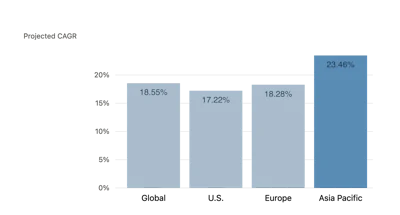
The market was previously valued at $1.29 billion in 2025 and is expected to reach $7.04 billion by 2035, growing at a compound annual growth rate (CAGR) of 18.55% during 2026–2035, according to a report by SNS Insider.
Growth is attributed to the fast-paced commercialization of gene therapies, cell therapies, and viral vector-based vaccines. Additionally, increased outsourcing by biotech and pharma companies contributes to the growth.
With expertise spanning process development, analytical testing, clinical and commercial manufacturing, and regulatory compliance, viral vector CDMOs have become key partners in moving therapies through development faster. Demand for scalable, high-quality vector manufacturing capacity is climbing as more gene therapy candidates reach the clinic worldwide.
By service type, clinical manufacturing led with about 31% share in 2025, while commercial manufacturing is forecast to grow fastest at 23.46% as approved therapies scale up. Process development, analytical development and QC testing, and fill-finish and packaging are included in SNS Insider’s report as remaining service segments.
North America accounted for about 47% of the market in 2025, with the U.S. representing roughly 93% of the regional total. The U.S. market was valued at $560 million in 2025 and is projected to reach $2.75 billion by 2035, a 17.22% CAGR. Europe, valued at $360 million in 2025, is forecast to hit $1.93 billion by 2035.
Asia Pacific is expected to post the fastest regional growth at a 23.46% CAGR from 2026 to 2035. The growth is largely driven by government investment in biologics manufacturing across China, Japan, South Korea, Singapore, and India.
Still, complex upstream and downstream processing, limited global capacity, yield variability, and raw material availability are factors that raise project costs and can stall smaller developers. Biotechnology companies, about 39% of end users, often lack GMP capacity of their own.