Transcript created by AI, there may be transcription errors.
Anne Marie Mohan:
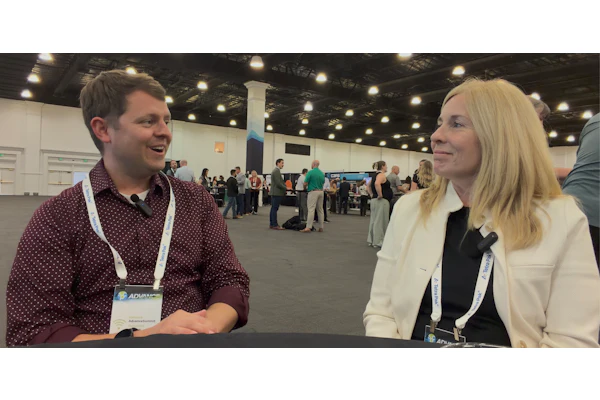
Hi, I'm Anne Marie Mohan, senior editor with Packaging World, and I'm joining you here from sunny San Diego. I'm at the Sustainable Packaging Coalition's SPC Advanced 2026 event. I'm joined here by Adam Rack. He is the co-founder and COO of Ravino, and he will be speaking tomorrow at this event. And he's going to talk about his company and its system for reusable wine bottle packaging. And reusability has really been a central theme here this morning as we talked about the SB54 regulations here in California and how refill and reuse could be a way to address some of that source reduction. So welcome, Adam.
Adam Rack:
Thank you.
Anne Marie Mohan:
So I wanted to get us started by asking you a little bit about your background and what it was about the wine industry and the way it handles packaging that led you to look for some sort of solution in this area.
Adam Rack:
Cool. I'll dive a little bit back into my youth because this is where a lot of the energy for this came from. I was born and raised in Western Kansas around agriculture, just surrounding us everywhere. So my early interest in sustainability was really fostered by the Land Institute based in Salina. This concept of regenerative was brand new at the time, but then also perennial agriculture instead of grains. And I kind of think of that as single use versus reusable, something that is in the ground giving itself over and over again versus restarting the whole process. So I actually moved to Oregon with my partner in 2014. And as you do, you join the wine industry as a young person in the Pacific Northwest. And the winery I joined was actually a zero use packaging winery. That's why I applied, kind of drew my attention from the first ad.
Adam Rack:
It was a place called Cooper's Hall. No single use packaging whatsoever, the growlers, and then they were very early in the keg space. So I spent the first eight years of my career in a weird space in the industry where single use packaging is not an option. So you have to iterate, you have to figure out how to sell people on a different concept, a different packaging. And in 2018, we joined the refillable beer bottle program up in Oregon that launched in 2018, first bottles in 2019. And during the pandemic, we saw some incredible opportunities there. We had packaging at our fingertips, didn't have to wait for tariffs, didn't have shipping delays. It was right in our locality. We were able to get shelf placements at a time when the rest of the industry was just struggling and trying to figure out how to shift from their wholesale focus to sell more directly to consumers.
Adam Rack:
And the reuse really gave us an opportunity to come in and be like, "We're doing something different, something engaging." And even though it was in a beer bottle shape, which didn't really pencil out for the rest of the wine industry, consumers really liked it. And so I got to see a lot of interest and engagement on that front.
Anne Marie Mohan:
Oh, that's interesting. There were some silver linings for packaging and CPGs during COVID. I guess you could say that was a good testing ground for reuse. So a lot of people have never seen the journey of a reusable bottle. What does that look like when you're talking about reuse from the filling of the bottle to the consumer, to the collection and washing and back again? And what really needs to happen to make that work?
Adam Rack:
So there's different ways to approach it, but the way we wanted to approach reuse was going at it with the lowest barriers possible. So no changeover parts for bottling lines. We went to the table to design a standardized bottle because once those bottles go back onto packaging at high speeds, packaging lines at high speeds, they have to be uniform and you have to visually be able to distinguish just like that final check, whether it's you think you trust it going through the system, but there's so many variations from supplier to supplier, from mold to mold that standardizing was a really important part of it. And that also unlocks the opportunities to market differently, to talk about it, to standardize the returns process. And that's where we kind of become the glue in the rest of this process. So we kind of have three pipelines, but for most of the supply chain, it's the same.
Adam Rack:
You buy the bottles, most of them are new at this point until the market scales, until we have more circulation, more states that we operate in. And most of it's the same. That means for wineries, they don't have to go over big expensive change parts. They're not trying to figure out a whole different product or material or filling style. So they buy the bottles, they change their labels a little bit if they aren't using compatible labels. And that's just adhesive, that is functional and comes off in a hot water caustic kind of wash system. And we do ask them to add some language on the bottle, minimum things to allow a customer to see it, identify it, look at the back of the label and either see a QR code or a website to actually find out where to return it. So lowest hanging fruit first is the winery themselves.
Adam Rack:
So most of the wineries in Oregon and a lot in California and all over the country actually sell to their market first. They are direct to consumer sales. Some of them only live in that direct to consumer market. They don't send to wholesale or retail. And that's an easy opportunity to, they're pouring them on site, reclaim those bottles and anything that goes out with the customer, it becomes a touch point to encourage them to come back and visit again. Because we also know that when you lose the customer experience, when they get something shipped to them, they don't get that touch point, the interaction with you as a winery owner and your story, what you're doing, your staff, that is really the only thing that keep a lot of people in these club systems instead of just going to the grocery store and buying a bottle.
Adam Rack:
So that's our first return system. The second one, a little bit more difficult, is the open loop, the open markets. And that's the reuse kind of gold standard is how do you build a reuse in an open loop system where things are going all over the place, wine bottles get shipped across the country. So we came in with an understanding that you have to level set. You're not going to get a 90% return rate anywhere in the next decade. I'd love to say that we will, but that's not the reality in a country that only recycles 30% of glass. So we use it as a tool to encourage people to return it if they're in location of an actual return location. And that is any winery that's participating will take the bottles back. Bottle shops, we have a retail chain up in Oregon, 22 stores that will take them back and offer rewards incentives.
Adam Rack:
And the big one that we're excited about down in California is the deposit return system. So formal statewide systems that the infrastructure's all out there. It just needs some adaptation to allow us to start collecting reusables out of those systems that are already in place. And that lowers the difficulty for the consumers, the extra location to drop something off. And as we invest more in those systems, especially in California, we have an opportunity to say also don't forget about the higher value in a bottle, which is full instead of little tiny shards of glass. Also worth a lot that can be remanufactured, but it's worth more in its full format. So we can kind of start to play the incentives game on what does it cost to get us back versus what does it cost to just recycle it in a market.
Anne Marie Mohan:
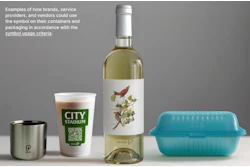
Right. You brought up a lot of very interesting points and I have to admit most of what I've covered in the past has been closed loop environments like a stadium and we're talking just about a cup where you're not putting a new label on every time. So that's interesting that they need to have that adhesive that will come off in your washing process if someone else then might be using the bottle. But you talked a lot about standardization, which it requires. And as we were walking over here, you were telling me that wineries already standardize quite a bit on bottle shape. So there's the burgundy bottle and it sounds like you started with that shape. Could you talk a little bit more about that, why and how you were able to get these different wineries to agree on a certain shape and size?
Adam Rack:
It’s complicated. A lot of tradition in the wine space to a winery or a brand manager or let's say a marketing team, they might have very strong feelings that this particular style of burgundy shape, it's a little fatter, a little bit taller, a little bit longer neck, sells their brand and it's the only way a customer is going to know that it's theirs. But in reality, most customers know there's a tall one, the Bordeaux shape and a burgundy and then sparkling, which is also a burgundy, but heavier glass. So there are very few things on the consumer side where it's a big signal to them that it's different. There is that cat bottle out there from Germany, which I don't see very often, but there's not a lot of real customization within the wine space. It's kind of small or maybe embossing on a bottle. So there is an opportunity to kind of plug and play with the systems that we already have.
Adam Rack:
So we went to the table with the industry in hand, hand in hand to go through the design process to say, here's what we need. We need a standard that you will use. It has to be identifiable by machine learning, AI, and the human eye that it's different and it should go somewhere else at some point, but it can't take away from the label, like the brand that is selling that bottle. So we have to balance how ugly or how loud we say it's reusable versus what a customer, a brand is willing to use and leverage. And what I've heard today actually at SPC is talking about using the packaging, which is kind of how we shifted the single use. We use the packaging and shiny new pretty things and custom as that marketing tool. And what we've been talking about is using reuse as a marketing tool, as a way to engage customers in what is otherwise a generic bottle that they don't notice the difference on.
Anne Marie Mohan:
So if a lot of these wineries are reluctant to standardize because they feel like that's a brand differentiator, how did you convince them that standardization and reuse is a benefit to your company, both economically and in sustainability terms?
Adam Rack:
Yeah, some of that's already happening. So the lightweighting push, the wine industry has been talking about it, fighting against it, moving towards it in various kind of spits and sputters for about 15 years, 20 years. Basically we're just now back at the point where we were in the 80s, 70s on the weight issue. But on glass engineering, there's only so many things you can engineer into a lightweight design without extra stress points, without extra issues coming up in the production side or feasibility on producing that bottle efficiently drops. The lighter you get, especially on that border, the less speed you're running the line at, the less efficient your line is, the more rejects the line has. And that's something that I think the industry hasn't done a good job. The glass industry hasn't done a great job of being like, look, we have a limit and it's either ultra lightweight and slower and more expensive or a slightly heavier bottle but high volume.
Adam Rack:
And that's something they're grasping right now, but then the industry has also started to choose lighter weight to begin with just because we have these EPR laws. We have the reality of just shipping is getting expensive. So it's not a difficult thing to get them to change bottles because they're thinking about changing already. The difficulty is getting them to think differently about their responsibility for the packaging that they choose and leverage the opportunities that come with reuse, opportunities that don't come with lightweight. You don't get the extra consumer touch points that you get with lightweight a bottle. And in some ways you get decreased kind of shelf value or presence with some of these ultra light bottles. We don't see it in the wine space, but the little tiny skinny caps that now come on juice containers, you have accessibility issues, you're having just quality degrading in packaging through lightweighting.
Adam Rack:
And that's something that I think the industry is concerned about because of the shelf value, the cost to them and their brand of going towards that ultralight space. So wine is a very unique market in that context. It's not all about unit economics, but it's still about it at the end of the day. Just a lot more wiggle room for a brand when they're selling a $70 bottle versus a 42 cent sauce jar or something. Right,
Anne Marie Mohan:
Right. That's something I hadn't considered either. That's very interesting. So you got some exciting news recently, I understand. You have been given a $4.8 million grant by Cal Recycle to open the first certified bottle washing facility in California. And that means that California wineries don't have to ship their bottles to your facility in Oregon if they want to be part of the system. So what did you learn in building your business in Oregon that you can translate over here to California and what's different about this market?
Adam Rack:
It's so much bigger. That's the big one. Getting to penetration in the consumer return space is going to be a lot more difficult just because we partnered with New Seasons in Oregon. That is a significant majority of the population is within their shopping territory. It's just the Portland Metro area. That's a lot harder to do in a state like California. That is conquering 700 stores instead of 22 stores in a region. But one of the things that's unique about being down here is that we actually get to engage in that formal deposit return system in the BCRV program or BCRP program. So wine is a part of the deposit program here. We like seeing that because it works. It is proven globally to be the return stream that people eventually use. There's a lot of maturing right now in the California deposit return system, but that is that opportunity to kind of plug in and say, what can we do differently?
Adam Rack:
And then we get to play into the deposits themselves. So as a certified bottle washer processor, which is an entity that doesn't exist anywhere else in the country, we get to certify and authorize payments of those credits, which wasn't legal until 2022, 2023 in California. You had to crush the bottle to give people their deposit back. So that's something that has changed recently and that's something we're excited about because then things can go back with all the other beverage containers and then that opens up the doors to say what other market segments can be shifted into reusables outside of just the wine space. There's also a lot more on-premise consumption at wineries, especially down in Southern California. You think Temecula, party central, people approach wine in a very different way down there where they are coming, they're enjoying a concert series and they're pouring 2000 bottles on a weekend.
Adam Rack:
So the opportunities to grasp those bottles, pull them back become a lot easier just because the volume is there.
Anne Marie Mohan:
Okay. So you're going to be speaking tomorrow at this event and I read the overview of what you're talking about. And one of your points is that we have to move beyond isolated pilots to more cohesive systems. And what would you like listeners to take away from your talk tomorrow and what do you see as a future for your company and reusable systems? You talked about the deposit reuse system maybe opening the door to other formats.
Adam Rack:
I hope so. Right now, policy does treat EPR materials and bottle bill materials very separate. And I think that's a lost opportunity, especially as we're looking at meeting EPR targets, mandated reuse targets through EPR models, source reduction targets through reuse. Where these other systems, we know how they operate. There's already reusable beverage container systems in Canada, Mexico, both of our neighbors here. Most countries around the world have some form of it, whether it's just in the beer space, Austria is an example where it's been in the wine space in a very unique way. Italy, they just do it. They just do it. They don't ask questions. They don't make a big hubbub of it. It is just done day to day. So I do see the opportunities to overlap on those as really important right now is that time where we have to say, can we make these interoperable so that consumers know what reuse is and that reuse location, if it's in this open loop space, it can be the return spot for a food container and a beverage container.
Adam Rack:
And we can leverage existing infrastructure, existing trucks, routes a little bit faster by sharing the workload instead of saying, "Nope, this is the truck that picks up bottles." You come later to that same location and pick up a food container and then you drive your own ways. And that is not super efficient, but it is nice seeing people in spaces like this talk about collaboration in a different way, in a pre-competitive, like we have the same problem, let's fix that and then compete. And that's hopeful in a space that there's not a lot of hope sometimes. And we've been investing in recycling for decades and decades and billions of dollars a year. We haven't invested in reuse at anywhere near this scale. We still won't under these programs, but small investments can trigger huge benefits. And once you start seeing those huge opportunities on the collaboration front on how consumers perceive and engage with packaging, I think we'll see hopefully a mindset shift in how consumer goods companies compete.
Adam Rack:
And that might open up those doors to say, "Hey, maybe we should shift more snacks into resealable jars and packaging." Why are nuts in single use containers when they could easily be something that is consumed on a regular basis, these faster turnaround items? I'm just talking forever.
Anne Marie Mohan
That's absolutely fine.
Adam Rack:
Pasta sauce, people pour it, dump it, it's over. Perfect opportunity to reuse. Standardizing in that segment is so easy. Most jars are not competing on a specialty shape or size in that segment.
Anne Marie Mohan:
True, true. Yeah. One thing that sticks with me that I heard some years ago is that in order to make reuse work, it has to be as simple for the consumer as throwing something away. So having that standardized drop off points for any kind of packaging and then at the back end, having that infrastructure to collect and wash sounds like it was going to really move reuse forward.
Adam Rack:
Yeah. And there's a lot more of us working on this than ever before. 30 years ago it was the hippies or the environmental folks exclusively, but now we do see it, whether it's because of policy for some people, it's because of the fees or just the reality that landfills are filling up. We can't keep this model going. We can't just keep spending and assuming recycling's going to improve because it's only a part of the solution. We also will recycle our containers at the end of their life. We still need the same infrastructure to crush, melt, and remake that glass. But in the meantime, you can have some more circles and provide more opportunities to feed recyclers with clean material by having these smaller circles for reuse. So I'm excited about that, but we'll see. It's going to be decades and more and more meetings like this where people are chatting, trying to figure out how to vision it differently and break out of the boxes that we've put ourselves in.
Anne Marie Mohan:
Well, it is exciting. I mean, the last several years I've heard more about reuse and people working on these systems, as you said, than ever before. So it will be exciting to see how it grows. Yeah. So thank you so much for your time and I look forward to your presentation tomorrow.
Adam Rack:
Thank you. Appreciate it.