Extended producer responsibility (EPR) has shifted packaging sustainability from a design discussion to a complex business challenge requiring brands to manage compliance across multiple state regulations, build reliable packaging data, and ensure their materials can actually be recovered through existing recycling infrastructure. Success depends on collaboration between brands, recyclers, equipment manufacturers, and regulators to address technical, economic, and consumer acceptance barriers throughout the entire packaging lifecycle.
- Seven states now have packaging EPR laws with different producer definitions, material categories (ranging from 65 to 95 categories), and reporting requirements, creating compliance complexity for multi-state brands.
- Material recovery facilities face physical constraints that prevent successful recovery of small-format packages, flexible film, and certain designs despite theoretical recyclability, with only about 5% of small-format packaging reaching proper recovery streams.
- Brands must invest in component-level packaging data collection and modeling to accurately report to EPR programs and use the same data for forecasting, fee estimation, and future packaging decisions.
- Flexible film recycling requires subsidies from EPR funding and industry initiatives like USFFI to cover increased collection and processing costs until stable end markets develop, with California targeting 2032 for recyclable or compostable covered packaging.
- Packaging redesigns for sustainability must involve operations and equipment manufacturers early in development to ensure new materials can run on existing lines, meet distribution requirements, and maintain consumer acceptance beyond recyclability alone.
Packaging sustainability has become a systems challenge that extends well beyond the design phase. A recyclable structure can still fall through a screen at a materials recovery facility, contaminate another material stream, or reach a recycler with no end market waiting for it. Recycled-content mandates can create problems when brands can’t source resin that meets odor, taste, or performance requirements. A switch from plastic to paper can change what happens on the packaging line. As a result, decisions about materials and design increasingly reach into regulatory compliance, manufacturing, recycling infrastructure, and the consumer experience.
These were among that challenges that were explored at the 2026 Packaging Recycling Summit, produced by Packaging World and held in June in Rosemont, Ill. Brand owners, retailers, recyclers, MRF operators, equipment experts, and others examined what it takes to move packaging from recyclable in theory to recoverable and usable in practice. EPR was a major part of the discussion, both as a new compliance responsibility for producers and as a source of funding that could improve collection, sorting, processing, and end markets.
The sessions also showed how much of the work falls back on brands. That includes building the packaging data needed to manage EPR, testing whether difficult materials such as flexible film can move through the recycling system, finding PCR that meets product requirements, and redesigning packages so they can run on existing equipment and be accepted by consumers.
What happens to a package at the end of its life increasingly depends on decisions brands make long before it reaches the recycling bin.
EPR shifts from policy discussion to business practice
Extended producer responsibility has moved quickly from a policy discussion to a day-to-day business issue for packaging companies. Seven states now have packaging EPR laws, and several more are considering them. The challenge for producers is that the programs don’t follow one common model.
Jason Bergquist, CEO, North America, RecycleMe, used the word “patchwork” to describe the U.S. landscape. “We’ve got seven states, seven different definitions of who a producer is, several different levels of scope, different approaches as far as whether it’s just business to consumer or business to business or business to business to consumer,” he explained.
 Packaging EPR is now law in seven states, but requirements vary widely in covered materials, B2B applicability, funding models, and implementation timelines.RecycleMe
Reporting categories also vary. Oregon and Colorado use 65 covered-material categories, while California uses 95 and requires producers to identify plastic components separately. The Circular Action Alliance serves as the producer responsibility organization, or PRO, in six states, while Maine calls for a stewardship organization. Washington, Minnesota, and Maryland have begun aligning around a more common producer definition.
John Hite, senior director of public policy and government affairs at The Recycling Partnership (TRP), pointed to producer definitions, material categories, and fee incentives as areas where differences between states are creating compliance tension.
 TRP’s John Hite explains how EPR is bringing new compliance responsibilities for brands while directing producer funding toward recycling infrastructure, collection, and education.Packaging World
Beyond the compliance requirements for producers, EPR also brings producer funding into the recycling infrastructure. Hite described five areas that influence recovery, beginning with packaging design and continuing through access, consumer participation, processing infrastructure, and end markets.
“EPR is not a silver bullet,” Hite said, “but we see this policy layer into these different intervention points in the system."
In Oregon—the first U.S. state to implement a packaging EPR program—CAA has invested $25 million in MRFs, largely for automation, along with $2.4 million for contamination reduction. By the end of 2026, 97 RecycleOn collection centers are expected to be operating for materials that previously had limited collection capacity. “So EPR is starting to kick in,” Hite said. “It’s starting to have an effect.”
Illinois is among the states watching those early programs. Christina Seibert, executive director of the Solid Waste Agency of Northern Cook County and president of the Product Stewardship Institute board, said the state can learn from the implementation and legal challenges appearing elsewhere. “We want to have policy that is defensible, that is implementable, and that is operable from all the different levels of the chain,” she said.
Seibert also wants brands to be directly involved. “When I call, I hope you answer, and you show up and have a meeting with us,” she said. “What I want to hear is what are your real challenges.”
 Charlotte Ashcraft of Just Born explained that EPR is less a policy problem than a packaging-data problem.Just Born
Charlotte Ashcraft, senior manager of packaging and graphics development at Just Born Quality Confections, provided a glimpse into some of those challenges in practice (see “How Just Born Turned Packaging Data into an EPR Strategy”) Initially Ashcraft tried to absorb every state law and reporting requirement. With no dedicated EPR department, enterprise reporting system, or data team, the approach quickly became unmanageable.
“I thought I could just learn all the rules and keep it all in my head,” Ashcraft said. “But it quickly became clear that wasn’t sustainable.”
That realization shifted her approach. Instead of treating each state as a separate compliance problem, she began looking for the common thread across them. “All the regulations are different, but the underlying data is largely the same,” she said. “This meant reporting how much packaging we’re placing on each state’s market, broken down by material type and component, which required reliable packaging weight data at the component level.”
Just Born didn’t have reliable component weights, so an intern spent a summer pulling components from the warehouse, logging them, and weighing them.
“It sounds really monotonous, and it was, but it was arguably one of the most important parts of this entire process,” Ashcraft said. “If your inputs are wrong, your model doesn’t matter, your formulas don’t matter, your outputs are wrong, and so are your fees.”
Ashcraft built an Excel model that combines packaging weight per case with estimated state sales volume. Where Just Born loses visibility after products reach customer distribution centers, the company allocates sales according to each state’s share of the U.S. population. The method isn’t exact, but it’s documented and repeatable.
 A rapidly changing patchwork of state and local packaging laws is forcing Ahold Delhaize to manage different definitions, targets, and reporting requirements, increasing the need for accurate, flexible packaging data.Ahold Delhaize USA
Retailer Ahold Delhaize USA faces a similar data requirement across a much larger private-label portfolio. Mike Roxas, packaging engineering manager, own brands, said the retailer needs to look beyond the main package when collecting information for reporting.
“Data is very important to us because we have a lot of SKUs, and we have to know where the packaging goes or what are our opportunities,” Roxas said. “And with that, you have to have accurate data to the component level, honestly.”
A tray, for example, may also include a pad, film, and a label, each recorded separately. Because Ahold Delhaize is the retailer, it can combine those component weights with store and transaction-level sales volume.
That information is becoming useful well beyond filing reports. At Just Born, Ashcraft can use the same data to estimate fees, evaluate lightweighting and material changes, identify higher-impact SKUs, and plan future packaging decisions. With EPR requirements continuing to develop across states, she has stopped waiting for every regulatory detail to be settled before moving forward.
“The spreadsheet started as a reporting tool, changed into a forecasting tool, and now I’m using it as a planning tool,” Ashcraft said. “Once you understand your packaging data, you’re no longer reacting to EPR, you’re planning for it.”
MRF sorting puts packaging materials, formats to the test
EPR can direct more money toward recycling infrastructure and give brands financial incentives to improve package design, but those policies ultimately depend on a physical system that has to collect, sort, process, and sell the material. At the Summit, MRF operators and recycling experts described how increasingly sophisticated sorting technologies are improving recovery, along with the physical and economic constraints those technologies can’t eliminate.
To put those constraints in context, one discussion followed packaging through a modern MRF, beginning with what happens when mixed recyclables arrive at the facility. Understanding that path helps explain why design choices made upstream can affect whether a package is successfully recovered.
 (l. to r.) Moderator Matt Reynolds of PW speaks with Van Dyk Recycling Solutions’ Mark Neitzey and WM’s Jim Marcinko about MRF sorting and recovery challenges.Packaging World
Jim Marcinko, recycling operations director at WM, described how incoming material arrives at a MRF mixed together in piles that can be the size of a house. Screens begin separating the mixed materials by size, shape, and density before optical sorters and other equipment identify and direct individual materials. By then, the MRF is dealing with decisions made well before the package reached the tipping floor, including how packaging is designed and how consumers interpret what is recyclable. “Residents are not usually trying to sneak contaminants into the recycling cart,” Marcinko said. “In many cases, they believe an item is recyclable or are unsure of where it belongs.”
But before AI vision systems or near-infrared scanners can identify materials, the stream has to be spread out on a conveyor so individual items can be seen and separated. “It’s all about preparing 50 tons an hour of material to a single layer,” said Mark Neitzey, sales director at Van Dyk Recycling Solutions. “That takes a lot of space, capital, equipment, and technology.”
Package characteristics determine how materials move through that process. Bottles and cans generally travel predictably because of their shape and density. Film behaves differently. “Film to us is probably the hardest to handle,” Marcinko explained. “It doesn’t really have any weight. It likes to kind of float and go just about anywhere in the system.”
 (l. to r.) PW’s Matt Reynolds leads a discussion on small-format packaging recovery with Sarah Pamplona Santos of Closed Loop Partners, Scott DeFife of GPI, and Kenneth Laverdure of Estée Lauder.Packaging World
Size creates other sorting problems. Small-format packages can fall through MRF screens with broken glass and travel to glass processors instead of reaching the container stream (see “The Billion-Package Problem: Small-Format Recycling Solutions Emerge”). Long, narrow items such as tubes and toothbrushes may pass lengthwise through openings, a phenomenon called “spearing.”
Sarah Pamplona Santos, senior project director for Closed Loop Partners, said even under optimistic assumptions, MRFs may see only about 5% of the small-format packaging placed on the market. Once those packages enter the glass stream, they become contaminants that glass processors must remove.
 Small-format packages can fall through MRF screens with broken glass and travel to glass recycling facilities, where new sorting solutions may help recover them before they are landfilled.Closed Loop Partners
Existing equipment may offer part of the solution. “Most of this equipment exists today,” said Scott DeFife, president of the Glass Packaging Institute. “It just hasn’t necessarily been deployed in this manner to look for these things.”
Package design can help, but brands can’t always redesign their way around the physical constraints of the system. Estée Lauder Companies, for example, can’t simply make lipstick, mascara, and other beauty packs large enough to remain on a sorting screen without changing the package and consumer experience.
Kenneth Laverdure, fellow, sustainability and material science at Estée Lauder Companies, described an 18-month trial with glass-recycling partners that was done to better understand how real-world packaging actually performs in recycling systems and to validate assumptions about recoverability using real facility data. The study compared nearly 100 real-world data points with recycler results. “We can only do that by partnering with the recyclers directly,” he said.
Kenvue is bringing recovery information upstream into package development. The company is using Greyparrot’s Deepnest AI platform, a digital twin of real-world recovery systems, to examine how labels, pumps, and material choices may affect detection and recovery before prototypes are made.
“Many packaging formats are recyclable technically by design,” said Gayatri Keskar, global packaging material science leader at Kenvue. “However, their actual recovery depends upon what happens in sorting facilities.”
Recovery also depends on what happens after sorting. Neitzey described a Houston MRF that spent $4 million on a retrofit to handle film and flexible packaging. Three optical sorters can produce a film stream with less than 5% contamination. “And then my customer can’t find an end market for it,” Neitzey said. “So there’s been $4 million spent on a retrofit.”
 According to Tom Szaky of TerraCycle, recyclability is an economic equation. A material is more likely to be recycled when the value of the recovered material exceeds the cost of collection and processing.TerraCycle
Tom Szaky, founder and CEO of TerraCycle, approached the same problem through economics. The cost of collecting and processing a material has to be weighed against its value and any subsidy, including EPR funding. When those economics don’t work, separating the material solves only part of the problem.
Summing up what has to happen for the system to work, Marcinko said, “Whatever’s recyclable, it has to get collected, get processed, and go somewhere, because if it doesn’t go somewhere, then it’s not recycled.”
Flexible film becomes test case for EPR
The MRF discussions made flexible film a particularly useful example of the challenge ahead. Film can be difficult to separate, expensive to clean, and hard to sell into stable end markets. California’s SB 54 EPR legislation is now adding a regulatory deadline to those technical and economic problems, pushing brands and other recycling stakeholders to determine whether a curbside recovery system for film can be built at scale.
Patrick Keenan, sustainable packaging R&D at General Mills, said the industry has become more focused on California’s requirement that covered packaging be recyclable or compostable by 2032. “We need to demonstrate that film can be recyclable,” he said. Rather than wait for CAA to begin implementing its California program, brands began testing ways to move flexible film through the recycling system.
 (l. to r.) Moderator John Nygaard of Glenroy, Raj Bagaria of GDB Circular, Patrick Keenan of General Mills, and Teo Medellin of P&G discuss the challenges and opportunities in scaling flexible film recycling.Packaging World
General Mills is among the CPGs behind the U.S. Flexible Film Initiative, or USFFI, which is helping pay the added costs of moving MRF film to reprocessors and end markets. CalFFlex, led by TRP, is working on infrastructure and other system needs. The two efforts began separately but increasingly found themselves working on the same parts of the recycling chain.
Teo Medellin, director, global corporate packaging sustainability at Procter & Gamble, said the work through USFFI and CalFFlex has given the industry a defined path for bringing flexible film into California’s recycling system, where a year earlier it was still working out whether and how that could be done.
USFFI reported moving about 1.5 million lb of California flexible film to end markets in roughly six months. Keenan put that against a state baseline of about 66 million to 70 million lb recycled annually, or a recycling rate of approximately 5%. The program pays MRFs to capture incidental film that might otherwise be discarded and helps cover the added cost for reprocessors to clean and sort it.
 CalFFlex, USFFI, and FlexLoop are working to build the collection, processing, and material-quality systems needed to move flexible film recycling toward scale.Packaging World
However, collection and sortation are only the first steps. Raj Bagaria, managing director of film recycler GDB Circular, described a stream that can include different polyethylene films, biaxially oriented polypropylene, multilayer structures, colors, fillers, labels, and other variations. Reclaimers have to separate that mix into usable material streams and produce recycled resin consistent enough for customers to use.
Financial support is beginning to reach that part of the recycling chain as well. “The fees that are being [EPR] fees that are being generated will help support this market,” Bagaria explained. Under California’s framework, those fees can help offset the cost of collecting, sorting, and processing film while supporting development of the markets needed to use the recovered material.
Keenan said USFFI’s subsidies and CalFFlex’s infrastructure work are intended to help build enough volume and demand for the economics to improve over time. “Eventually the system ideally stabilizes to a point where you no longer need to subsidize it, and it works in an efficient model,” he said. “But I suspect we’re years away from that, and we’ll need to leverage EPR to do that.”
Separating film into usable streams still leaves the challenge of removing contamination that can limit the quality and potential uses of the recycled material. P&G is working with Lindner Washtech on FlexLoop, a solvent-extraction process designed to remove inks, adhesives, labels, odor, and other contaminants from recycled plastic (see “P&G Applies Cleaning Know-How to Recycling Innovation”).
 FlexLoop uses solvent extraction to remove inks, adhesives, odors, and other contaminants from recycled plastic, improving material quality for new applications.Procter & Gamble
Medellin described FlexLoop as another type of wash line, with particular potential for films where contamination can limit later uses. The technology adds material quality to the collection, sorting, and end-market work already underway.
“Now we have a plan, and we need to execute,” Medellin said. “We need to demonstrate that we can make progress.”
PCR mandates collide with quality, food-contact constraints
While flexible film presents one set of recycling challenges, rigid plastic packaging brings another. Separate from EPR, state recycled-content mandates are increasing pressure on brands to source PCR that also meets performance, sensory, and food-safety requirements.
New Jersey has put that issue higher on the agenda. Unlike earlier state mandates that focused heavily on beverage containers, its recycled-content law applies to a broader range of containers. Covered rigid plastic containers currently require an average of 10% PCR, rising to 20% in 2027. A temporary exemption for food packages is also scheduled to expire in 2027 unless extended, although plastic beverage containers are already subject to the law.
 Rigid-plastic recycling depends on producing PCR that is consistent, clean, and suitable for new packaging, a challenge that becomes more difficult as brands face higher recycled-content requirements.Adobe Stock
Molly Campbell, manager, packaging sustainability at The Campbell’s Company, said that broader scope has changed how the company approaches PCR. Moving a few products to high recycled-content levels may not be enough to meet an aggregate target, so Campbell’s has had to look across categories and determine where PCR can make the greatest contribution.
Food-contact applications narrow those choices. “There’s a long list of check boxes that we need to consider,” Campbell said. “My sensory team will not be happy with any changes in color, odor, or flavor. It’s a very stringent process between food safety and sensory and quality.”
Ahold Delhaize USA paused a bottled-water PCR project after testing detected an unwanted taste. “The LNO [Letter of No Objection] is the first step, but we have to really test it because again, we’re also the customers of our products,” said Mike Roxas. “We don’t want that plastic smell and the plastic taste in our water.”
Purification technologies could expand the options for polyolefin PCR. PureCycle licenses P&G’s dissolution technology for polypropylene, which removes odors, colors, additives, fillers, and other contaminants while leaving the polymer intact. PureCycle has received a food-contact LNO from the U.S. FDA for its purified resin.
 Erik Johnson of Churchill describes the technical and supply-chain work required to turn post-consumer PP into food-contact drinkware.Packaging World
Churchill Container provides one example of where that resin can go. The company wanted to produce food-contact souvenir cups with 100% PCR, but conventional recycled PP did not provide the consistency it needed.
“We needed cleaner materials, more consistent materials, materials without odors and streaks, and higher melt flow options,” explained Erik Johnson, product director at Churchill.
 Churchill’s 2026 College Football Playoff National Championship souvenir cup was made with 100% rPP produced through PureCycle’s physical dissolution recycling process.Churchilll Container/PureCycle Technologies
PureCycle adjusted the melt flow of its purified PP so Churchill can run the resin at 100%. Its Run It Back cups have been used in programs with the Cleveland Browns and the College Football Playoff National Championship, providing an example of recovered PP returning to a food-contact application.
Packaging redesigns meet operational reality
The food-contact discussion showed how a material change can run into product-quality requirements. Other sessions at the Summit showed how a packaging redesign can reach much further, affecting equipment, handling, quality systems, distribution, and capital planning.
That idea surfaced in a panel on paper packaging featuring Mars, Google, and Nestlé (see “Google, Mars & Nestle Make Paper Packaging Work”). The three companies were working with very different formats—the Kind bar wrapper, consumer electronics packaging, and the Vital Proteins collagen canister, respectively—but each had to consider how a new material would behave beyond the design stage.
Mars began testing a paper wrapper for Kind in 2023 as part of its effort to move the package toward recyclability. The existing clear film allowed consumers to see the bar and its ingredients, an important feature for a brand whose tagline is “Ingredients you can see and pronounce.” Mars was concerned that consumers might see the loss of transparency as a drawback.
 (l. to r.) Moderator Brent Lindberg of Fuseneo, Kerri Clark of Mars, Joey Giacomini of Google, and Eric Bell of Nestlé discuss the challenges of moving packaging from plastic to paper while maintaining performance, manufacturability, and consumer acceptance.Packaging World
Consumer testing showed otherwise. In a later Whole Foods trial, shoppers responded positively to the paper package despite its different look and feel. “More premium, more appealing, more durable is what the consumers fed back,” said Kerri Clark, VP of packaging R&D at Mars Inc.
The other concern was whether the paper could run on Kind’s existing equipment. “We can’t idle all of our assets, and we have a pretty diverse manufacturing network with a lot of different line types and different ages,” Clark said. “So you’ve got to get it to work mostly within the base that you have.” Mars drew on earlier work with a strategic OEM to identify changes needed to form the paper without tearing it, improve seal quality, and prepare the package for distribution.
A similar rethink, though in a very different product category, came from Google. The company was already about 94% plastic-free in its electronics packaging on average in 2019, leaving a final 6% that included closure labels, product wraps, and shrink film. Removing shrink film meant replacing functions such as tamper evidence and print protection through changes elsewhere in the packaging system. Shippers, coatings, pack-out procedures, and handling practices all came into play.
The project changed how Google approached development. “Something we learned was we needed to get ops involved earlier,” said Joey Giacomini, packaging design manager at Google. “It’s something we do now.” The design group still develops concepts with a smaller team, he said, but incorporates more frequent checkpoints with operations and automation teams before a concept advances too far.
Vital Proteins faced an even larger operational change when it replaced its rigid plastic collagen tub with a paper canister. Nestlé Health Sciences was building new packaging lines as the package was being developed. Explained Eric Bell, principal packaging scientist at Nestlé Health Sciences, “Every single aspect of the packaging line gets impacted—the filler, all end-of-line automation, the quality systems, warehousing.”
Handling became one of the harder lessons. Heavy paper canisters scuffed as they moved through equipment, sometimes before leaving the plant. Nestlé refined the varnish and reduced contact with the package, investing more heavily in automated handling. “Traditional conveyance is not acceptable,” Bell said. “Automation is our friend at the end of the day. The fewest manual touches that you have, the better.”
The three projects point to a problem that also showed up in PMMI research. Rebecca Marquez, director of custom research at PMMI, The Association for Packaging and Processing, presented survey data showing that 55% of CPG companies cited machinery as an obstacle to meeting sustainability goals in late 2025, up from 52% in 2022.
“When OEMs are engaged too late, companies end up designing packaging that looks viable on paper but requires costly rework on the line,” Marquez said, underscoring that early collaboration is becoming a defining factor in whether sustainability-driven packaging changes succeed or stall.
Consumer acceptance still defines packaging success
Even when a new package can run on the line, survive distribution, and meet its recycling goals, the ultimate question is whether people will buy it and use it. Research presented at the Summit suggested that recyclability alone is unlikely to drive that decision.
 Myles Cohen of Circular Ventures shares new consumer research that found that packaging recyclability ranked last among six purchase factors, regardless of demographic group.Packaging World
Lanie Shapiro, founder of TouchPoll Surveys, and Myles Cohen, founder of Circular Ventures, presented results from a national online survey of 650 primary household decision-makers (see “New Research, to be Revealed at PRS, Examines Recyclability, Purchase Intent”). Respondents force-ranked factors, including price and value, brand experience and preference, nutrition and ingredient information, expiration date, health claims, and packaging recyclability. Recyclability finished last across demographic groups.
The finding doesn’t mean consumers are indifferent to packaging waste. It does suggest that brands can’t assume recyclability will outweigh the attributes people already use to choose products. Suzanne Shelton, senior partner at ERM Shelton Marketing & Communications Agency, made a similar point during the rigid-plastics discussion, noting that consumers are more likely to accept greener products when they also receive another benefit, such as better durability or ease of use.
Several brand examples showed how those benefits can become part of the package redesign itself. As Gayatri Keskar, global packaging materials science leader at Kenvue, explained, “First, at the human level, the packaging needs to remove friction and fit naturally in people’s lives, so packaging sustainability never feels like a compromise.”
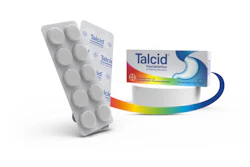
Kenvue’s recent projects apply that thinking in different ways. A redesigned Zyrtec carton replaced a plastic blister tray and paperboard backing with a 100% paperboard format, eliminating approximately 152,000 lb of plastic annually. The new graphics also make important product information easier to find and read. (See “Kenvue Packs Purpose into Every Package”).
 Kenvue redesigned Nicorette’s package as a more discreet, paper-based pocket pack, while also cutting plastic use by 85%.Kenvue
Consumer research drove the Nicorette redesign in another direction. Some users of Nicorette nicotine replacement lozenges sold outside the U.S. said the distinctive package made them uncomfortable using the product in public. Kenvue developed a more discreet, gum-like paper pocket pack that reduced plastic by 85% and the product’s total carbon footprint by 17% compared with the previous package.
Kenvue’s OGX shampoo bottle addressed usability along with material choice. The company moved the bottle from colored PET to HDPE, incorporated 100% PCR, and designed it for recyclability. The new bottle requires 30% less squeezing force to dispense and evacuate the product. Changes to the product and packaging together reduced the total product carbon footprint by 16%.
 Sambazon halted a planned PP bowl after consumers questioned its recyclability, then developed a custom plant-fiber package aligned with the brand’s sustainability goals.Sambazon
Consumer reaction can also send a packaging project back to development. Sambazon was close to launching its ready-to-eat açaí bowl in an off-the-shelf PP container when testing raised concerns about what consumers were supposed to do with the package after use and whether it was recyclable. Moving ahead with the format no longer fit the sustainability mission behind the brand.
Sambazon stopped the launch and developed a custom package without virgin plastic, giving up its chance to be first to market and absorbing additional development costs. Travis Baumgardner, co-founder and chief customer officer at Sambazon, said the finished package later increased purchase intent and helped retailers meet sustainability targets. Since launch, he said, the format has avoided more than 1 million lb of plastic, equivalent to more than 21 million plastic bowls.
The experience changed how Sambazon approaches decisions beyond that one package. Said Baumgardner, “We learned that it’s got to be a values decision within our company and not just a brief.”
That idea reaches beyond Sambazon. The brand examples throughout the Summit showed how decisions about recyclability, recycled content, materials, equipment, and recovery ultimately come together in the package a consumer buys and uses. Addressing those issues earlier gives packaging teams more room to find solutions that can work across the full system. PW

Packaging World Forum, coming to Chicago June 16–17, 2027, builds on the Packaging Recycling Summit with a broader focus on the forces reshaping packaging, including EPR and regulatory compliance, operational agility, and retailer and e-commerce demands. The two-day event brings brand owners, retailers, converters, and regulators together to share practical solutions and real-world lessons. Learn more at pwforum.com