The 2024 Brand Owner Bootcamp revealed that packaging leaders struggle most with converting the final 10% of their portfolios to recyclable formats, while mechanical recycling and fragmented EPR regulations complicate industry-wide progress.
- The final 10% of packaging portfolios, typically flexible packaging, faces significant barriers due to underdeveloped materials and equipment incompatibility.
- Mechanical recycling is essential for meeting PCR mandates, but requires strict chain-of-custody protocols and cooperation across recyclers, producers, and brand owners.
- PCR materials continue improving in quality and performance, but innovation gaps remain for food-contact flexible film and multi-material laminates.
- Fragmented EPR legislation across North America creates compliance uncertainty, with conflicting state rules on recyclability labeling and the chasing-arrows symbol.
- Industry precompetitive collaboration among brand owners at BOB has accelerated commercialization timelines for packaging innovations like mono-material freezer packaging.
Editor’s note: Packaging World was not in attendance at Borouge International’s Brand Owner Bootcamp (BOB), an invitation-only, supplier-sponsored event. This recap is based on a summary provided by Borouge, the conference organizer and sponsor. Claims attributed to Borouge below reflect the sponsor’s own account of the proceedings and have not been independently verified by Packaging World.
Since 2022, Borouge International’s Brand Owner Bootcamp (BOB) has brought together packaging decision-makers from major brands and retailers. The three-day, invitation-only conference is billed as a forum for industry leaders to discuss progress, setbacks, and shared concerns around designing packaging for recyclability and incorporating post-consumer recycled materials.
According to Borouge, the event has drawn speakers from the Plastics Industry Association (PLASTICS), the American Institute for Packaging and the Environment (AMERIPEN), the American Chemistry Council (ACC), GreenBlue, and the Flexible Packaging Association (FPA), among other industry groups.
This year’s event was held in Chicago and organized around three daily themes: innovation, current concerns and solutions, and future-focused strategies. Borouge says attendees discussed both the packaging progress their organizations had made and the challenges that remain consistent across sectors and applications.
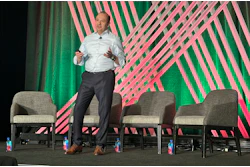
 Borouge International's Brand Owner Bootcamp brings together brands and retailers to tackle shared packaging challenges.Borouge International
Borouge did not disclose a full attendee list, but its materials indicate the guest roster included packaging and sustainability representatives from consumer brand owners such as Mars, Mondelez International, Conagra Brands, General Mills, Kraft Heinz, Campbell’s, Ferrero, Ferrara, Tyson Foods, Sargento, and fairlife, along with retailers including Walmart, Target, Sam’s Club, Aldi, and Publix.
The sponsor company also reported growth in the event’s attendance as a sign of broader industry interest in collaboration. The first BOB, held in Brooklyn, drew representatives from nine companies. This year’s event in Chicago drew 23 organizations among a 55-person guest list.
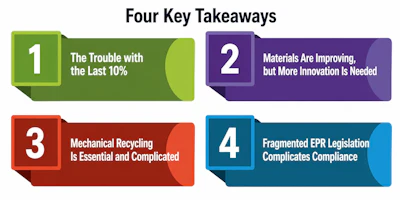
Following are four takeaways Borouge reported from BOB 2026.
1. The Trouble with the Last 10%
Borouge reports that attendees repeatedly pointed to the final 10% of their packaging portfolios as the hardest to convert to mono-material structures designed for recyclability. This remaining segment, which most often includes flexible packaging, faces significant barriers. In some cases, suitable materials haven’t been developed yet, or available solutions aren’t compatible with existing filling equipment.
According to Borouge, attendees agreed that isolated work on individual packaging projects isn’t enough on its own to drive the system-level changes needed to build out waste collection infrastructure and end-market demand for recycled materials.
2. Materials Are Improving, but More Innovation Is Needed
Part of BOB’s agenda involves briefing packaging leaders on emerging technologies and solutions. Borouge reports that presenters and attendees generally agreed that while PCR materials and recyclable structures continue to improve in quality and performance, more innovation is still needed for the industry’s toughest applications. Among them are recyclable flexible film for food packaging and flexible film with PCR content that meets food-contact compliance requirements.
In a session Borouge called the Product Spotlight, several brand representatives reportedly discussed packaging formats still presenting challenges, such as converting a wrapper from a multimaterial laminate to a mono-material structure. Borouge says other attendees responded with ideas and suggestions based on their own experience, an exchange the sponsor characterized as evidence of the value of precompetitive discussion among brand owners.
3. Mechanical Recycling Is Essential – and Complicated
Mechanical recycling of plastic packaging was a central topic, according to Borouge. For the third time in the event’s five-year history, attendees selected a presentation on mechanically recycled polyethylene for what Borouge calls its Beacon of Brilliance award, given to the presentation attendees rate as most insightful.
As Extended Producer Responsibility (EPR) legislation and PCR mandates expand, demand for food packaging incorporating recycled content is expected to keep rising. Mechanical recycling is one route to increasing the supply of PCR plastic for these higher-value applications, though questions remain around material quality and supply chain management.
The winning presentation, per Borouge, focused on identifying chemicals of concern in mechanically recycled rPE. Food-contact recycled resins carry strict chain-of-custody requirements to track sources and screen out contaminants; achieving this typically requires testing beyond what’s needed to obtain a Letter of Non-Objection (LNO) from the U.S. Food and Drug Administration.
Attendees agreed that scaling mechanically recycled materials for food-contact packaging will require cooperation among recyclers, resin producers, converters, and brand owners, along with more unified regulation
4. Fragmented EPR Legislation Complicates Compliance
New EPR frameworks continue to develop across North America. Uncertainty remains around how brand owners should meet specific program requirements and control costs. Packaging has historically represented a relatively small share of total product cost for many consumer brands; EPR material fees are changing that in some cases, pushing companies to reconsider material choices and design decisions.
According to Borouge, attendees discussed compliance strategies, reporting requirements, and on-pack messaging challenges as definitions of recyclability shift state to state. Conflicting state rules, particularly around use of the chasing-arrows symbol and how to describe a package’s recyclability, are reportedly leading some brand owners to take a more cautious approach to labeling, including removing recycling-related language altogether. Federal proposals such as the CIRCLE Act and PACK Act add another layer of complexity to an already fragmented regulatory landscape.
Moving from discussion to action
Borouge reports that several brand and retail attendees have pursued packaging collaborations, including work on mono-material freezer packaging and PE barrier technologies, that originated from connections made at previous BOB events, and that some attendees credit those relationships with faster commercialization timelines. PW