Transcript created by AI, there may be transcription errors.
Anne Marie Mohan:
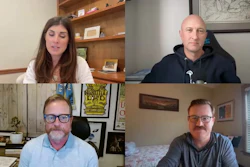
Hi, I’m Anne Marie Mohan, senior editor with Packaging World, and today I'm coming to you live from SPC Impact in Nashville, and I'm here with Sarah Dearman, she's the chief Strategy and Engagement Officer for The Recycling Partnership. And today we are going to talk a little bit about some of the challenges around rPET PET recycling, as well as some of the findings or the accomplishments that are outlined in TRP’s recent 2026 impact report. So welcome, Sarah.
Sarah Dearman:
Thank you. So nice to speak with you today.
Anne Marie Mohan:
Very nice to see you. So the first question or the first thing I wanted to ask you, for those of our viewers who are not familiar with The Recycling Partnership, could you give a brief overview and talk about what differentiates your NGO from some of the others that are in the sustainability and packaging, recycling and environmental space?
Sarah Dearman:
Absolutely. So our organization, non-profit organization, we're focused on solving recycling's toughest challenges. So that's one of the things since our history or 12 years ago that we've really been diving into, whether it's communities that don't have access to recycling. Since we started, we've put more than 2 million recycling carts on the ground. So people who did not have access to recycling before, did not have access on par with the recycling or with trash. Now they do. So we focus on increasing access. Another one of the toughest problems that we're always working on is how to increase participation in recycling. As we look at EPR states, for example, we know that getting people to recycle more is going to be one of the biggest and most important unlocks. So that's a key area that we focus. And then also when materials and material supply chains, how can we improve the supply chain so that they're more sustainable? And of course, one of the key factors with all of that is policy. So I would say for us as an organization, one of the things that's really important and differentiates us is we're really looking at the system as a whole. How can we make the entire system work better? Thinking about all the materials, all of the different players so that we can all work together because the challenges that we're facing are so big. It's not anything that one community, one company, or one part of the industry can solve alone.
Anne Marie Mohan:
Great. So we just heard news last week that Keeefe Harrison, TRPs founder and CEO, is going to be leaving the organization in a couple of months. Could you tell me a little bit about how that looks moving forward for the organization?
Sarah Dearman:
Yes. Well, this is a planned transition for Keefe, not only our CEO, but our founder as you mentioned, and it's something that I'm really happy for her about. It's incredible that she's going to get to take this time everything that she's done for our organization as well as the industry. The great news is we really have a very strong organization. We have incredible leadership team in place, and we're really focused on continuing the momentum that we've built and on delivering our strategic plan that we have in place. So I'm very confident that we're going to continue to succeed as an organization, though we will definitely miss Keefe.
Anne Marie Mohan:
I'll miss her too. I've really watched as TRP has grown since its founding, and she's just been such an incredible force in the industry. But I have no doubt TRP will move forward with great success. So
Sarah Dearman:
She's an incredible visionary and it's really what's led to the enormous growth. I started out on the board of The Recycling Partnership and then moved over to the staff several years ago, and just getting to work alongside her and all of the other leaders in our organization has been incredible.
Anne Marie Mohan:
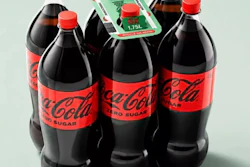
Well, great. I wish you the best of luck. And now I wanted to switch over to something I mentioned when I introduced this conversation. We're really seeing difficulties with PET recycling, but not in the collection or sorting stage. I sat in on a webinar that TRP hosted a couple of weeks ago, and the consensus was really that we have collection down, we have sorting down, maybe not, we don't have the numbers that we'd like to see with PET bottle recycling. I think it's around 30%, but the real problem is in the back end or the end markets and the PET recyclers. So we've seen maybe I think five to seven of the major PET recyclers go out of business in the last year or so, and there aren't a lot in the U.S. So what are some of the drivers of those closures?
Sarah Dearman:
It is definitely a challenging environment, and there's a variety of things that are leading to this. We have more PET plastic being produced around the world than has ever been produced before. So that certainly has an impact on the prices of Virgin. Meanwhile, all of us are experiencing costs are increasing, and so that negatively impacts those reclaimers that are making the recycled content and has a really difficult time. Then as we look at the cost of virgin versus recycled content. So it is incredibly worrisome that we've seen about 25% of PET reclaimer capacity closed over the last year, and that will have impacts on the industry for a long time. We do see that oftentimes these can be cyclical, right? We've seen ups and downs in PET and all of the other industries as well, and I am confident that our recycling system is strong and that we're going to continue to be successful. But everyone does have a really important role to play. And what's most important right now is that we get material purchased. Making the recycled content is only so good if then it doesn't have anywhere to go. And so we're really looking at all of our partners in the industry who make packaging, who have design standards around what needs to go into their packaging, and those are some of the people who can make the biggest influence right now to use not only recycled content, but domestically produced recycled content.
That's one of the really key pieces we see. Some companies are certainly still able to continue doing it, and it's those that see that because this pendulum is going to swing back, they're going to return to a place where they have increased pressure to have more recycled content again. So I see the really smart ones looking at this opportunity holding steady, strengthening their agreements so that they can be successful over time, but we need a lot more people to come to the table for sure.
Anne Marie Mohan:
I think it's probably especially worrisome right now when we're seeing these EPR mandates for greater recycled content. So despite the fact that Virgin materials are even less expensive in some cases now than PCR, and despite cheaper imports, there's going to have to be a solution for domestically produced recycled content.
Sarah Dearman:
Yes, we definitely need more demand and we're going to have to look at a variety of applications and packaging is always going to be our first choice so that we can have a circular material, but right now we've got to just continue to get that material moving. I think as we look over time, we are going to see EPR play a role, but a lot of those mechanisms like eco modulation and some of the support that the producer responsibility organization will be able to provide to in markets, for example, those are still a little ways out. So it is a tough space in between right now where some of those mechanisms haven't kicked in. There is certainly policy solutions that we are looking at. Some of them, we are looking at creative solutions of how can we pursue tax credits, for example, to help offset the cost. And so I think there's some really unique solutions, but policy takes time to get in place and to get implemented. So it's really important that we get the commitment of all of the brands and producers who have the ability to use the material, then we need them to, and we need them to designate domestic recycled content.
Anne Marie Mohan:
Okay. So if I understand correctly, TRP created the Circle Act. Yes. Could you explain what that is and how it might increase the domestic supply of rPET?
Sarah Dearman:
Sure. So one of the things that we know is really beneficial is whenever we can look at federal policy, state by state, it is a great place to start, but where we can get things that cover the whole nation, then that would be incredible. And so one of the things that we're looking at there is again, some of those unique mechanisms. So looking at tax credits in this situation specifically for infrastructure, so it could help reduce the cost over time to invest in infrastructure for recycling equipment. It's just one piece of the puzzle, but it's one that could be really exciting and could help make a positive impact to those that we need to really be investing in the solutions.
Anne Marie Mohan:
So now I wanted to switch over to your 2026 impact report, and as we sat down here, you explained to me that it speaks of all the accomplishments of The Recycling Partnership since its inception. So to date, what do you see as some of the greatest accomplishments of the organization so far?
Sarah Dearman:
When I think about the 12 years and all of the things that we've accomplished, there are certainly many things that we can point to, but one of the things that I get most inspired by are all of the people that we've been able to help, thanks to those who support us as an organization. So the community recycling managers that we partner with to help make their program better. People who have been wanting to bring recycling to their community for a long time and haven't been able to. And by going in and helping to provide a grant and technical assistance to help them know what a good system looks like and able to then move from no recycling to recycling, those are certainly the pieces that really stick with me when I'm able to meet those individuals. But it goes beyond that as well. I'm really proud of the work that we've done around the materials. One I worked on for a while as polypropylene, for example, and when we launched the Polypropylene Coalition, being able to achieve the 60% access rate so that it could be widely recycled, that's not something that we're able to achieve very often in this industry where you can see a real measurable increase. And so that's something that really drives us as a partnership. And as we look at opportunities around materials that are going to need additional support, certainly PET, the PET thermoforms, or film and flexibles as we look at the future of that and EPR states, that's what continues to give me hope and motivation to know that we can do it. One of the stories that I'm most excited about in the impact report is the work we've done over the years with the state of Michigan. So we started working with the state about six years ago, and they had set a bold goal to really increase recycling in the state, and they have a long way to go. A lot of communities didn't have recycling, and some of those that did were underperforming. So over these years, we've worked with them to bring recycling to more communities, provide grants like in Flint, Michigan to launch education initiatives across the state. And so in this time, we've seen recycling rates increase from 14 to 25%.
Anne Marie Mohan:
Wow.
Sarah Dearman:
So as we think about this enormous task we have in EPR states and goals that seem at times unattainable, when I look at that and see what a state has done voluntarily with so many communities and organizations like ours and able to see that measurable increase, then I know that it's possible, especially when we look at the level of investment and incentives that are going to be provided in EPR states.
Anne Marie Mohan:
Okay. So you talked about getting polypropylene to that 60% recycling rate, and I spoke with Starbucks about the development, and I think that really speaks to how important collaboration is within recycling and moving sustainable packaging forward. Could you talk a little bit about how important it is to TRP and how you develop those relationships?
Sarah Dearman:
Absolutely. There are so many people in this industry who play a critical role, and as I mentioned earlier, no one can do it alone. So it is essential that we come together and we partner and we leverage each other's strengths. And polypropylene is certainly a great example of that, of how we're able to just look strategically at what are the improvements that need to be made in the system and work with the MRFs and the facilities to upgrade the equipment so that we could see that change quickly. But it also took partners like NextGen Cup Solution and Starbucks and Keurig Dr Pepper and so many of the other partners over the years that invested in the solution, saw the possibility, and then helped make it possible.
Anne Marie Mohan:
As we sat down here, you also said to me how important the consumer piece is. And that's a very difficult piece, a very big challenge in recycling to get people to throw that package into the bin, that waste into the bin and the correct bin. And what does TRP, what work are you doing around that piece besides getting those carts to people?
Sarah Dearman:
Helping people recycle better has really been core to us from day one. So from 12 years ago. We're constantly looking at and improving, how can we motivate people to recycle more? So now we have 12 years of experience, and we have at any point in time about 200 active projects. Many of those are focused on increasing participation and capture. So over and over again, we'll go test different methods. So what is the right message? What is the right cadence of mailers? What does the in-home rotation and bins need to look like so that people can maximize the amount of recycling in their home? And we're in the process now taking those strategies that we've proven over the years and saying, okay, which one of those already proven and we can package up and scale. So for that, we make them available to communities across the country for free through toolkits on our website.
We're looking at how we partner with other organizations so that we can scale that such as the EPR states. So that's one of the things that we're doing is we're testing new solutions. What are some of the more innovative ways we can inspire people to recycle? And then working to move those to proven and then packaging them so that other people can do it as well. One of them, for example, where we had a lot of success is in Cincinnati and going in and just really listening to the people and understanding what were the barriers that they're facing. We know right now we do have a challenge with people trust. We trust recycling.
We talked about PET and some of the questions people raise around that. So being able to really figure out what is going to help reduce their confusion, really relate to them and understand, we know that this can seem complicated, and so anything we can do to help simplify it for them, whether that's making the materials and the directions easily available, or if it is working on a curbside cart or maybe even an in-home bin or a bag for a multi-family complex. So proving those solutions and then continuing to scale them, that's really going to be key. And it's going to be so important in states like California and Oregon have strong systems, and a lot of people already have access to recycling. So it's really going to be about getting people to recycle more is going to be the unlock there.
Anne Marie Mohan:
Well, I've seen a lot of the studies and data that TRP has produced around consumer education, and it's very impressive the work that you've done.
Sarah Dearman:
Well, thank you. We have an incredible team. Several years ago, we invested and built out our team with behavior change specialists, and we've done a lot of research over the years, and we have some additional research that's going to be coming out soon. And what we continue to see that is still really hopeful is people still really want to recycle. We know that it is something that they see as a challenge and they want it to be better, but those are all really positive signs because there's a lot of places where people just give up and move on to the next thing. But that's not the case with recycling. They want to continue to recycle and they want to do it better, and they just need all of our help to do it.
Anne Marie Mohan:
Okay. So last question. Our audience is primarily made up of brand owners, CPGs. What is one piece of advice you could give them, something that they should be looking at or working toward to make the recycling system in the U.S. more effective and more successful?
Sarah Dearman:
That's a great question. Having worked in various parts of the industry, having worked for a large brand and for government, I would say the piece that really resonates with me is to have a strategy with the measures that is really end to end. We know that not any single piece of it will solve the problem. We've got to be thinking all the way from design through how it's making its way into people's hands, and how people are then understanding how to recycle it, and then making sure that you're buying that material on the end. So to me, it's really about a comprehensive strategy that's thinking about design collection as well as that recycled content.
Anne Marie Mohan:
And we hear that over and over. It's so important to have that holistic view of your packaging from beginning to end in order to facilitate this circular economy.
Sarah Dearman:
That's right. It is. And it really is a tremendous opportunity that we all have to be the leaders and to be the stability that the industry needs right now. And I have complete confidence that those do. Those are really going to be the winners at the end of the day.
Anne Marie Mohan:
Well, thank you so much for your time today. I hope you enjoy the rest of the conference and have lots of people stopping by the booth.
Sarah Dearman:
Absolutely. Well, thank you for the time.