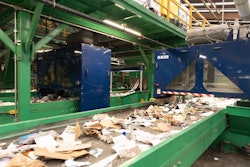
Kenvue, the world’s largest pure-play consumer health company, has partnered with AI-powered waste intelligence company Greyparrot to evaluate the real-world recyclability of its packaging portfolio. Through the collaboration, Kenvue will use Greyparrot’s Deepnest platform to analyze how its packaging performs inside commercial-scale recycling facilities in the U.K. and U.S., moving beyond theoretical “design-for-recycling” assumptions to data gathered from actual sorting environments.
According to Kenvue, the initiative is designed to help the company better understand how packaging components such as labels, pumps, translucency, material combinations, and regional recycling infrastructure variations affect detection, sortation, processability, and recovery rates within existing recycling systems.
The collaboration comes as regulations such as the European Union’s Packaging and Packaging Waste Regulation (PPWR) and Extended Producer Responsibility (EPR) programs increasingly tie packaging design decisions to financial and operational impacts.
Using Deepnest’s AI-driven modeling capabilities, Kenvue will be able to simulate how design modifications, such as changing translucency levels or switching material types, could affect recyclability performance and potential EPR costs before physical prototypes are produced.
“To help achieve our circular packaging goals, we must move beyond aspirational guidelines and embrace real-world evidence,” says David Lickstein, global head, packaging innovation, sustainability, and experience at Kenvue. “Our partnership with Greyparrot and the integration of Deepnest represents a fundamental shift in how we approach sustainable packaging.”
Lickstein adds that AI-driven waste intelligence will allow the company to move beyond simple tracking into advanced scenario modeling, helping Kenvue identify impactful design changes and implement packaging improvements more quickly and cost-effectively across its global portfolio.
Greyparrot says the collaboration expands its work with consumer packaged goods companies, including L’Oréal Groupe, Unilever, McDonald’s, and others, that are seeking more precise data on packaging recovery performance and recycling outcomes. PW