Flexible film recycling requires coordinated improvements across collection, sorting, technology, and end markets rather than isolated solutions. The Alliance to End Plastic Waste outlines a system-wide strategy beginning with end-market demand, demonstration projects, and cross-value-chain collaboration to scale flexible packaging recycling.
- Flexible packaging represents roughly half of all plastic packaging globally, but remains one of the most difficult materials to recycle due to complex multilayer structures and economic challenges.
- The Alliance's strategy prioritizes understanding end markets first, then designing targeted projects to close gaps in collection, sorting, recycling infrastructure, and contamination control.
- Advanced sorting technologies including AI-enabled object recognition and digital watermarking improve material identification and recyclate quality for demanding applications.
- Demonstration projects must be proven locally before scaling nationally to build trust and ensure system viability across collection, sorting, and end-market infrastructure.
- Brand commitments and policy mechanisms such as extended producer responsibility (EPR) and recycled-content mandates are essential to create stable demand for recycled flexible materials.
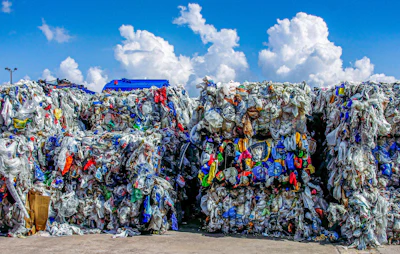
Flexible packaging now accounts for roughly half of all plastic packaging globally, driven by growth in e-commerce, convenience foods, and lightweight packaging formats. Yet despite its functional and environmental advantages, flexible film remains one of the packaging industry’s most difficult materials to collect, sort, and recycle at scale.
The Alliance to End Plastic Waste believes solving that challenge will require far more than incremental improvements to existing recycling systems. Through its U.S. Flexibles Program and a recently released report, “The Challenges and Solutions for Flexible Plastic Packaging Waste,” the organization is outlining a system-level strategy designed to improve flexible film recycling through coordinated action across the packaging value chain.
Central to that effort is the Alliance’s U.S. Flexibles Program. The Program is part of a broader thematic initiative operating across the U.S., Canada, and Europe, with projects shaped by recycling initiatives and pilot programs already underway in multiple regions.
 Pranav Goenka, chief advisor, global program development, Alliance to End Plastic WasteAlliance to End Plastic Waste
“This is basically a program that’s designed for action,” says Pranav Goenka, chief advisor, global program development at the Alliance to End Plastic Waste. “We are looking to implement solutions around some of the gaps we see in relation to flexibles, whether it’s relating to design, whether it’s related to collection, sorting, or recycling, or end markets.”
The Alliance’s approach draws on years of pilot projects and on-the-ground recycling initiatives around the world, along with lessons learned about what works and what doesn’t when attempting to scale flexible film recycling systems.
What makes flexible film so challenging?
Flexible packaging offers several sustainability advantages compared with many rigid alternatives. Its lightweight structure can reduce transportation emissions and improve material efficiency, while its barrier properties can extend shelf life and reduce food waste. Those same performance benefits, however, can make flexible materials more difficult to recycle at scale.
One major challenge stems from the multilayer structures commonly used in flexible packaging. “The number one issue is that it is made of a wide range of materials, hence its structures are complex, and that makes recycling more difficult for flexibles,” Goenka explains.
Economics present another barrier. Because flexible films are lightweight, they are more difficult and expensive to collect, transport, and process economically within existing recycling systems.
Operationally, films also create problems inside materials recovery facilities (MRFs). “This is a material that sticks to other waste, it clogs equipment, and as a result, when you are operating facilities with a lot of flexibles, you have a lot of downtime and maintenance issues,” Goenka says.
Despite those challenges, the Alliance argues in its report that scalable solutions are achievable through targeted interventions across collection, sorting, recycling, and end-market development.
Why end markets come first
One notable aspect of the Alliance’s strategy is that it begins not with collection infrastructure or packaging design, but with end markets. According to Goenka, the organization’s first step is understanding where demand for recycled flexible materials already exists and what specifications recyclers and converters must meet to supply those applications. “It’s about understanding where these end markets exist and what will be required in terms of quality and cost,” he says.
The report emphasizes that recycling systems cannot scale without strong and stable demand for recycled content. That includes understanding the performance requirements of applications such as blown film, injection molding, and food-contact packaging. “By understanding these applications, it leads us to the second step, which is being very targeted about designing our projects to close gaps across the value chain,” Goenka says.
 A framework from the Alliance to End Plastic Waste’s report illustrates the interconnected technical, economic, policy, and end-market challenges limiting flexible film recycling, along with the system-level interventions needed to address them. Alliance to End Plastic WasteAlliance to End Plastic Waste
The report identifies multiple weak points that continue to limit flexible film recycling in North America, including inconsistent collection systems, contamination issues, limited sorting capabilities, insufficient recycling infrastructure, and uncertain end-market demand. It also points to fragmented policy frameworks and limited access to curbside collection for films and flexibles as barriers slowing broader adoption and investment.
To address those barriers, the Alliance’s framework focuses on three interconnected elements: market mapping, demonstration projects, and replication.
Prove locally to scale nationally
The organization’s emphasis on demonstration projects comes from the idea that recycling systems must be proven locally before they can scale nationally. “We are demonstrating it from a system viability end-to-end point of view in a local city or a local community because that’s when you start to instill trust in the system,” Goenka says.
The report notes that many flexible packaging recycling initiatives have struggled because improvements were made in isolation rather than across the entire system. A new collection stream, for example, may fail if downstream sorting or end-market infrastructure cannot support it.
The Alliance instead advocates coordinated interventions across the full value chain. “If we follow these three steps, in our view, it’ll get to the heart of the issue around what we face in the U.S. today around gaps in infrastructure, gaps in access, gaps in supply chain connectivity, and above all instilling more trust in the system,” Goenka says.
The organization also sees collaboration as essential. The U.S. Flexibles Program works with producer responsibility organizations, recyclers, brands, municipalities, and other industry groups to identify where each stakeholder can contribute. Says Goenka, “I would say over the last year I have seen much more coordinated and complementary actions happening on the ground.”
The role of advanced sorting technologies
Advanced sorting technologies are another major focus of the Alliance’s work. The report highlights the growing role of AI-enabled object recognition, digital watermarking, and dedicated plastics recovery facilities in improving flexible packaging sorting and recyclate quality.
Conventional technologies such as near-infrared (NIR) sorting can already identify many plastics streams. The next step, according to Goenka, is giving recyclers more detailed information about the materials moving through the system. “These technologies sometimes are able to detect but sometimes are not able to quantify, for example, the number of polymers that exist in a packaging structure or the additives that are included in that packaging material,” he says.
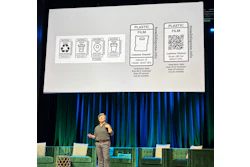
Digital watermarking is one example of the newer technologies being explored to improve sorting accuracy and material identification. The technology embeds an invisible code into packaging that can carry information about a product’s composition and properties. When scanned in a sorting facility, the code can help recyclers identify materials more precisely and direct them into appropriate recycling streams.
The Alliance has supported digital watermarking initiatives through projects such as HolyGrail 2.0 in Europe, which validated the technology in industrial sorting environments.
AI-enabled object recognition and digital watermarking are often discussed together, though Goenka says the technologies serve different purposes within the recycling chain. “If you are on the collection side trying to ensure that you’re improving contamination levels, then probably AI sorting or object recognition is actually well used there,” he says. “But when it is about using it at a secondary sorting facility to understand melt flow indexes and what type of applications materials will go into, digital watermarks is actually a much better application.”
Ultimately, the goal is not simply better sorting efficiency, but higher-quality recyclate capable of meeting demanding end-market specifications.
Global projects inform local strategies
Although the U.S. Flexibles Program focuses on North American challenges, the Alliance is leveraging lessons from projects underway in Europe and other regions. In Europe, where extended producer responsibility (EPR) systems are more established and recycled-content mandates are expanding, the focus has shifted toward improving recyclate quality and validating higher-value applications.
One example is the Alliance-supported COtooCLEAN project in the U.K. with recycling technology company Nextek. The demonstration unit uses supercritical CO2 to remove contamination from polyethylene film without water, with the goal of producing recyclate suitable for higher-value applications.
The Alliance is also evaluating sorting and recycling pathways for polypropylene films in Belgium, including dissolution, de-inking, and decontamination technologies. The projects are intended to evaluate how recycled PP can move through the recycling stream and ultimately be incorporated into biaxially oriented polypropylene (BOPP) applications for both food and non-food packaging. Explains Goenka, “This is really about validating from collection all the way to end-use incorporation into BOPP.”
The broader goal is to develop repeatable models that can eventually be adapted to local market conditions elsewhere. The report emphasizes that scaling flexible film recycling will likely require regional approaches tailored to local infrastructure, policy environments, and end-market demand rather than a single universal solution.
Brands play a critical role
The report repeatedly emphasizes that brands and retailers will ultimately determine whether flexible film recycling systems can scale. Without long-term demand commitments for recycled content, the report argues, infrastructure investment and technology deployment will remain limited.
According to Goenka, brand owners and retailers have become more directly involved in flexible packaging recycling efforts through pilot projects, design-for-recycling initiatives, recycled-content commitments, and investments intended to strengthen end markets for recycled film. The Alliance sees those long-term commitments as critical to creating enough demand to support new recycling infrastructure and technology investments.
The report also points to policy mechanisms such as EPR programs, recycled-content mandates, and investment incentives as important enablers for scaling flexible packaging recycling infrastructure in the U.S. Emerging state-level legislation in California, Colorado, New Jersey, and other states is expected to increase pressure on brands and recyclers to improve recovery rates and expand recycled-content use.
Still, the Alliance argues that policy alone will not solve the challenge. The report repeatedly emphasizes that flexible film recycling will require coordination across the full packaging value chain, from brands and municipalities to recyclers, technology providers, and producer responsibility organizations.
That collaborative approach, according to both the report and Goenka, will be critical if flexible film recycling is to scale beyond isolated pilot projects and into broader commercial systems. PW