The U.S. Plastics Pact introduced a framework in February addressing flexible film waste by aligning design standards, collection infrastructure, and recycled content demand across the industry. Success requires brands to support collection systems, use recycled content in packaging, and shift toward mono-material films where feasible.
- Flexible film has among the lowest recycling rates of all plastic packaging, with nearly all residential film ending up in landfills
- The framework calls for industry alignment across design, collection, and end markets to avoid duplicated efforts and maximize efficiency
- Demand for recycled content is the critical driver—without profitable markets for recycled film, collection infrastructure won't be economically viable
- Brands should start with large, clean, dry applications like cereal bags and bread bags, then build toward more challenging applications requiring innovation
- By 2027, the goal is 15% post-consumer recycled content in shrink films, increasing to 30% by 2030
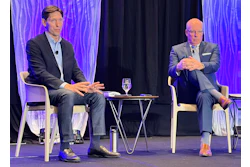
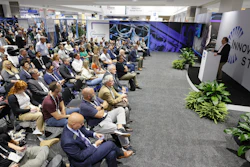
In February, the U.S. Plastics Pact introduced a comprehensive framework for film and flexible packaging circularity in the U.S. Packaging World spoke with Crystal Bayliss, interim executive director for the U.S. Plastics Pact, at the Plastics Recycling Conference in San Diego this week to learn about the challenges and opportunities presented in the framework and how brands can help advance circularity for film and flexible packaging.
Packaging World:
Why is film and flexible plastic packaging recycling such a critical issue, and what are some of the factors that make it such a challenge?
Crystal Bayliss:
So there are a lot of benefits to film and flexible plastic packaging, particularly because it’s lightweight and so you don’t need as much plastic to protect the product, which allows you to save money. You can design great functionality for the consumer and you can get more product onto a truck, which saves in transportation emissions, and those are all great benefits. But then on the flip side of it, because the material is so functional, they’ve had to combine different polymers to be able to get that functionality, which makes it challenging to separate and recycle. And additionally, the lightweight nature of the film makes it challenging to collect. And when they do collect it, you have to get so much film before it’s of a weight that makes any money in selling it. And so there’s not a lot of economic incentive to collect and recycle it either.
What is the scale of the issue? How much flexible film are we losing to landfill?
It’s definitely the vast majority of it. Estimates vary, but about half of film goes to the consumer or residential and almost all of that is not recycled. And then about half of it is in a business-to-business setting, and that can be collected and recycled a little more, but the estimates on that are still pretty low. So when you think about all the different types of plastic packaging, film makes up a considerable amount of the total plastic put out, and it has some of the lowest recycling rates across the board.
We’re seeing new initiative and new coalition launching regularly that are addressing flexible film recycling. We’ve got the Film & Flex Taskforce, led by Circular Action Alliance, the Peer Collaborative, led by the Film & Flex Recycling Alliance, and the industry-led US Flexible Film Initiative. And there are others led by PLASTICS and the Alliance to End Plastic Waste. How does the U.S. Plastics Pact’s framework complement these efforts? What does it add to the discussion?
There are so many efforts because this is probably the biggest challenge when you think about advancing a circular economy for plastic packaging. It’s so complex and you have to stand up a completely new system in order to do so. And so there’s got to be significant design changes. There’s got to be collection infrastructure, there’s got to be end markets with demand for that recycled content. And no one organization can do all of those things, which is why you’ve seen so many different organizations pop up, and they’re focused on their area of expertise, which is really important because these are technically complex problems and you need people to focus on their area of expertise. But at the same time, if you’re not all driving towards the same end goal, you’re not going to get there because if you are misaligned on what the design standards should be, comparing that initial design to the end markets and what they can actually recycle, and also thinking about what’s the collection mechanism for that.
If you’re not aligning all of those efforts with the same baseline understanding, it’s just not going to work. And so what our framework did was take a look at the current state of all of the initiatives, where we made progress, where we haven’t. And it is a clear call for all these organizations to be working together. Some of these organizations pull together lots of different companies, and that’s great, but also then the different organizations need to work together on a higher level too, to make sure that we’re going in the same direction so that we’re complementing each other and we can have maximum efficiency in making this change to a circular economy.
One of the strongest messages in the framework is that demand for recycled film is really the key to making circularity work. Why is that?
So we live in a capitalist society. The laws of supply and demand are in full effect all the time. It’s basic things that everyone learned in high school or college economics. If there’s not demand at a profitable price, there is no incentive to make the material. And so if you think of that in terms of recycling, you have to have demand for the PCR in order to incentivize folks to recycle it. And we see huge gaps in that area in terms of the demand for the recycled content. I see a lot of efforts happening on collection and even thinking about what types of end markets can take that material and process it. But if those end markets don’t have someone to sell to, they’re not going to be viable businesses.
And so we need to make sure we’re focused on that because ultimately, for example, if you think about the evolution of the phone system, when my mom was growing up, she had a party line where she shared with eight neighbors, and now today I carry around a small computer in my pocket. And we didn’t get from that to that in just a year in just one step. It took lots of different steps, but there was economic demand at a profitable price for the phone. And so the innovation came along accordingly. And in the same way, we have to think about how we can incentivize this to transform the entire system to get the infrastructure and the technology and the innovation that we need to make that happen.
When we’re talking about film-to-film recycling, how can brands build up those end markets?
The very first place I would encourage everyone to start is to think about their shrink film that they buy. Usually that’s secondary packaging. It’s usually not food contact. It can tend to take a significant amount of PCR. I’m aware of some companies putting as much as 50% PCR into that shrink film. And so that’s a great place to start. And if you can’t get to 50% initially, can you do five? Can you do 10? Can you build? Because if there’s that demand there that’s going to incentivize the collection, it’s going to incentivize folks to invest in washing capabilities and recycling capabilities to get higher-quality film coming through that you can put into more applications. There’s other things too that are not necessarily primary packaging related. So if you think about putting it into pallets or can you put it into the trash bags that your company buys, or there’s lots of other durable things as well. And if you think about that tiered approach, like party phone to rotary, landline to car phone to cell phone, we can eventually do the same thing with film and get to more film-to-film recycling.
The report encourages brands to move from multi-material to mono-material films, but then it also acknowledges that some applications just aren’t there yet. Where should companies focus first? What can they realistically tackle now versus what needs more innovation?
If you take a look at our report and also at our problematic and a necessary materials list, we took the approach from what would have the biggest impact now. So if you think about something like a box of cereal, like the bag inside of a box of cereal, or you think about a bread bag, and those are fairly large pieces of plastic, they tend to be clean and dry and someone will want to collect and recycle those. I wouldn’t necessarily start with your tiniest piece of plastic. That’s going to be a challenge to collect, or something that has a ton of food contamination that no one’s going to want. But if companies really focus their efforts on where it’s going to make the biggest impact of those pieces of plastic in which folks definitely want to recycle it, I would start there because that’s going to have an immediate impact in terms of the amount of plastic that can get recycled. Ultimately, we need to solve all the applications, but you’re not going to do it overnight. And so if you do what you can now and then that allows more runway to work on those more difficult applications that need additional innovation.
There’s call to action in this framework for brand owners to support collection infrastructure and secondary sortation, not just to redesign their packaging. How do you see CPGs stepping into that role, especially those who may not traditionally think of themselves as part of the recycling system?
I think it’s important for brand owners to realize that if you’re putting packaging onto the market, you’ve got to really think about how it’s going to get collected and recycled. And that’s the whole nature of EPR, or extended producer responsibility, putting that responsibility back on the brand owners. One thing that I think is a challenge is that there are a lot of brands that would love to see film collected curbside everywhere, and maybe that is possible, but right now there are a lot of challenges around that. And if we set that out as the only means to collect film, you’re going to lose out on a lot of opportunities to collect meaningful amounts of film in other ways. And so I think there are a couple things they can do. So there are different organizations that invest in collection infrastructure. You can definitely partner with them.
You can do clear guidelines for how to dispose of your packaging on the product. If it’s not recyclable, say it’s not recyclable so people don’t toss it into a bin and contaminate the recycling stream. If it is recyclable, give clear instructions on taking it to a drop-off location. And then finally, as a lot of these companies are working on EPR, whether it’s direct lobbying or indirect lobbying, but I would really recommend that they advocate for all viable forms of collection to be considered because it would be very challenging to get to a state in which curbside could be universally available to consumers for collection mechanism. And so we would want to have depot drop-offs or potentially a second bin for collecting from home if that’s the case. But really thinking through what’s going to get us quality film, that’s going to get quality PCR, that can still get collected in a large amount and exploring those different options and advocating for it as such.
How do you see Extended Producer Responsibility shaping the future of film and flexible packaging circularity? What impact could it have on accelerating real progress?
If done well, I think it can rapidly make progress. There are a lot of things that have to go into it though. So you’ve got to make sure that those drop-off locations are accessible. You’ve got to make sure that the instructions to consumers are clear, you’ve got to make sure there are convenient hours, et cetera. As we were developing the paper, we talked to one organization called Recycle Here in Detroit, and they had a whole drop-off system that had a variety of different community engagement efforts and things like that. And so it was fun to show up and recycle your product, and people were dropping off more than just flexible film, but it was a really interesting model for what you could do if you just took some time and energy and focus on what works for that community. And so I think if we try to not necessarily take a broad brush and apply it to everything but do smaller strokes and figure out what works in each spot, I think you could really make progress.
If we look ahead three to five years, what would meaningful progress on film circularity look like? What milestones should the industry be watching for?
I think in the next three to five years, you can see significant improvement on the design side. So if you think about those larger pieces of plastic, things that are like shelf-stable applications, the bread bags, the cereal bags, those types of things I talked about, all secondary packaging, et cetera. You can see a lot of progress in redesigning to mono-material formats, even if in some frozen and refrigerated applications, you can see continued progress there. Heat-treated, that’s a tough one. You’re probably not going to see that one completely fixed in five years. On the collection side, I think you will see ramped-up collection. It’ll be interesting to see how it pans out because I think a lot of folks are hoping for curbside collection, but you are seeing more scaling on the drop-off in depot side of things.
And then I think it’s going to be critical for any of this to work to see improvements in that recycled content inclusion. So for example, in our roadmap 2.0, we have a goal of having 15% PCR in shrink films in 2027 and 30% by 2030. And so those would be some mile markers to watch for. And I would encourage companies also, when you think about the recycled content claims that you’re making in your sustainability reports, don’t just think about your primary packaging. Also think about office supplies, plant supplies, durables, et cetera, and think about how you can start using more PCR content there. I think you could really see the needle move on that front in the next three to five years as well. PW