Three major packaging innovations are transforming the industry: Ryp Labs' StixFresh stickers extend fruit shelf life by 40-100%, Waitrose uses invisible UV tags to track recycling, and SPG developed cold seal packaging for temperature-sensitive chocolate.
- Ryp Labs' StixFresh stickers extend produce shelf life by 40-100% using natural bioactive compounds that inhibit fungal growth, already used by Walmart in Costa Rica
- Waitrose & Partners' UV tags provide item-level recycling data through Polytag's detection units, supporting EPR compliance and covering approximately half the UK household recycling stream
- SPG's cold seal technology uses pressure-activated adhesives instead of heat, protecting chocolate and other temperature-sensitive products while improving production efficiency
- All three innovations address critical market needs: reducing food waste, enhancing recycling traceability, and maintaining product integrity during packaging
- These technologies represent eight years of R&D (StixFresh) and collaborative industry partnerships focused on sustainability and operational efficiency
These innovations highlight new and different innovations that are hitting the market with added functionality.
Learn more about ThePackHub's Innovation Zone here.
Ryp Labs develops shelf life-extending stickers to reduce fruit spoilage
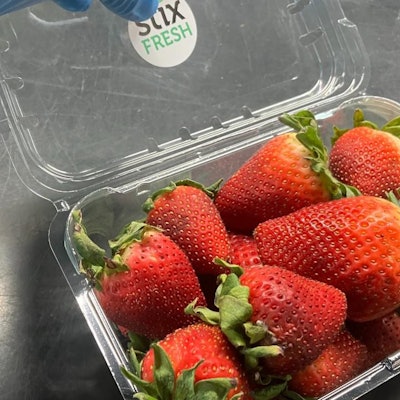
US-based startup Ryp Labs has developed a food-grade sticker technology called StixFresh that extends the shelf life of fresh produce by releasing natural bioactive compounds to inhibit fungal growth. The company, headquartered in Seattle with facilities in Portugal and Belgium, claims the stickers can increase the shelf life of fruit by 40–100%, depending on the type of produce. The stickers are designed to be applied either directly to individual fruits or placed inside packaging, such as clamshells for small berries. Ryp Labs’ approach is based on replicating the protective mechanisms of plants, using pre-approved compounds commonly found in food, ensuring that the product meets regulatory requirements across multiple regions without requiring additional certification. The technology was developed over an eight-year period, including five years of R&D followed by field trials. The stickers are already being used commercially, with early adopters including Walmart in Costa Rica, particularly for strawberries and other perishable fruits shipped over long distances. The application is most relevant for high-value or export-oriented produce such as mangoes, dragon fruit, and berries.
 The tags, invisible to consumers, are applied to items such as bottled goods and are detected in Materials Recovery Facilities (MRFs) via Polytag’s Plastic Detection Units (PDUs).ThePackHub
Waitrose & Partners' invisible UV-tags support plastic-packaging recycling intelligence
UK supermarket chain Waitrose & Partners has begun rolling out invisible ultraviolet (UV) tags on its plastic packaging, in partnership with technology provider Polytag, to enhance traceability through recycling systems. The tags, invisible to consumers, are applied to items such as bottled goods and are detected in Materials Recovery Facilities (MRFs) via Polytag’s Plastic Detection Units (PDUs). These devices scan for the UV-watermark tags, providing live, item-level data on packaging entering the recycling stream, including when and where collection occurs. This approach aims to support better packaging lifecycle visibility, strengthen recycling-claims accuracy, and assist compliance with upcoming Extended Producer Responsibility (EPR) requirements. Waitrose joined Polytag’s “Ecotrace” program, which targets widespread installation of PDUs at MRFs across the UK and claims to cover around half of the household recycling stream. The technology enables brands and retailers to understand post-consumption behaviour of packaging and take data-led actions to improve circularity, sorting efficiencies and material recovery.
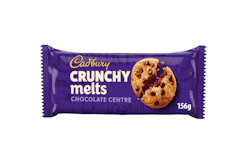
 Cold seal technology functions through a pressure-activated adhesive system that eliminates the need for heat during sealing, making it particularly suitable for chocolate packaging, where exposure to heat can affect product integrity.ThePackHub
SPG collaborates with Chocolates Lacasa on cold seal packaging for temperature-sensitive chocolate products
Spain-based flexible packaging specialist SPG has collaborated with Zaragoza-based confectionery company Chocolates Lacasa to develop a new cold seal packaging solution designed specifically for temperature-sensitive products such as chocolate. Cold seal technology functions through a pressure-activated adhesive system that eliminates the need for heat during sealing, making it particularly suitable for chocolate packaging, where exposure to heat can affect product integrity. SPG contributed its expertise in multilayer film structures and its control over the extrusion process of raw materials to enhance both performance and efficiency. This has led to improved material usage and optimized production processes at Chocolates Lacasa. According to Chocolates Lacasa’s internal teams, the technical support provided by SPG throughout the project added further value, particularly in relation to material selection and production efficiency. The use of multilayer structures typically involves combining different polymers to achieve desired barrier properties and mechanical strength. The partnership underscores both companies’ shared focus on innovation, productivity, and packaging sustainability, responding to evolving market demands in the confectionery sector.
Learn more about ThePackHub's Innovation Zone here.