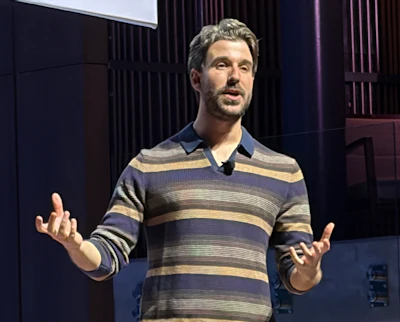
Effective movement building relies on personal connection and local specificity rather than broad messaging. Adam Met demonstrated that people take action when stories relate to their immediate concerns and lead directly to participation.
- Good storytelling inspires sharing; effective storytelling motivates people to take action
- Local, immediate concerns drive engagement more than sweeping global narratives
- An AJR concert activation in Phoenix generated thousands of petition signatures by connecting extreme heat to city council action
- Sustainability leaders should replace abstract terms like climate change with everyday language tied to health, jobs, transportation, and food
- Real systemic change requires matching the story, audience, timing, and level of comfort to create large-scale participation
Adam Met opened SPC Impact 2026 with an argument that building sustainability movements has less to do with broad messaging than with making people feel personally connected to change.
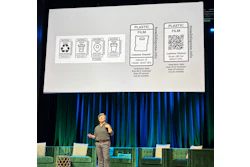
Met, best known as bassist for multi-platinum band AJR but also a Columbia University professor, policy strategist, and founder of Planet Reimagined, drew heavily from his experience growing a global fan base to explain how industries can drive meaningful behavior change. His core point was that good storytelling alone is not enough unless it leads to participation.
“Good storytelling is the kind of story that you’ll take home, share with your friends and family,” Met said. “Effective storytelling will actually make you get up off your butt and do something about it.”
Throughout the keynote, Met emphasized specificity over abstraction. Whether working on climate policy, concert-based activism, or packaging, he argued that people respond more strongly to local, immediate concerns than to sweeping global narratives. One example Met shared came from an activation in Phoenix, where temperatures reached 109ºF during an AJR tour stop. There, his team encouraged concertgoers to sign a petition urging city council to declare extreme heat an emergency. Thousands participated, and the effort helped unlock municipal funding to address the issue. By tying action directly to a visible local problem, Met said engagement rose significantly.
Met also urged sustainability leaders to rethink language. Terms like climate change or net zero may resonate within policy circles, but he suggested broader public engagement often depends on connecting issues to everyday realities such as health, transportation, jobs, or food.
“If it means we’re going to expand our tent effectively to use different language, I’d ditch that,” Met said.
For Met, creating change depends on matching the story, the audience, and the moment. “When you think about the timing of it, the kind of scope of the story, and how comfortable and uncomfortable you want to make people, that’s when you can get real, large-scale systemic change to happen.” PW