Key Takeaways
Food manufacturers are using digital twin technology, artificial intelligence, and advanced automation to reformulate products and maintain profitability as state legislatures ban synthetic dyes and additives like Red No. 40 and Yellow No. 5, with several bans taking effect between 2027 and 2028. These technology investments enable companies to optimize processing, reduce waste, and scale new ingredient solutions while navigating regulatory uncertainty.
- State Bans Taking Effect: West Virginia and other states have banned synthetic dyes including Red No. 3, Red No. 40, and Yellow No. 5 and No. 6, with enforcement beginning January 1, 2027, though a federal court has temporarily blocked some bans.
- Digital Twin Technology: Real-time, data-driven models of production systems help manufacturers optimize reformulation, reduce jar-to-jar weight variation by up to 10%, and achieve significant cost savings.
- Processing Complexity: New ingredient technologies like precision fermentation and cellular agriculture introduce downstream processing challenges requiring precise control over moisture, temperature, shear, and flow rates.
- Automation and Connectivity: OEM machines now link to centralized control systems with predictive maintenance, real-time monitoring, and remote diagnostics to reduce downtime and improve asset performance.
- Reformulation as Systems Problem: Manufacturers must rethink not just formulations but entire processing workflows, equipment design, and ingredient handling to successfully scale compliant products.
Business certainty has eroded as state legislatures and federal regulatory bodies move quickly to enact ingredient and dye restrictions. Several additive and petroleum-based dye bans have already passed and are slated to take effect between 2027 and 2028.
West Virginia, a leading example, passed a 2025 bill banning Red No. 3, Red No. 40, and Yellow No. 5 and No. 6, among others, beginning January 1, 2027. However, a U.S. District Court has temporarily blocked enforcement of the ban, underscoring the regulatory uncertainty manufacturers must contend with.
Despite this volatility, food manufacturers have spent the last four years investing in automation, machine learning, and digital twin simulations to improve margins and tighten process control. These investments are now enabling brands to rethink ingredients, processing, and formulation—allowing them to do more with less while future-proofing operations in an Industry 4.0 environment.
Innovation in processing and reformulation
Food manufacturers are responding to shifting consumer preferences faster than ever. As highlighted in ProFood World’s January “Chocolate 2.0” article, Devon McDonald, Food Scientist at Cargill, noted the rise of indulgent flavors in wellness categories.
“Nutrition bars now feature dessert flavors like fudgy brownie or cupcake, and there are partnerships with candy companies. Active nutrition bars may be packed with protein, but they still taste good,” McDonald said.
As protein demand, evolving consumer trends, and regulatory pressures converge, food producers are increasingly turning to software platforms, AI tools, OEM partnerships, and digital twin technologies to accelerate formulation, product development, and processing.
“We work with customers to provide flexible equipment that can process multiple SKUs, recipes, or formulations,” says John Bauersfeld, VP of Platform Sales at Grote Company Family of Brands. “We assist with designing, testing, and implementing the necessary retooling and updates.”
At the same time, new processing approaches are gaining traction. Technologies such as precision fermentation, solid-state fermentation, freeze structuring, and cellular agriculture are enabling the development of novel ingredients but also introducing new processing complexities.
“These technologies are opening the door to entirely new ingredients, but they also introduce a new set of processing challenges,” says Abbey Thiel, PhD, Food Science Consultant at Abbey the Food Scientist. “You have to think not only about fermentation, but also downstream processing—how you separate, purify, and stabilize those ingredients for use in food systems.”
To address these challenges, companies are increasingly deploying digital twin platforms to gain real-time insight into production during reformulation.
“We are seeing more use of digital twins, which are dynamic, data-driven models of a real processing system,” says Jason Dietrich, Chief Revenue Officer at TwinThread. “They are continuously informed by real production data—not just static simulations.”
 Operator interface for the Perfect Batch solution showing optimal startup conditions and operating setpoints.TwinThread
A notable example is TwinThread’s collaboration with AVEVA to help Nestlé optimize production of Nesquik and Ovaltine. Nestlé faced variability in a manual agglomeration process, where inconsistent moisture and density created downstream challenges.
Because lab measurements were only taken every 30 to 60 minutes, operators lacked real-time data to make adjustments, which led to overfilled jars and inefficiencies.
“Using CONNECT and AVEVA Advanced Analytics—a white-label version of our platform— Nestlé could use both historical and real-time data to generate quality predictions and optimal setpoint recommendations,” Dietrich explains.
During a single trial after implementing the solution, Nestlé reduced jar-to-jar weight variation by 10%, minimized waste across production and packaging lines, and achieved up to 10% savings in Nesquik powder.
Quality control innovations are also reshaping packaging operations. “One emerging technology is the use of AI-driven vision systems to create feedback loops,” Bauersfeld says. “Detecting issues earlier in the packaging process can save significant time and cost.”
Tighter process control and continuous improvement
Digital investments are delivering real-time data for operations and improving margins with new processing approaches.
“It’s about tighter control,” Thiel says “Extrusion is still a major tool, especially for plant-based products, but manufacturers are getting more precise about how they control moisture, temperature, and shear to build specific textures.”
Thiel cites the example of shifting away from heat pasteurization for milk to UV-based technology. UV light is used to inactivate microorganisms, but the approach requires specific equipment design to work. “If the path is too thick or the flow is not well controlled, the treatment becomes ineffective,” says Thiel. “So even though the goal is simpler and preserving quality, processing becomes more precise, and you need tight control over flow rate, exposure time, and system design to make it work.”
OEMs are supporting this shift by enabling greater connectivity and data visibility.
“Our machines can link into centralized control systems, allowing operators to monitor amperage, feed rates, and other key indicators in real time,” says Scott Klockow, Director of Applications and Product Development at Urschel.
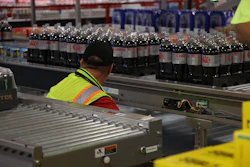
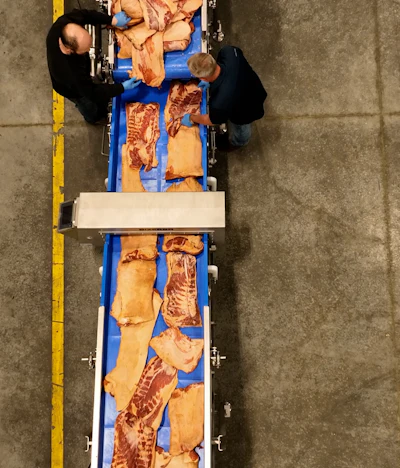
 Searching for margins, food producers have moved toward advanced slicing, portioning, and cutting using robotics, machine vision, and automation.Urschel
“OEMs are embedding predictive intelligence to monitor asset health, lifespan, and degradation over time,” says TwinThread’s Dietrich. “Smarter automation and closed-loop control are also helping machines operate more efficiently and more consistently within their optimal range.”
Ultimately, ingredient bans are forcing a broader shift in how manufacturers think about reformulation. “Manufacturers are realizing that reformulation is not just a formulation problem, but it’s a processing problem,” says Thiel. “You have to rethink how and when ingredients are added, how they are handled, and in some cases how the equipment itself is used.”
To increase margins, digital investments must meet the moment as well as be able to scale quickly and effectively. “Innovation is moving faster, but scaling it remains difficult,” says Dietrich. “Volatile environments and sensitive processes make achieving the baseline stability and consistency required for scale difficult.”