Bristol-Myers Squibb is among the first pharmaceutical companies to use DNA codes to fight counterfeit drug packaging. For more than a year, the company has been labeling anticancer drugs with DNA codes. According to Germany’s identif GmbH, a subsidiary of november AG, the codes make pharmaceutical packaging “forgery-proof.”
Each code is a unique sequence of synthetic DNA. For a label, like the one shown here, the DNA is mixed with a clear varnish laid down on the label substrate in one station of a flexo or offset press. The DNA can also be added directly to a folding carton, for example, by mixing it with the ink sprayed on by an ink-jet printer.
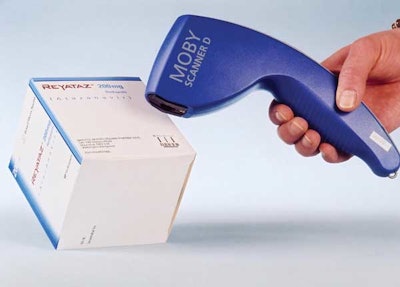
In either case, the customer-specific DNA code can be authenticated within seconds by using a hand-held reader like the one shown here. If the reader does not detect the genetic code that is supposed to be on the label or carton, a counterfeit has been detected.
New York-based Bristol-Myers Squibb says it will introduce these “genetic fingerprints” for its anticancer drugs and HIV drugs.
See the story that goes with this sidebar: Anticounterfeiting: the urgency grows