 Sterling Anthony
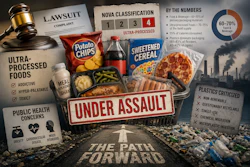
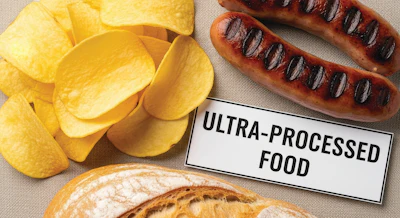
The establishment of a legal definition of ultra-processed foods is a logical necessity. The Food and Drug Administration (FDA) and the United States Department of Agriculture (USDA) are collaborating in that effort. Companies, however, don’t need to wait for that definition to determine its applicability. Based on publicly available coverage of the debate, the definition likely will encompass most packaged foods. Individual companies, therefore, need to assume that they will be impacted. That leaves the question of, how?
It’s a safe bet that the coming regulations will affect labeling. Placement is a key issue. If, for example, certain information is mandated for front-of-package placement, companies will need to decide how to best integrate it, while still leveraging the communication function of packaging. A greater challenge would be a front-of-pack placement mandate for a warning label. That’s because federal regulations for warning labels typically impose requirements regarding form and format. To be effective, warnings must be conspicuous—they need to stand out and be readily noticed. Since marketers don’t regard their products as harmful, having to call attention to a warning is daunting.
It’s a solid possibility that the coming regulations will place restrictions on marketing practices, such as advertising, and particularly what’s aimed at children. When thinking of advertising, print and electronic quickly come to mind. But packaging not only is a medium for advertising, but also one that operates at the point-of-purchase. Companies that market foods targeting children need to access the degree to which the packaging might be attacked as exploitive. Here, too, package design and redesign will be impacted.
Expect restrictions, and even outright bans, of various additives. Incidentally, some states are not waiting for federal regulations and are enacting their own, California being a prime example. Preservatives are particular category of additives that carry packaging-related ramifications. Protection is a key function of packaging, allowing for the extended safe quality of foods. Preservatives are used for the same purpose. The relationship between the two can be said to be inverse: a lesser reliance on preservatives places a greater reliance on packaging. Under that scenario, barrier packaging—notably of the flexible variety—looms large. But there’s a catch-22. Flexible barrier packaging consists of various materials, bonded with various substances, and therefore, are subject to criticisms regarding recyclability.
There’s a different type of restrictions than might be implemented by the coming regulations, related to the alleged “hyper-palatability” of some supposed ultra-processed foods. It can take the form of lowered allowed amounts of the big three: sugar, salt, and fats. Would it be an overreach, given that Nutritional Labeling already addresses those ingredients? That argument could be made. Nonetheless, there are at least two concerns that companies should bear in mind. One involves whether those ingredients will be assigned new, more prominent roles in labeling. The other involves the challenge of reformulating, using lowered amounts of those aforementioned ingredients while still providing desired palatability.
It is not being alleged here that every conceivable fallout from the ultra-processed foods debate will have a direct connection with packaging. It is being alleged that there are direct connections with packaging that impact a company’s sales, market share, and profitability. It can’t be otherwise, given that food processing and food packaging are so intertwined. It further follows that a company’s responses to the ultra-processed foods debate should assign the proper role to packaging professionals.
Every company should have a mechanism for staying abreast of the regulatory landscape, not only as presently composed but also of potential changes. Traditionally, aids have included trade associations, strategic partnerships, and external sources. More recently, AI has made the task easier, along with various software programs that track patterns and predict shifts. Fundamentally, every company should understand the federal rule-making process. Regulations don’t suddenly appear, but are preceded by a protocol, including announcements of proposed regulations and a period in which invested parties can provide inputs.
Packaging, as a discipline, should be a standing member of any internal group tasked with anticipating what’s to come and strategizing responses to the ultra-processed foods debate. Such membership should come naturally for packaging professionals, because packaging is an interdisciplinary function. Other disciplines might include marketing, production, supply chain management, and, of course, legal.
Regarding the legal discipline, the past teaches that legislation leads to regulation, which leads to litigation. There already have been individual and class-action suits regarding the ultra-processed foods debate, and the pace looks like it’s accelerating. A company that finds itself a Defendant in a lawsuit should know how to assist its law team. More than that, a company should have such assistance at the ready, in advance of litigation. Those issues will be addressed in the next and final article in this series, in next month’s issue of Packaging World.
Sterling Anthony, CPP, consults in packaging, marketing, logistics, and human-factors. A former faculty member at the Michigan State University School of Packaging, his contact info is:100 Renaissance Center, Box-176, Detroit, MI 48243; 313/531-1875; [email protected]