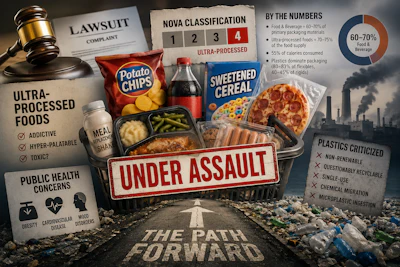
Packaging is becoming a central target in the ultra-processed food debate because it enables production and marketing of these foods, which represent 70-75% of the food supply. The packaging industry must anticipate regulatory changes and develop strategic responses to address growing public health concerns.
- Ultra-processed foods comprise 70-75% of the food supply and represent 55% of calories consumed, making packaging a critical enabler of their distribution.
- Plastics dominate food packaging at 80-83% of flexible packaging and 40-45% of rigid packaging, creating environmental and health concerns.
- No federal definition of ultra-processed foods exists yet, but the NOVA classification system will likely serve as the model when regulations arrive.
- Key figures like Robert Kennedy Jr. and Dr. David Kessler are publicly opposing ultra-processed foods, signaling that regulatory action is likely regardless of political administration changes.
- The packaging industry faces litigation and regulatory risks and must develop anticipatory strategies now to address health concerns, sustainability challenges, and potential chemical migration issues.
 Sterling Anthony
“Ultra” means beyond what’s normal, ordinary, and expected. However, depending on what’s being described, it can mean beyond what’s necessary and proper. It’s the latter, expanded meaning that’s being applied to processed foods. Here’s proof of the negative connotation: there’s not a single brand-owner that markets its products as being ultra-processed. “Hyper,” similarly, describes that which is considered as being excessive. Ultra-processed foods are characterized as hyper-palatable, suggesting that they are so satisfying as to be addictive. Again, as proof of the negative connotation, there’s not a single brand-owner that markets its products as being hyper-palatable.
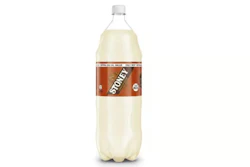
What are ultra-processed foods? Currently, there is no U.S. federal definition. When (not if) a definition comes, it likely will be modeled on the NOVA classification system. NOVA classifies foods (and beverages) into four groups, in increasing order, based on the extent and the purpose of the processing and not based on nutrient content. Group 4 is ultra-processed. Defining by example, a partial list includes carbonated beverages, snacks, sweetened cereals, frozen pizzas, TV dinners, processed meats, baked goods, and meal replacement shakes and bars.
Since the mentioned products are under assault, then inescapably, so is packaging. Ultra-processed is a designation determined by product formulation and not by how the product is packaged. That truth notwithstanding, critics of ultra-processed foods can cite packaging as an enabler. Packaging is a technical necessity without which ultra-processed foods would not be available to retail consumers. Packaging also is a potent marketing tool, providing shelf-impact, especially effective in impulse purchases. There’s nothing sinister about those roles, which also are performed for other groups of foods. What makes packaging a target in the ultra-processed foods debate are the associated statistics.
Various entities compile statistics about the packaging supplier industry. The work is done by market research firms, industry trade associations, and government agencies (e.g., U.S. Census Bureau and the Center for Disease Control). Their findings vary but fall within citable ranges. Food & Beverage is the largest end-use market for primary packaging materials, comprising 60 to 70%. Ultra-processed foods, in turn, are 70 to 75% of the food supply and represent 55% of calories consumed. Plastics dominate packaging for foods, in general, with 80 to 83% of flexibles and 40 to 45% of rigids. It follows that similar percentages apply to the ultra-processed category.
Plastics provide extended shelf life, widened distribution, cost-effectiveness, and convenient proportioning, among its benefits. Even if those benefits are acknowledged by critics, their counterargument is that plastics are bad for the environment, being derived from a non-renewable resource, questionably recyclable, and often single-use. Such criticisms have been leveled routinely against plastic packaging throughout the sustainability era. With food packaging, however, there’re the added criticisms of chemical migration and microplastic ingestion. The harshest critics consider ultra-processed foods and plastic packaging to be a toxic-twosome, linked to such maladies as obesity, hypertension, cardiovascular disease, and mood disorders.
It would be convenient for the packaging supplier industry to dismiss the ultra-process foods debate as an offshoot of the sustainability challenges that it has faced for decades. Convenient yes, advisable no. Nor would it be advisable to believe that the debate will lessen after an outgoing administration takes with it its Make America Healthy Again (MAGA) initiative. Consider, for example, Robert Kennedy, Jr. (current Secretary of the U.S. Department of Health and Human Services) and Dr. David Kessler (former Commissioner of the U.S. Food & Drug Administration). The otherwise ideological adversaries are in a joint effort, publicly calling attention to what they deem to be threats imposed by ultra-processed foods.
And it’s not an unreasonable digression to mention that, in the pet foods industry, it’s “reigning” cats and dogs, a combined 90%. Many, if not most pet-owners love their pets as bonified members of the family. Is an associated ultra-processed foods debate on the horizon? A possible precursor is the growing segment of so-called fresh, to-be-refrigerated pet foods. The point being made herein is that the ultra-processed foods debate is posed to not only grow louder but also to diversify.
The packaging supplier industry is at a juncture, caused by a backlash against ultra-processed foods. Public health-related debates and controversies have a habit of leading to litigation and regulation. An oft-time Defendant in litigation and a subject of regulation, the packaging industry can’t afford to play spectator, as conditions play out that can affect its profitability and viability. Enough is known already about conditions to constitute a call to action.
To get ahead of what’s to come requires anticipation followed by strategizing. Those vital steps will be the subject next month’s column.
Sterling Anthony, CPP, consults in packaging, marketing, logistics, and human-factors. A former faculty member at the Michigan State University School of Packaging, his contact info is:100 Renaissance Center, Box-176, Detroit, MI 48243; 313/531-1875; [email protected]