 Ken McGuire, consultant, former P&G exec and Packaging World contributor
Before 2020, e-commerce sales were already growing quickly, but for many large consumer products companies they still represented only a small portion of total business. For companies like P&G, e-commerce was less than 5% of sales volume. Even though the e-commerce supply chain looked very different from the traditional brick-and-mortar system, those volumes were still low enough that many brands could manage the problem with workarounds rather than true redesign. Companies often paid retailers such as Amazon extra fees to help protect products during shipment by taping lids closed, bagging liquid packages, or adding other protective measures. Because those fees applied to only a small fraction of sales, they did not materially change the economics of the business. That is no longer true. Last year, major consumer products companies such as Estée Lauder, Clorox, and others reported e-commerce volumes above 20% of total sales. At that scale, temporary fixes become expensive habits. Companies now have to decide whether to design packaging that can survive the e-commerce supply chain, the brick-and-mortar supply chain, or ideally, both. That is no longer just an engineering question. It is a strategic one.
The challenge is especially acute for products such as beverages, shampoos, laundry detergents, and cleaning products. These items are often heavy, sold in bulky bottles, and carry limited margins. When more than 20% of sales are exposed to the risks of e-commerce distribution, cutting further into margin is not an option.
The traditional retail supply chain, developed and refined over decades, is highly controlled. Companies manufacture and package products, place them in corrugated shipping cases, stack those cases on pallets in carefully designed patterns, stretch-wrap the loads, and ship them by truck. Packages and shipping cases are engineered with the necessary top-load strength to survive that journey without damage. At the store, the cases are opened, the products are stocked on the shelf, and the system works largely as intended. That predictable environment allowed companies to optimize packaging for cost, efficiency, and waste reduction.
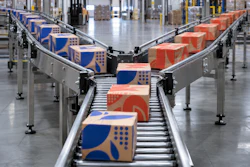
E-commerce breaks much of that logic. Once a retailer packs a shipping box with a random mix of products, the carefully controlled system disappears. A detergent bottle may now travel in the same box as clothing, electronics, toys, or any number of unrelated items. Packages that performed beautifully in a store supply chain suddenly face drops, impacts, compression, leakage risks, and the possibility of damaging everything packed around them.
Those changes create real challenges, but they also create opportunity. Since leaving P&G three years ago, I have worked with companies large and small on packaging technologies and packaging strategy, and one theme appears again and again: how to win in e-commerce.
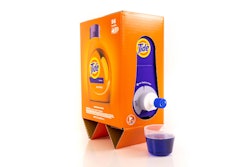
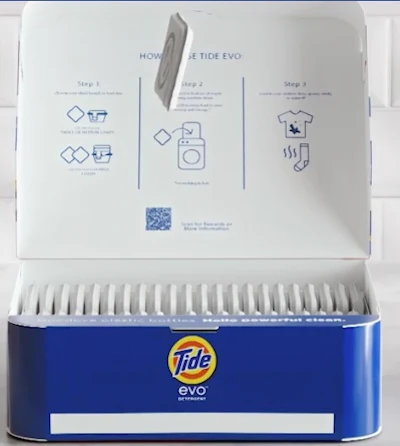
For large companies, solving the problem can deliver significant business value because it protects both economics and consumer trust. One recent example involved a blow-molded package with an injection-molded flip-top cap. In traditional retail, the package performed acceptably. In e-commerce, however, the cap would occasionally pop open (or pop off entirely), spilling product in transit. The result was not just product loss and mess; it also damaged the consumer's confidence in the brand. That kind of failure is no longer a minor operational issue. It is a strategic threat.  P&G’s Tide eco-box is an early example of a Ships In Own Container (SIOC) design—engineered to withstand the unpredictable ecommerce supply chain without added overboxing, reducing damage risk, cutting costs, and signaling how packaging must evolve as online volume reaches critical scale.Tide
Some companies respond with e-commerce-specific packaging, such as the Tide eco-box or Truman's concentrated home cleaners, which shift the product and package format to better fit direct shipment. Others pursue omnichannel formats that can work in both retail environments, such as AeroFlexx liquid packaging. Still others go further and redesign the product itself, as Tide has done with Tide Evo. The point is not that one answer will fit every brand. It is that the old answer, doing nothing and paying for extra protection, is becoming much less viable.
E-commerce is here to stay, and for many companies it has reached a scale that makes packaging strategy impossible to ignore. Brands that move quickly to develop smart, cost-effective, channel-appropriate solutions will be better positioned to win in this new sales environment. There will not be one universal answer. The most successful companies will likely build a portfolio of solutions: some omnichannel packages, some ecommerce-specific formats, and in some cases entirely redesigned products. What matters is recognizing that ecommerce packaging is no longer a niche issue. It is becoming a core part of how consumer products companies compete.