Liz Cuneo: So we can start — give us a little bit of who you are. I did read a little bit about you on LinkedIn: that you were an investment banker and you made a big transition to promote sustainability and do work in that field, especially with packaging. How did that come about?
Michael Martin: Yeah, Exxon Valdez happened back in 1989, and I thought this is not what business should be doing to society. It should be doing good stuff. I’m a capitalist, but I felt like there was a better way of doing it. So for the last 36 years, what I’ve done is identify major sustainability issues, and then come up with companies or concepts that become campaigns and movements. For example, from 1990 to 1995, I produced the nationally broadcast Earth Day stadium concerts and helped form the Earth Day Network — which, if you’ve heard of Earth Day, is the largest international secular event.
I created the first climate change campaign by creating a Ben & Jerry’s Dave Matthews Band ice cream flavor. I worked with Toyota and helped launch the Prius. I worked in the organic food space for many years, growing awareness of organic food. I’ve worked with Apple Computer on their sustainability strategy and started a bunch of businesses around this too — including a chain of organic food restaurants.
There’s a company called Plantaga where we get plant-based foods into underserved communities in New York, and a company called Native Energy, which built wind turbines on native lands.
It’s really about how to use capitalism and culture to create change. Over the years, I’ve also been the guy that “greens” the music industry. Billboard calls me the guru of live event greening because back in 1990, when we were producing these Earth Day concerts, I thought: you can’t produce a concert for the environment and not produce it sustainably. So over the last 36 years, that’s really what I’ve focused on, in addition to other things.
As part of that, I introduced recycling to live events. I was the first one to do that — along with composting — and worked with Live Nation, who hired me to develop their sustainability strategy.
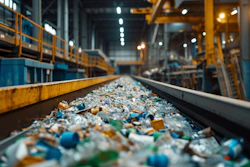
I realized, after seeing what was happening in Europe with reuse, that the waste system at live events — which is really a microcosm for society — is broken. It doesn’t work. Basically, only about 9% of plastics are getting recycled, best case. Aluminum is so energy intensive, and most aluminum products have plastic on the inside, so you’re not getting away from plastic. We really need to think about how to move people through reduce, reuse, recycle — in that order of priority. Reuse is better than recycle.
So in 2017, I decided to focus on launching the reuse movement in this country by building the reuse ecosystem and infrastructure needed to make it happen. So that’s the long-winded answer, but that’s the path that got me to why we decided to launch the reuse movement and what Our World does.
Cuneo: That’s great. So it sounds like you’ve dabbled in almost every industry. I looked up the R Cup — is that what we’re talking about? When you talk about r.World Reusables, is that the only product or the main driver within the company?
Martin: So, r.World is the company, and we have different lines of business that are interconnected.
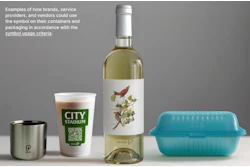
We’ve got our cups, which are reusable serve cups. We’ve got reusable serveware called Artware. Our tech platform is called Arturn. But basically, what our product is, in some ways, is the reverse logistics, sanitation, and infrastructure to do reuse.
And we can put anything through that: CPG packaging, glassware, whatever. That’s what the marketplace needs, because the waste system is failing. Landfills are filling up, incinerators are being shut down, and it’s primarily an environmental justice issue.
Compostable cups are also a problem because unless they get to an industrial composting facility, they just act like plastic — and there aren’t enough industrial composting facilities. There’s a waste crisis, and what’s needed is a disintermediation of that industry. That’s what we’re focused on: what’s needed to make reuse work.
So you’ve got cups, serveware, reverse logistics, sanitation, quality control, environmental impact tracking, reporting — it’s a complete ecosystem to build the reuse movement in the United States. And so the thing, as we consult with locations, venues, buildings, and corporations about waste reduction, is really focusing on the big picture: the true impact and the true cost.
For example, in pure economics, a single-use cup costs less than a reusable cup. The reason is that reusable systems require higher quality cups, plus the labor to pick up, drop off, wash, inspect — all of that. So yes, it costs more upfront. And everybody cares about dollars and cents, affordability — I totally get that. But the issue is that people don’t look at the full picture.
With single-use cups, you have to constantly rebuy them. Number two, you also have to clean them up afterward. Most people will put our cups into the correct bins, so you have less cleanup labor needed. Number three: you’re throwing out less stuff, so your disposal fees are lower.
Number four: with a reusable cup, it’s a higher quality drinking experience. People can charge more, and customers will often buy more beverages in an R Cup than with single-use, so your per-head sales go up. So we’ve found that when you look at the overall picture, reuse is actually advantageous financially and environmentally.
The problem is that a concessionaire will say, “Wait — I can buy a cup for 10 cents. Why would I spend 30 or 40 cents on a reusable cup?” They don’t see how it plays out over time.
That’s one of the things we’re working on: educating people and getting them to go with reuse. And part of this also requires awareness of the manufacturing process — the toxins generated from plastic and aluminum — and the impact on the planet’s health, and on our children’s health and future generations.
Cuneo: Sure. So, I want to switch it a little more personal, Michael. Nothing too personal, but you mentioned your passion for sustainability. You started thinking about this stuff once you were already into your career. I’m wondering: did you have any of this passion when you were young? Did you ever think, “I want to build something different, do something meaningful, save the world”?
Martin: No, that’s what’s really weird. I was plowing ahead thinking: how do I make the most money? How do I be more successful? Get into the best business school, get into investment banking, get into real estate investment banking, do major deals. And I was doing that at 28 or 29 years old.
Then Exxon Valdez happened, and I thought, wait a minute — this is not right. I started looking at what value I was providing by structuring mortgage-backed securities or financing malls that were destroying the environment. I didn’t want my life spent doing something without purpose. At first, I thought maybe I’d do this for a year and then go back to investment banking.
By the way, I quit before I was making lots of money — unfortunately — but I was right on the verge of it. But once you start learning what’s going on in the environment — ancient forests, species extinction, toxins, climate change — you can’t look away. If you have any heart, empathy, or brain, you have to take action. It’s easy as humans to say, “I’m not going to think about that,” but the reality is we’re seeing the impacts now.
Just this week, almost the entire country was blanketed with a storm that wouldn’t have happened at this scale if climate change had been addressed. And the more people are personally impacted — from microplastics to climate change — the more they move from awareness to action. I grew up in Wisconsin, where Senator Gaylord Nelson, the founder of Earth Day, was from. I remember when I was 10 years old, the first Earth Day. I went out and cleaned up the Fox River.
That was the only thing I did, and I didn’t think about it again until I was around 30. Then I realized: I want to use the skills I have to do good in the world. There’s always been this idea of corporation versus environment, but I thought it was a false choice.
We live in a capitalistic society — you have to fold them together. You can’t just sit in a bubble throwing tomatoes at planes. You have to figure out how to steer the plane the right way.
Because CEOs and managers are told their job is to maximize shareholder value. The problem is that accounting doesn’t factor in the negative impact of corporate decisions on the health of people and the planet. So how do you factor that in, so we’re not destroying the planet and everybody’s health?
Cuneo: Yeah, and you’re in a unique position because you’ve dug into all of these issues. I’ve been learning a ton in this job, especially through the packaging world.
Sustainable packaging is where the industry is going, and it’s eye-opening to see where packages really end up and how broken the recycling infrastructure is. So, my question is: how do more people who aren’t in the industry learn about what’s going on? How do they get jazzed and passionate about these issues? I feel like we need more education, but I don’t know what that looks like for society. Any thoughts?
Martin: Have them call me one by one. But part of the reason I like doing things like this is to get people thinking outside the box and seeing the bigger picture. I do think the next generation gets this. When I was in school, there wasn’t a sustainability class. Now there are master’s programs and PhDs.
One thing I’m proud of with Earth Day is how many people have reached out to say they first started thinking about the environment through an Earth Day event. That focus on schools really helped. I think sustainability will be inherent for the next generation.
Corporations will have to embrace it too. For example, Coke has been recognized as one of the world’s largest polluters — but we work with them now, which would have been unheard of 20 years ago. And I can see they’re doing meaningful work around reuse and footprint reduction.
My point is: work is being done, and that will lead to more consumer awareness as it becomes integrated into business models. We’re in a neutral moment in this country right now, but it’s going to get back in gear. It needs to. To answer your question: people are being educated in school, there’s greater generational awareness, more people are being directly impacted by cancers, pollution, climate change, power outages — all of it. And leadership is coming along that understands this.
If you look at China, Europe, and other parts of the world, they are drilling down hard on these issues. That’s the future. The ecosystem is going to have to change for capitalism to succeed. Yeah, it’s interesting you mentioned the younger generation.
What’s driving sustainability change? Is it companies? Consumers? Legislation? It’s probably a mix of all of them. And you’re right — consumers and voters create change, which is why education is critical. I love the fact that musicians are choosing venues based on whether they implement reuse. That drives change. Despite how heavy these issues are, I’m hopeful and optimistic about the positive change that’s coming.
Back to reuse for a second — I see reuse in the future is going to be massive. You think about Procter & Gamble putting 4 billion orange Tide bottles into communities and making communities pay for that cleanup. That’s what’s happening now with EPR — extended producer responsibility legislation — which is bubbling up, and I think it’s in seven states.
You’ve also got the federal government: the Senate passed bipartisan reuse legislation at the end of November. And part of the reason that’s so critical is because, as you alluded to earlier, a CEO’s mandate is to maximize profits. If legislation is required to get somebody to say, “Yes, it costs a little bit more to choose the reusable option, but it’s the right thing for society,” then we have to do that. We have to stop creating billions of items and throwing them away long-term. That’s not sustainable.
Cuneo: Yeah, of course. So, thinking about packaging — because that’s what we write about and focus on — do you have any advice for the future generation of packaging engineers? What should they be looking at in terms of sustainability? Is it material reduction? Post-consumer recycled materials? What is it?
Martin: I think it’s all of the above. It has to be everything possible, but I would start first with the question: how can packaging be eliminated altogether? A good example is soaps and shampoos that are now coming out as bars. It’s just a bar of shampoo — no packaging needed.
One concern I have, and I’m not a scientist, is this: Does recycled plastic leach more micro- or nanoplastics than virgin plastic? Are we creating more of a microplastic crisis the more we recycle? I don’t know the answer, and I’m not claiming it’s true, but I’ve read some articles that suggest it. I’d love to know if anybody has real data on that.
Sometimes I think about companies saying, “This shirt is made out of recycled plastic.” Personally, I wouldn’t want to buy that if it means more plastic is leaching into the body. It goes back to the premise: there’s no such thing as “away.” Whatever you create, you have to think about the outcome. Where is it going to go?
There is a role for post-consumer recycling and all of these approaches, but I encourage CPG companies and retailers to start considering how reuse systems can be set up in ways that make operational, economic, and environmental sense. That’s what I’m focused on right now: what components are needed to make that work. We’re leading on that, and we have a lot of pilots and tests out there to experiment with it.
I think that’s ultimately the future. It won’t be tomorrow, but over the next 10 years, you’ll start seeing reuse become more understood, accepted, and sought out by consumers. Political will is going to grow from a legislative standpoint too. Consumer awareness about the waste crisis is increasing, and that will force companies to address it.
Cuno: Yeah. So, you talked about eliminating packaging. What about refilling? We talked briefly about refilling soap containers. I remember seeing European examples where people refill cereal containers and things like that. Is refill viable for society here in the U.S.?
Martin: Yes, refill has a role. You go to co-ops and it’s already happening. The challenge is that you need a society that cares about the future, about their neighbors, and about their community. Not everyone does. But of course there’s a role for refill, reuse, recycling — all of it.
It all comes back to this idea: there’s no such thing as “away.” Every marketing plan, product plan, and strategy should start with the question: What happens to this at end of life? And what can we do as a company to mitigate the waste, toxins, and CO₂ emissions being generated by what we make and sell?
Cuneo: Sure. Do you know anything about advanced recycling or chemical recycling? Some people say it could help with the broken recycling infrastructure in the U.S. What are your thoughts?
Martin: I’m not a scientist in that area, so I don’t want to say something inaccurate. My concern, with a 36-year perspective, is that we keep trying to play games to make single-use make sense — and everything we’ve tried has failed. We tried recycling. We tried compostables. We tried aluminum. We shipped everything overseas. We buried it in landfills.
Now we’re introducing heat, chemicals, and toxic processes to try to melt materials down and extract value. We’re experimenting with seaweed packaging, mushroom packaging — all these materials. But the real question is: does it break down into only carbon, hydrogen, and oxygen?
If it breaks down into anything else — chemicals, nanoproducts, microproducts — then it’s not solving the problem. We’re still generating waste.
Cuneo: Yeah, sure. So wrapping up our interview today: what’s next on the horizon? What are you working on or thinking about as the next big sustainable movement?
Martin: A few things. First, I’d love to see people redefine what true zero waste means.
You can’t call something “zero waste” if you’re sending contaminated materials to recycling or compost facilities that won’t actually process them — yet events still get certified. In my mind, recycling and compost are still forms of waste. A true zero waste event is one where everything is bulk and reuse-based.
From a reuse standpoint, we need a national infrastructure solution — which is what we’re working to build — so that every major market has a reuse option. I want more analysis done comparing the cost per capita of building a citywide recycling system versus a citywide reuse system. I contend reuse would be far cheaper operationally, economically, and environmentally than the complex machinations required for recycling.
I was just in Paris last week, and it was amazing — there was almost no single-use anywhere. America needs to look at what’s happening in the rest of the world and move ahead. Corporations will respond as consumer awareness increases. Nonprofits like WWF and Upstream are helping get the message out. Cities like Oakland are passing reuse legislation, and several other cities are considering it.
The federal government has started moving reuse legislation forward too. And the next generation is coming with more awareness and concern.
On a macro level, it comes down to understanding the impact of every decision — not just on yourself, but on your community, on people you know and people you don’t know, and on the environment. The more empathy we build, the more the right decisions will be made — allowing businesses to be profitable without sacrificing the health of people and the planet.
Cuneo: Sure. Thank you, Michael, for your time today and for your work in the industry. It’s really enlightening to learn about what you’re doing. Thank you.
Martin: Of course. Thank you for taking the time to do this. This is how change happens — through education and waking people up to how reuse is a great solution that works. And I have to say, it’s not just me — it’s an amazing team making everything happen. I really appreciate you taking the time.
Cuneo: Yeah, thank you.