 Todd Bukowski
The Scorecard also signaled how important packaging data would become. Suppliers were no longer being asked only to improve a package. They had to provide information that could be measured, compared, and used to guide decisions across an enormous supply chain. The industry was only beginning to understand where that shift would lead.
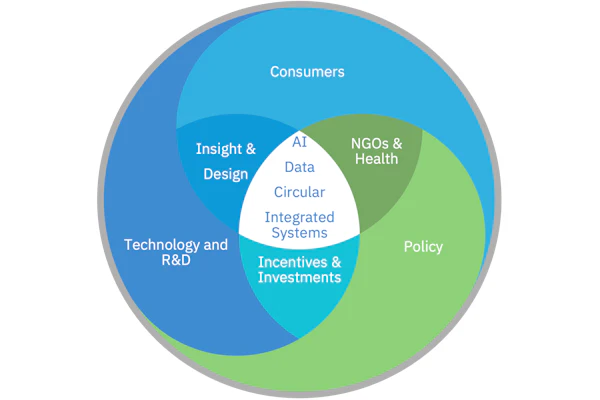
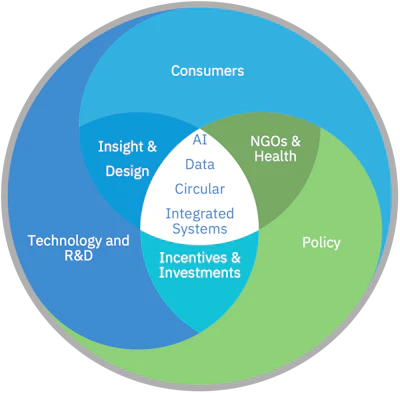
In the physical world, recycling, composting, and reuse systems must be aligned so materials can be collected and returned to productive use. Common standards must help companies, consumers, recyclers, and regulators work from a consistent framework. In the digital world, systems must exchange packaging data seamlessly, helping the entire value chain streamline workflows, reduce duplication, and respond to regulatory and business requirements.
The original Walmart Packaging Scorecard asked suppliers to report against the “7 R’s”: Remove, Reduce, Reuse, Recycle, Renew, Revenue, and Read, with “Read” referring to consumer education. At the time, many of us thought that was a lot of information to provide. The industry was not structured to collect, maintain, or share it efficiently.
Today, the demand for packaging data has expanded dramatically. Extended Producer Responsibility laws in a growing number of U.S. states and Canadian provinces require detailed information about packaging placed on the market. California is also asking brand owners to reduce plastic packaging, move toward more reusable systems, and demonstrate progress. In Europe, the Packaging and Packaging Waste Regulation is creating additional reporting expectations, while future Digital Product Passport requirements are likely to add another layer.
The required data is also becoming more granular. Brand owners and retailers may need information on individual components, material types, weights, color, clarity, composition, separability, format, recycled content, and whether inputs are bio-based or fossil-based. These attributes can affect recyclability classifications, regulatory status, environmental assessments, and EPR fees.
This information must be accurate, traceable, and auditable. For brands managing hundreds or thousands of packaging specifications, this is no longer simply a reporting exercise. It is an enterprise data management challenge. Packaging data management is therefore moving beyond spreadsheets and disconnected calculators toward software platforms built around a common data foundation.
The future is an integrated platform
To get more clarity on the future of data management and integration, I spoke with Prashant Jagtap, President and CEO of packaging software provider Trayak. Jagtap explains, “The appropriate response is not a collection of disconnected calculators. It is an integrated sustainability platform built on a common packaging data foundation. The same Sustainability BOM (incorporating material type, packaging format, component weight, manufacturing process, end of life attributes, etc.) can support streamlined LCA, recyclability assessments, EPR reporting and fee forecasting, PPWR readiness, and future product disclosure requirements.”
The common data foundation is the key. When environmental calculations, recyclability assessments, regulatory reporting, and financial forecasting are handled in separate systems, brand owners often enter and maintain the same information multiple times. This creates extra work and increases the risk of inconsistent results.
When these capabilities share a common data structure, a change to one component can flow through environmental calculations, recyclability results, compliance assessments, and cost forecasts. CPGs can evaluate the broader effects of a decision without recreating the same package in multiple tools.
The result is a more reliable single source of truth that can support package development, sustainability, regulatory affairs, procurement, finance, suppliers, and other partners across the value chain. Jagtap mentioned “Trayak has been building and expanding their EcoImpact platform towards this vision.” EcoImpact is an example of an integrated software tool that is able to grab data from multiple sources, such as packaging specifications, sales data, and procurement data. Many of these “single source of truth” tools allow brand owners to do “what if” scenarios along with financial modeling to understand both the sustainability and economic impact of a packaging decision.
AI extends packaging data’s value
Artificial intelligence can make these tools more powerful by extracting information from specifications, mapping materials to classifications, identifying missing attributes, detecting anomalies, and modeling scenarios across large numbers of SKUs. These capabilities can reduce manual work, identify data gaps earlier, compare alternatives more efficiently, and assess design or material changes across a portfolio.
However, AI does not replace data governance. Regulatory and business decisions still require transparent methodologies, controlled workflows, version histories, evidence management, and clear responsibility for data quality. AI will provide the greatest value within a well-managed system built on reliable packaging data.
The industry has changed significantly since the Walmart Packaging Scorecard, but its underlying vision remains relevant: better information can lead to better packaging decisions. What has changed is the scale and complexity of the challenge. Sustainable packaging increasingly requires design, sustainability, regulation, finance, suppliers, producer responsibility organizations, and recovery systems to work from shared data.
Over the next decade, the ability to collect, govern, exchange, and apply that data will become a core industry capability. Brand owners that leverage an integrated packaging data foundation will be better positioned to meet regulatory requirements, evaluate trade-offs, improve decision-making, and develop more holistic solutions across the packaging value chain.