Chemical recycling is at a critical stage facing competition, high energy costs, and regulatory uncertainty, but industry experts agree that choosing the right recycling technology depends on specific needs rather than relying on one solution.
- Three main recycling approaches: Mechanical (cleaning and remelting), physical (solvent-based purification), and chemical (altering polymer structure through pyrolysis or gasification)
- Technology selection matters: Companies must choose based on feedstock, end-use application, scale, and integration with existing assets
- Industry challenges: Inflated claims, missed targets, high energy costs in Europe, regulatory uncertainty, and project delays fuel skepticism
- Standardization gap: Most recycling standards are voluntary and industry-led; improved data collection and transparency across systems are needed
- Complementary approach: Leading companies view all recycling technologies as pathways to circularity rather than competing solutions
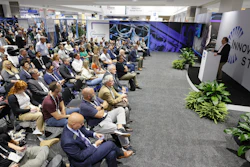
A cross-section of resin producers, technology providers, and standards experts took the stage at the Plastics Recycling Conference in San Diego this week to tackle the state and outlook of chemical recycling.
Thomas Blocher, Business Manager Chemical Recycling of BUSS ChemTech AG, opened the panel by describing the industry as being at a critical-stage.
He cited pressures including competition with virgin plastics, high energy costs in Europe, regulatory uncertainty, and project delays as responsible for this critical stage.
“While we need to avoid having better be the enemy of good, we do need to not rush into things and we do need to take the time to make sure certain things are done right—or at least included,” Blocher said.
Blocher acknowledged that inflated claims and missed targets have contributed to skepticism around chemical recycling, adding that clearer distinctions between mechanical, physical and chemical processes are necessary to avoid further confusion.
As discussed during the panel, mechanical recycling typically involves cleaning, grinding and remelting plastic while preserving the polymer chain. Physical recycling uses solvents to dissolve and purify polymers without changing their molecular structure. Chemical recycling refers to processes that alter the polymer structure itself, such as pyrolysis or gasification.
Company perspectives on recycling technologies
For Mariane Maximous, Vice President of Feedstocks & Mechanical Recycling, Lyondellbasell (LYB),the appropriate technology depends on what a company is trying to solve for, including feedstock, end-use application, scale and integration into existing assets.
“We're technology agnostic, and that's why we're looking at all different ones," Maximous said. “Because we recognize that chemical recycling is complementary to mechanical or to solvent based as well.”
She said all recycling technologies are a pathway to circularity, meaning it’s best to choose a technology based on what you are trying to solve for. For instance, end-use applications, scale, and time to deployment require different approaches.
Tamisin Ettefagh, CSO/EVP Government & Industry Relations, PureCycle Technologies, emphasized that her company uses physical recycling rather than chemical recycling.
As a physical recycler, Ettefagh explained that PureCycle’s process includes multiple purification steps and produces finished resin rather than relying on mass balance accounting.
“We think this technology is good for being able to keep recycling polypropylene over and over again,” Ettefagh said. “We're cleansing about 1% of low molecular weight branches out of it through the extraction and we make a low molecular weight atactic polypropylene wax from that which we can sell.”
In terms of harmonization Michelle Seitz, Circular Economy Program Director—Plastics, National Institute of Standards and Technology (NIST), said there is still a long way to go.
She noted that most standards are developed through voluntary, industry-led processes and are not regulations. Seitz also emphasized the need for improved data collection, comparability, and transparency across recycling systems.