Casey Flanagan:
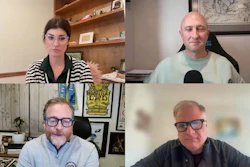
Hi, I'm Casey Flanagan, associate editor with Packaging World. I'm joined today by Jillian Salinas, founder and CEO of Beach City Coffee. It's a woman-founded coffee brand based in Southern California. So thanks, Jillian, for joining. I'm really excited to chat today.
Jillian Salinas:
Thank you for having me. I'm happy to be here with you.
Casey Flanagan:
Great. All right. I have my coffee ready so we can just dive right in.
Jillian Salinas:
Nice. Very good. Cool. Yeah. So I can tell you how I got started with Beach City if you'd like.
Casey Flanagan:
Exactly. Yeah. So to start, I should mention the news of the day, I guess. Beach City recently earned BPI certification for its commercially compostable coffee bags. And according to the company, that makes it the only coffee brand bringing BPI certified compostable packaging to mass retail shelves. So exactly. If you could start by telling me a bit about Beach City Coffee and how you originally approached your packaging and what led to that switch.
Jillian Salinas:
Yeah, sounds good. So my husband and I started Beach City Coffee together, and we've actually been roasting coffee for 17 years. So we started back in college. At the time, you couldn't really buy specialty grade coffee in the grocery stores, so we thought it'd be fun to roast it ourselves. And we actually started with an old school popcorn popper with a wooden dowel that we literally used to mix the coffee beans. Our neighbors were like, "What are you doing?" And then we got really into it. So we got an actual coffee roaster, then we got a bigger coffee roaster. At one point, we had to move out of our one bedroom apartment because we had nowhere to put our coffee roaster. And as we got more into it, I saw how underrepresented women were in coffee ownership and coffee roasting roles. And then the other thing that really bothered me about the industry was all the waste around packaging.
And so I knew not only would we have a lot of fun starting Beach City Coffee, but that we can make a big impact. And so really we've always focused on fair trade organic coffee and then packaging has been really important to me. And so I first started with recyclable packaging because that was what was available at the time. And I went with one of the main packaging suppliers in the US and I got their recyclable packaging and then I had it at my house, and then I realized that my city didn't recycle the recyclable packaging that I had gotten. And then I learned that there's this whole epidemic of wish cycling where people think that they're recycling, they think it's recyclable, but in fact it's not because there's these little numbers on the bottom of recyclables that you actually have to pay attention to because it identifies what your city will recycle or not.
And so I though, "Okay, this is not it. There's got to be something better." And so I though, okay, compostable packaging, we got to go compostable. But at the time there just was no compostable packaging available in the US at all for coffee. I searched high and low, and it's also because you have to maintain the integrity of the coffee and the packaging, so there does have to be some extra layer there. And so I searched for a really long time. I ended up finding 60% compostable here in the US. So it was almost all the way compostable. You had to remove the valve on the bag and the tin tie. So we started with that and then I just knew if I kept searching, eventually I could find it. And so about a year ago we ended up finding 100% compostable packaging, and so we switched to that.
But then there was the whole thing of being able to communicate that on our packaging.
So then I had to search who certifies compostable packaging and what does that take? And so I found out about BPI and that they were a certifier of compostable packaging, but their certification, it required testing and it took a really, really long time. So we started that process and then as we got more into it, it was very costly as well. And as we got more into it, I kept searching as well for other suppliers and I ended up finding one when we were already a little down the road with our current one. I found one that was already BPI certified. And so we ended up being able to switch to their certification because then BPI had that on file and we ended up getting a sublicense through them because that packaging had already been tested. Interesting. Yeah. And then there's things that you don't think about too.
So for our coffee, you have to do a Best Buy or an expiration date on the bag. That's another thing that you're printing on the bag. And so I had all the certification done and then they're like, "Wait, do you print a Best Buy date?" And I was like, "Yes." And they're like, "Okay, nope, you got to get a metal test for that." So it's just been this really intense process, but it's really exciting to finally be able to communicate that to customers on our packaging because before we were really only able to do it through in-store demos and things like that.
Casey Flanagan:
So yeah,
Jillian Salinas:
We're very excited.
Casey Flanagan:
That's great. And it sounds like it was an iterative process with this where you didn't just land on one compostable solution, you were able to keep improving on this idea of getting more and more compostability. So could you tell me about that journey of going from one supplier to the next and what you were looking for out of a supplier? And if you're able to share the supplier, that would be great to hear.
Jillian Salinas:
Yeah, so there's a few that we use. I think BioPack is one of them, but just knowing that I always wanted to test it and then when I found the one that was already BPI certified, that was like, okay, this is a game changer. This is going to make it so much easier.
Casey Flanagan:
Great. Okay. And were there any concerns when it came to balancing sustainability and package performance? Anything that changed about the package that you had to keep in mind for shelf life or even things like cost of what that would do to impact your product?
Jillian Salinas:
Yes. So obviously compostable packaging is a little bit more expensive, but I feel like it's worth it in that the end consumer, people care about packaging more than ever now. So I think that the end consumer sees that value. But yeah, the other thing that was hard about it was that before I would buy bags and then if I didn't use them this year, I could use them next year. But with compostable packaging, they do start to break down a little bit. So I usually give my bags a year shelf life in our facility, and then after that I've got to have moved through them because otherwise the integrity of the bag starts because it is compostable.
Casey Flanagan:
Interesting. Yeah.
Jillian Salinas:
So it did open up another, made things harder, but worth it.
Casey Flanagan:
First in, first out inventory kind of situation to manage.
Jillian Salinas:
Exactly.
Casey Flanagan:
Interesting. That's good to know. And when it comes to having the product in there, is there any difference in performance of keeping the coffee fresh?
Jillian Salinas:
No. So our bags now are made of kraft paper and a high barrier PLA, which you probably know the term around that, but it's like a plastic made typically from fermented plant sugars. And so that acts as the barrier that helps keep the coffee fresh. So it still has the full freshness and all that.
Casey Flanagan:
Interesting. That's great to hear. Okay. And how has that compostable packaging, knowing that you've adjusted a little bit over the past year or so, how has that performed as you've made that switch when it comes to any measurable sustainability benefits or even just positive feedback from customers?
Jillian Salinas:
Yeah, so now we're really starting to track how many bags we've diverted from the landfill, and it'll be exciting to see that data as we go on. But I feel like now that we have the certification, now it's really about educating our customers. So encouraging them to look up if their city composts, because that's really the best way to do it is just to go to your city website directly and see that. But if not, there's other resources. There's a website called Compost Now, and they offer local pickup options. So I feel like now we're shifting. We got the certification, now it's all about educating and helping grow that. And I think too, the more companies that switch to doing something like this, the more readily available it'll be, and then it'll be easier for small companies to do it too. Because that's the other thing is we're buying bulk packaging, really large amounts, but if you're a smaller company, you can't go and buy thousands and thousands of bags.
You have to start with a hundred. So I'm excited for this to become more widespread and really... Yeah.
Casey Flanagan:
Right. That's a great point. It's an interesting thing about the compostability conversation is the more companies do it, the more there's demand to create the infrastructure for it and the more it can become a part of our packaging. So it's an interesting angle. Great. And so getting into the BPI certification and what that meant to achieve, can you walk me through the certification process, what it involved in terms of testing? And it sounds like it might've been made quite a bit easier by finding a supplier that was already certified with them. So if you could tell me a bit about that.
Jillian Salinas:
Yeah, so we were originally going to go down the long path of testing the bags ourselves, and we were really vetting out. They had a few different places that you could go and test the bags because BPI doesn't actually test the bags. They have you get them tested and then they look at the data and you of course have to use someone that they are okay with. And that process is really long. I know they're wanting 90% of the microorganisms must convert the material into CO2 90% within six months, but they keep the bag and test it for a year. So it's a really long process. But yeah, thank God we were able to find this company that already had the certification, and this was right at the... We were literally about to go through the whole process, so it was really great. And then it took a couple months to get our sublicense through them.
They still did have to see our packaging as well. And then we got delayed a little further with the Best By stamp, but we got that all sorted.
Casey Flanagan:
Interesting. Okay. And when it comes to that Best By stamp, is the issue a problem with getting the print to stay on it? Could you tell me about the challenge that you ran into there a bit more?
Jillian Salinas:
Yeah, so basically because it is an ink that you're putting on the bag, they need to make sure that that will compost and break down as well. And so they have you get a metal test because I guess that signifies how much it would break down or not.
Casey Flanagan:
Interesting. Okay, that's great to know. And you mentioned it a bit already, but I think the customer education angle of this is really interesting. So can you tell me about what it takes to get your customers on board with this and get them to understand not only that it's compostable, but the route to get it successfully composted? Is it written on your packaging? Is it in your marketing? Tell me a bit about that.
Jillian Salinas:
Yeah. So before we had the BPI certification, we really couldn't say it anywhere on our bag. So we are heavy into doing demos, so samplings at our coffee's in Whole Foods and it's in Ralph's and Walmart, and so we're always out there giving out samples, and that was the perfect opportunity to tell people about our compostable packaging. So that's really where we led with first. Now that we have it on the bag, I'm excited to add resources on our website and we can talk about it more on our website. But I feel like with a lot of companies, and even today when I go to food shows, packaging has really been an afterthought for people, especially around more sustainable packaging. And so I'm excited to lead the way, and I feel like customers care more than ever, like I said. There's all these documentaries coming out.
There's a plastics documentary on Netflix, and I feel like that's just moving the needle forward. So yeah, I think everyone's getting more educated in general, but yeah, being able to say it on our packaging now, I'm going to have a QR code that they can scan so that it's easy,
Casey Flanagan:
But yeah. Great. That's great to hear. And could you tell me what the decision making was like in terms of home compostability and commercial compostability? Was there any downside that you saw to the home compostable option or is that maybe not an option in the coffee space?
Jillian Salinas:
Yeah, it wasn't an option for us. It does have to be commercially composted, but I will say, like I mentioned, it does start to break down on its own, but it should be commercially composted. So yeah, so we do have to direct people to do that.
Casey Flanagan:
Okay, that's great. Interesting to hear. All right. And so I guess looking forward with how Beach City Coffee is implementing this and how now you have the certification, what does this mean for the company moving forward in terms of building trust with consumers and retailers and any opportunities this might be opening for you?
Jillian Salinas:
Yeah, it's really exciting to go and go back to all our retailer partners. They knew that the packaging was compostable, but they are so excited for us to be able to communicate that to their customers. And I feel like we've now been having a lot of other big retailers wanting to sign on with us as well because they really like it too. And yeah, so it's been really great.
Casey Flanagan:
Yeah, absolutely. And then thinking about as you've gone through this process, what advice would you give to other food and beverage manufacturers considering a switch to compostable materials? I know you mentioned that maybe this can be a catalyst for smaller companies to jump on board with this. So what's your advice for a company interested in jumping into compostability?
Jillian Salinas:
I think it's an excellent way to differentiate your company, so I would highly recommend it. I think customers really care about it, and so even my friends that own other food and beverage companies, I'm on them. I'm like, "Come on, make this switch." It just seems like a no-brainer to me. So I think it's about getting all those different types of packaging to have compostable packagings that work with it. I have a friend that owns a Popsicle company. I'm like, "Why don't they make those plastic popsicle liners compostable?"
Casey Flanagan:
Right. Get creative with it. Yeah. And that's good to chat with your fellow companies out there about how this has been good for you. So great to hear.
Jillian Salinas:
Thank you.
Casey Flanagan:
All right.
Jillian Salinas:
Yeah.
Casey Flanagan:
Thanks for joining today. I think this has been really interesting hearing how Beach City has been able to make this switch and get that certification. So I appreciate you taking time. I appreciate it.
Jillian Salinas:
Thank you, Casey. Nice talking with you.
Casey Flanagan:
Great talking with you, and thanks everyone for watching.
Jillian Salinas:
Great.