Biopharmaceutical companies are moving away from EPS and dry ice in cold chain shipping to adopt more sustainable materials like recyclable ice packs and cardboard, while the packaging industry is seeing emerging trends in pickle-flavored products, premium pet care items, and ingredient transparency in packaging design.
- EPS Sustainability Shift: Multiple biopharmaceutical companies are replacing EPS and dry ice with recyclable alternatives, including ice packs that can be cut open and recycled with flexible materials.
- Pickle Flavor Trend: Private Label Manufacturers Association show featured extensive pickle-flavored products including sunflower seeds, edamame, chips, hamburger buns, and mustard.
- Driverless Forklifts: Rockwell Automation acquired Agilux and predicts automated material handling will replace human-operated forklifts in large facilities within 5-10 years.
- Smart Manufacturing Standards: CESMII released an open API standard with Department of Energy backing, enabling plug-and-play equipment connectivity without creating new data silos.
- Premium Pet Care Boom: New pet products include yak milk chews, premium shampoos, and advent calendars with treats, reflecting continued humanization of pet care.
Sean Riley: Hi, and welcome to the End of the Line podcast. I'm your host this week, Sean Riley, editor in chief of OEM. I'm here with my fellow editors to talk about things that have come across our desks this week that maybe didn't make it—or made it—into a story. Some things didn't make it into a story, and we just want to talk about them. It's kind of a free-for-all.
This week, we have a special guest, Joe Derr from Contract Packaging. Joe, welcome. I think this is your first time on here, correct?
Joe Derr: It is my first time, so please be gentle with me, guys.
Sean Riley: We will be gentle. We are honored to have you. I don't know how you've gone this long without being on it. You've been dodging us.
Joe Derr: Yes, hiding underneath the pages of ProSource. Happy to be here.
Sean Riley: Yes, you're our ProSource guru and our Contract Packaging lead. We also have with us, as always, from ProFood World, Derrick Teal, and from Healthcare Packaging, Liz Cuneo.
Liz Cuneo: Hello.
Sean Riley: Going with manners, let's start off ladies first. Liz, what's come across your desk this week that's exciting?
Liz Cuneo: Exciting, maybe, but I've noticed a common thread in some of the stories that have come my way. A couple of different biopharmaceutical companies are moving away from EPS and dry ice for their cold chain shipping solutions and looking for more sustainable materials. One of them we'll be posting about in the next couple of weeks.
One company is using recyclable materials, including an ice pack that you could literally cut open, dump out the water, and recycle with other flexible materials. The outer shipping box is recyclable at curbside.
It's interesting, this move away from EPS. They're not the first company, and they're really moving away from dry ice. Dry ice presents some sustainability challenges, some handling challenges, of course, and some cost challenges for these companies.
I know we've talked about this, and if Matt were here, he'd be all over it.
Sean Riley: He really would.
Liz Cuneo: We reported in August, if you guys remember, about the U.S. Plastics Pact. They removed EPS from their naughty list, if you will, which is really their voluntary problematic and unnecessary materials list.
They reevaluated EPS and determined that roughly 30% or higher was the recycling rate. They deemed it as meeting the Pact's evaluation threshold. It's really no longer a problematic material, but it's interesting to see, after this came out, that companies are still trying to move away from it.
We'll see how prevalent EPS and dry ice are in cold chain as time moves along, but it's pretty neat to see some new solutions come onto the market.
If you remember, I think I brought that up after PACK EXPO, too. That was definitely the way cold chain is going. With cold chain growing, people are looking for new materials to better serve their sustainability goals.
Derrick Teal: I was just going to ask if you've ever gotten dry ice in a package before.
Liz Cuneo: Yeah.
Derrick Teal: It's impossible to get rid of unless you just throw it in the trash and try to pretend that's regular trash.
Liz Cuneo: If you're trying to be sustainable or good for the world, yes.
Derrick Teal: I just brought that up because it takes forever.
Sean Riley: I agree. I was actually going to talk about the other part of it—the EPS. We confuse our acronyms often. I'm sure Matt would be able to speak to this a little better, but I think what he was saying was that one of the reasons it got taken off the list is because a lot of it is used when, say, you get an appliance from an appliance store. They take it back, and there's a central place taking care of it.
But if you're being sent that to your house, you're kind of stuck. You don't have any way of dealing with it unless you're going to drive it to that facility.
I was also wondering, does it still look like Styrofoam? Do you know if the newer stuff does?
Liz Cuneo: I don't think it looks exactly like it, but it's behaving in a very similar way. You bring up a good point. There are two cold chain chains, if you will: direct to consumer, and then within companies, pharmacies, and hospitals. Those takeback programs are much more prevalent there.
When it comes to our house, I don't know what we're doing. I'm sure there are facilities and resources for companies to recycle dry ice, or at least handle it differently, or return that EPS shipper for a credit or something. But for at-home use, I don't know what we're doing.
I just save all those ice packs, with a freezer full of them.
Derrick Teal: Same here.
Liz Cuneo: That's your go-to for when you pack your cooler in the summer.
Derrick Teal: Speaking of takeback, I wish somebody would take back the pallet I've got in my garage that I've had since I got my snow thrower last year.
Sean Riley: What do you have on top of your pallet?
Derrick Teal: Tires.
Sean Riley: You need someone to take the tires, too.
Derrick Teal: Well, those are my winter tires.
Joe Derr: If you need a forklift to lift the pallet, I have some suppliers you could talk to.
Sean Riley: It's funny you say that. That's perfect. Look at Joe bringing segues.
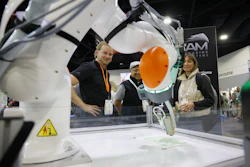
I was at Automation Fair this week, and one of the biggest things they talked about—and Rockwell's all in on it—was AMRs and driverless forklifts. They actually bought a company that does this during the event.
A lot of the talk was that they think within five to 10 years, you won't see forklifts being driven by people anymore. What they were saying was that you can go into the most automated facility, almost a lights-out facility, and at the very end of the line, there'll be a guy or a woman driving a forklift. It's like, we've eliminated all of this manual labor, but you still have the forklift part of it.
That's where the AMRs and forklifts come in. Throughout the week, I saw multiple presentations where they brought it up. Like I said, they bought a company. The company's name was Agilux.
They think within five to 10 years, you won't really see people driving forklifts. That seems a little ambitious because you have these smaller companies where I don't think they're going to have AMRs running around their plants, but it was interesting.
Since I'm already yapping about Automation Fair, that's where I was this week. They have merch at Automation Fair. Have you guys been to a lot of shows that have merch?
Derrick Teal: Not anymore. I used to.
Liz Cuneo: Merch or swag?
Sean Riley: Not swag. Purchase. People are buying a lot of merch, like Automation Fair quarter-zips, caps, or a coffee cup. That's exactly the face I was making, Derrick. I was like, “Wow, look at this.” It's like free advertising.
Liz Cuneo: PACK EXPO needs to get on board with this.
Sean Riley: No kidding. People were spending their hard-earned dollars on Automation Fair and Rockwell Automation merchandise.
Liz Cuneo: Wow.
Sean Riley: But anyway.
Derrick Teal: I was just going to say, you're right. I don't think it's going to go away within five to 10 years because of those smaller companies, but I can see the larger companies doing away with it.
Sometimes finding someone certified to drive a forklift can be a challenge. That's a workforce issue we talk about all the time. I think if the bigger companies go the automated route, it's going to push some of those drivers to the smaller and midsized companies, and it's going to delay it a little longer.
I'm totally making a guess here, but I would say it's probably going to be about five years longer than what they suggest, and even longer for that to be completely gone. But I would not be surprised at all if it happens at the larger companies within their time frame.
Sean Riley: I could see that with the larger companies that are almost fully automated, that it would be the next step. I just immediately thought of the small to midsized companies. You make a very valid point, especially with the workforce issue we talk about all the time. If people aren't certified to drive them, it might be more cost-effective to have the driverless ones eventually pay for themselves.
While I was at Automation Fair, I attended a ton of sessions. There was one I earmarked for the podcast because it touches on a bunch of our publications.
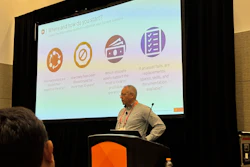
It was a panel with a packaging and processing CPG, Flowers Foods—they're a baker—an OEM, Delkor, and CESMII, the Smart Manufacturing Institute. I should have known more about them, and I really didn't.
The whole presentation was built around something we've heard about for years. There's OMAC and PackML and all these people trying to get everything standardized on the line so it's plug-and-play. Your bagger talks to your conveyor, and it goes right down the line. We hear about it all the time, but not necessarily that it's happening.
CESMII is pushing for smart manufacturing, and they have a lot of big names on board, the P&Gs of the world, because they have funding from the Department of Energy. I almost said Department of Education, which wouldn't make any sense at all.
Derrick Teal: No, not at all.
Sean Riley: Good point. The Department of Energy.
Anyway, they came out with this open API, which Flowers Foods and Delkor were big fans of. It allows applications to layer on top. You don't have to create new data silos and things like that. You layer it on top of existing systems, and there's no cost to impose structure across legacy equipment.
It's a standard they came up with that Flowers Foods and Delkor are both investigating using. Flowers Foods also brought up PMMI's OpX Leadership Network, which we're familiar with. Garth, who was on the panel from Flowers Foods, was talking about how the OpX Leadership Network is also driving standards. They have established common data definitions, core machine parameters, and industry frameworks.
We know all these people are coming up with standards. The gist of what I'm trying to say is that they had this presentation where it seems like everybody's starting to get on board with it, most importantly the CPGs, the end users.
I think a lot of it is being driven because CESMII, with the Department of Energy backing, has a name behind it. They're bringing together pretty big vendors.
Someone from the audience said, “That's all well and good, but if the OEM I bought the machine from has that gated and doesn't allow my stuff to talk to the other machinery, or charges me extra to do that, it doesn't help me whether there are standards or not if everyone's not buying into them.”
I think what we're finding is that some of the big CPGs are getting behind it. It's like Matt always says with Walmart or Amazon: The P&Gs and the Kraft Heinzes of the world steer the ship. I thought that was interesting.
Derrick Teal: The tail that wags the dog.
Sean Riley: I'll go with that. He's definitely said that.
Derrick Teal: I would say, in this case, too, you've got the government actually taking a step in there. In many cases, the government would take a back seat for a bit and let the industry start to figure things out—let the tail wag the dog—and then step in.
But in this case, having the DOE take a more active part, and then having end users getting involved, is probably why it's starting to coalesce a little faster. That's an obvious fear: You don't want to start investing in one standard only to have something else become the norm.
Sean Riley: Right. I think it was Garth who used an example: You buy a mouse, you plug it into your computer, and it works. They're probably wireless now, but back in the day, you bought a mouse and plugged it into your computer.
Derrick Teal: Even then, Bluetooth.
Sean Riley: Exactly. It figures it out, but we can't get it on a packaging line. He said that's what we need. We need it to be almost like a USB, where you plug it in, it reads, and everything works fine.
It was interesting to hear that everybody was on board, versus just another person standing up there talking about standards—hopes and dreams, and nothing comes to fruition. I found that interesting among the sessions I attended, plus it touched on a lot of our publications.
That brings us to our rookie, Joe Derr. Joe, you did some traveling. Where were you this week?
Joe Derr: I went to the suburbs of Chicago, Rosemont, Illinois. I live in Chicago, so I didn't have to go far. It was the Private Label Manufacturers Association annual meeting earlier this week. Matt and I were both there and saw some pretty interesting things.
This show is like a marketplace for new ideas. A lot of the stuff I saw is not on store shelves yet. This is where the co-mans and manufacturers are pitching ideas about trends they think are going to become hot. They're hoping the retailers and brands in attendance will pick up on them.
I saw some really interesting things there. Big shocker: Pickle flavoring is very big, right, Derrick? Trending right now, pickle flavor.
Derrick Teal: I have no idea what you're talking about. Pickles? What?
This is only a small sampling. For those of you on the podcast, I'm holding up a bunch of packages: pickle-flavored sunflower seeds, pickle-flavored edamame. These are sweet pickles, but I had dill-flavored chips.
We had multiple different flavors of pickles themselves. You mentioned spicy earlier. I think we had buffalo-spiced pickles, which were fantastic.
Joe Derr: There was a showcase at the PLMA show where Walmart was displaying one of their products: Marketside dill pickle hamburger buns. You can put pickles on the hamburger, and then you can get a bun that tastes like pickles.
Derrick Teal: Then you can put on a little relish, just for a little more pickle.
Liz Cuneo: That's a lot of pickle.
Sean Riley: Are they trying to eliminate the pickle altogether with the buns so you don't have it? That's the problem I have: If there are tomatoes and onions on it, everything just collapses.
Joe Derr: Right, exactly. It's an interesting trend that I wasn't that aware of. I'd heard about it a little, but seeing all the pickle products—pickle-flavored mustard and all the other things—was very interesting.
Another trend I saw at the show was the protein boom. It's still booming. It's still flexing its muscle.
Am I allowed to make jokes on this podcast?
Sean Riley: Heck yeah. Someone has to.
Joe Derr: Lots of probiotic drinks, collagen drinks, collagen-infused functional beverages. Combinations of coffee and chocolate with collagen protein, nut butters, lots of protein-infused snacks. Lots of protein, and also protein for pets.
The premium pet care boom is still happening. Have you guys heard of yak milk sticks before? Do you guys have dogs?
Sean Riley: I have not. You're breaking news.
Joe Derr: Yak milk. I saw it a few times at the show, especially among the featured products. Yak milk is being dried and formed into sticks that are chewable for dogs. I guess it's really great protein for them. It's considered a premium product to pamper your dog.
Derrick Teal: I can't imagine the supply chain issues for yak milk. You don't drive down the road in the country and say, “Oh, look at all those yaks over there.” It's not something you see every day.
Sean Riley: Where's Mongolia with the tariffs right now?
Liz Cuneo: Is there another word for a yak, or is that what we're going with? It's so strange. I'm wanting it to be like a buffalo.
Joe Derr: When I first saw yak dog products, I thought of something else.
Derrick Teal: What do you normally associate with dogs and yak?
Joe Derr: That was one of the trends. In terms of pet care, I also saw some premium pampering products for dogs, like sheer shampoo in a cool bone-shaped bottle that you could spray on their hair. Humanization is definitely a continuing trend.
Another really cool thing Matt and I both noticed was in an area of the show they call the World of Ideas. Retailers show interesting products they've done, and there are trending packaging samples.
Have you guys ever been to Marks & Spencer in the U.K.? It's a huge store. They sell everything—food, clothing. It's kind of like Target.
Liz Cuneo: I feel like I've heard of it.
Sean Riley: I've heard of it.
Joe Derr: They had this really cool minimalist package focusing on ingredient transparency. They had it for several different products, for bars, for canned beans, but they all had a similar design: a small picture of the product and a large white panel.
I have a picture up on my screen now. It's a bran flakes package, and it says, “Only three ingredients: whole grain wheat, 285 g; barley malt extract, 13 g; sea salt, 2 g.” That's it. It just says M&S Food and the ingredients.
I guess this would be an extreme example, but ingredient transparency was also a big trend.
Sean Riley: It makes it stand out, like you said. That is one way I would never have thought of doing it. I feel like there's a protein or nutrition bar that does something like that, and it's escaping my mind, where the ingredients are really big.
Liz Cuneo: What was that bar? Kind Bar? Is that what it is?
Derrick Teal: No, RX. It's like four egg whites, three almonds.
Sean Riley: That's exactly what it is.
Liz Cuneo: One date. It does stand out, and you know right away what it is and what's in it.
Derrick Teal: It reminds me of those old cartoons, Acme products. Just say the name.
Liz Cuneo: I would be remiss not to mention, speaking of the premiumization of pets, I noticed at Trader Joe's and Aldi that there are advent calendars for pets—dogs and cats—with a treat a day. I'm like, “Oh, gosh.” I almost bought them, but then I'm like, “What am I doing?”
Sean Riley: I may live in a house that has had one before for the dog. I did not partake in the purchase of it.
Derrick Teal: I bet it was from Aldi, because that was immediately what I thought of.
Sean Riley: Yeah, we had one.
Liz Cuneo: They're not opening the little window and getting excited to count down. I'm just buying more packaging to package 24 treats when I can just buy—I'm not trying to put advent calendars on blast because my kids get one every year with the chocolate.
Derrick Teal: Mine would open up the windows of an advent calendar on their own, but they'd do it in their own disrespectful way.
Liz Cuneo: Your animal would?
Derrick Teal: Well, they're heathens, so they do it in their own way. All of them are being eaten on day one.
Liz Cuneo: Okay, good to know.
Joe Derr: You mentioned chocolate, Liz. That reminded me of another thing I saw: protein plus chocolate, a big thing, like quinoa with chocolate. That's another thing they're pitching now. Lots of cool things going on at the PLMA show.
Derrick Teal: You have to find some way to make a healthy food unhealthy.
Joe Derr: Right. Exactly.
Sean Riley: That sounds awesome. That was great. I think this has been one of our finer podcasts. Matt might be the one holding us back. We're not going to tell him that, though.
Liz Cuneo: When he listens to this, he's going to hear it.
Sean Riley: With that in mind, I want to thank everybody for listening. I want to thank everybody for coming on here. Joe, thanks for making your debut. Derrick, Liz, as always, thanks.
We will not be doing a podcast next week, as that will be the Thanksgiving holiday. Everybody enjoy their holiday, eat up some turkey—
Derrick Teal: And enjoy it with pickle-flavored dressing.
Sean Riley: There we go.